

Poolin Technology Pte. Ltd., once the company behind one of Bitcoin’s largest mining pools, filed for Chapter 11 bankruptcy on July 22. The U.S. process allows a company to keep operating under court supervision while it reorganizes or, as in this case, sells remaining assets and winds down.

The filing was made in the U.S. Bankruptcy Court for the District of New Jersey. It covers Poolin and two U.S. affiliates, Lonestar Dream Inc. and Lonestar Taproot LLC. Court documents list more than $100 million in prepetition obligations against less than $10 million in assets.
From major mining pool to bankruptcy court
A mining pool lets individual Bitcoin miners combine their hashrate, the computing power used to solve the cryptographic puzzles that add new blocks to the blockchain. By pooling that power, participants can win rewards more often than they could on their own.
Poolin was founded in Beijing in 2017 by Zhibiao “Kevin” Pan, Fa Zhu, and Tianzhao Li. All three had previously worked at mining hardware maker Bitmain. The company grew into one of the biggest mining pools in the world. At its peak, Poolin controlled nearly one-fifth of Bitcoin’s global network hashrate, then expanded into crypto lending and interest-bearing accounts through a product called Poolin Wallet.
Withdrawal freeze in 2022 set off the crisis
Poolin’s problems began in September 2022, when it froze withdrawals for Poolin Wallet and Pool Account users. The company said at the time that it was “facing some liquidity issues,” linking the pressure to a wave of withdrawal requests during the broader crypto crash that year.
Rather than fully repaying customers, Poolin issued IOU tokens as stand-ins for actual Bitcoin claims. Those obligations were never repaid.
11,700 wallet holders are owed $163.7 million
Those unpaid IOUs are now the largest liability in the bankruptcy case. According to a court declaration from Chief Restructuring Officer Michael DuFrayne, about 11,700 wallet holders are owed $163.7 million.
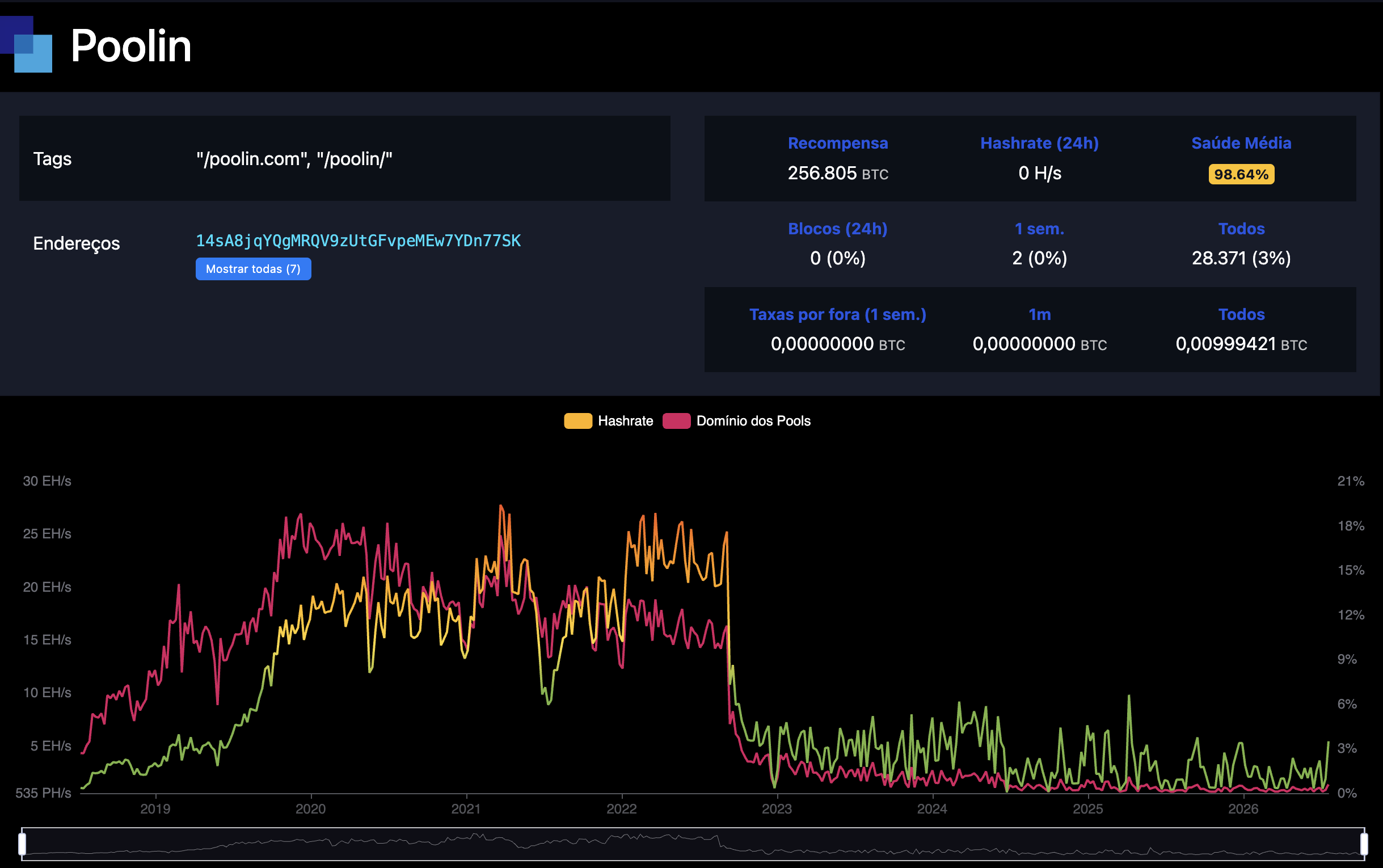
Poolin’s Texas mining and hosting operations, run through Lonestar Dream, shut down completely on July 10. The company said it does not plan to resume those operations.
West Texas asset sale is central to any recovery
To repay creditors as much as possible, Poolin is auctioning two sites in West Texas. Thor CALAP LLC has submitted a $52 million stalking-horse bid, an opening bid in a court-supervised sale that sets the minimum level later bidders must top.
That bid covers only the physical mining infrastructure. It does not include the frozen wallet balances, and it remains far below the amount owed to users.
Court filings also show that the Texas units had already accumulated about $45.9 million in losses since opening. On top of that, the company recorded another $8.8 million in losses from selling equipment at discounted prices between fiscal 2023 and 2025.
Users now wait on the auction outcome
For the 11,700 IOU holders, any recovery now depends largely on how much the West Texas auction ultimately brings in. More than three years have passed since withdrawals were first frozen.