
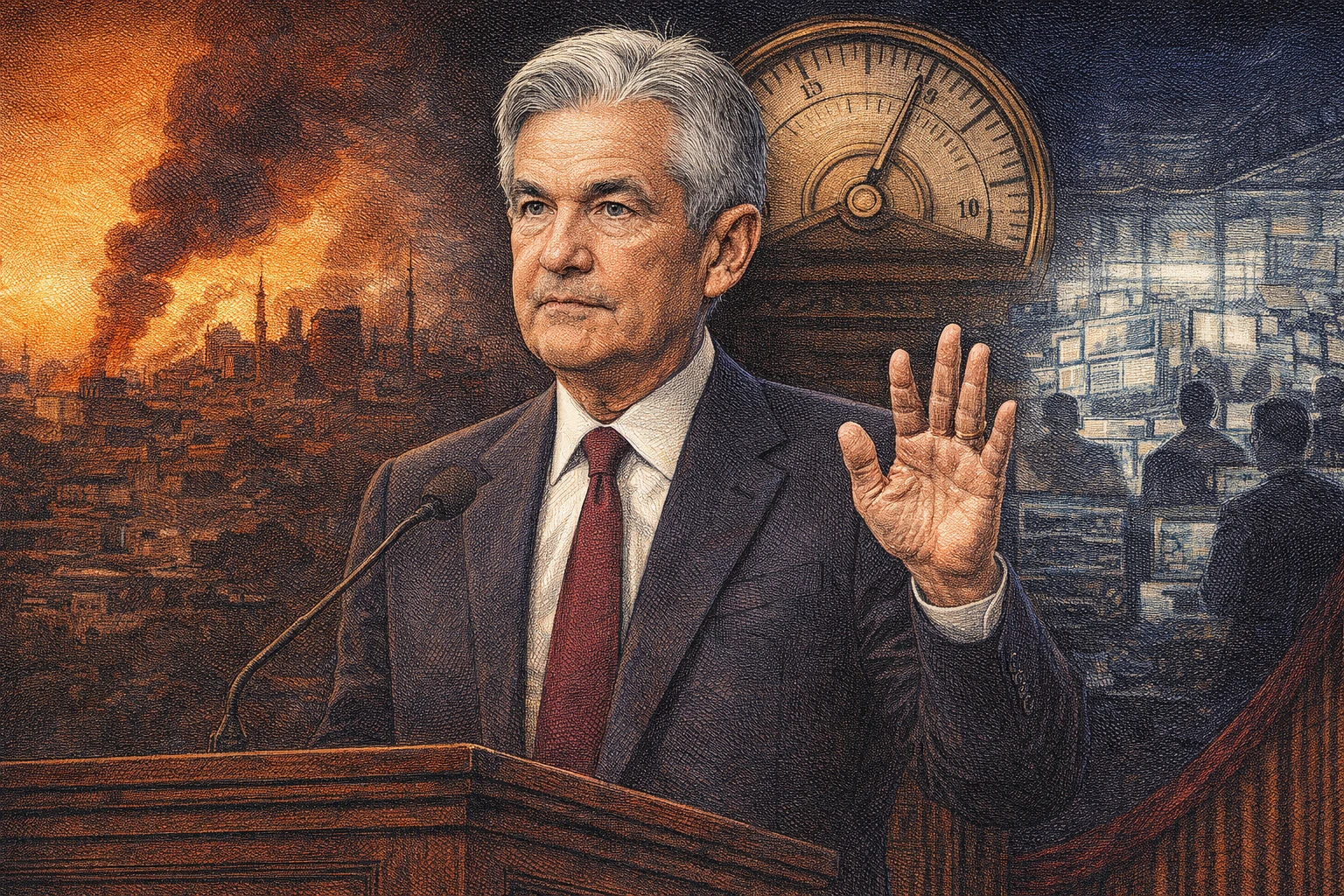
Federal Reserve Chair Jerome Powell is set to speak at Harvard University tonight at 10:30 PM Beijing time, in a discussion that markets are watching closely for any shift in monetary policy signals. Analysts widely expect Powell to reaffirm the Fed's hold on interest rates, as escalating Middle East tensions drive energy inflation and reduce room for easing.
This week also marks a pivot point for labor market data, with nonfarm payrolls and other indicators due for release, adding more context to Powell's remarks.
Powell's Likely Message: Pause, Wait, Keep Options Open
Based on the tone set at the March 18 FOMC press conference, Powell is expected to emphasize the Fed's dual mandate — maximum employment and price stability — and stress that the committee is in no hurry to move amid geopolitical uncertainty. Upward pressure on energy prices from the Middle East conflict directly counters any case for rate cuts.
The market's biggest fear right now is not recession, but persistent inflation that locks the Fed into a corner.
Trump's Dilemma: His Own Policies Keep the Fed on Hold
Ironically, the very forces keeping the Fed from cutting rates stem in part from the Trump administration's own policies, especially in the Middle East and energy. Trump has publicly pressured Powell to lower rates, even threatening to "fire" him. If Powell again signals a hold, Trump is likely to renew his attacks after the speech.
Beyond the personal feud, the conflict tests the Fed's independence. Powell is also under criminal investigation by the Justice Department over office renovation costs — an investigation he says coincides with his refusal of Trump's rate-cut demands. Successor candidate Warsh's hearing could come as soon as April 13, while Powell's term ends May 15, though he plans to stay until a successor is confirmed.
Crypto Market: Rate Cuts Distant, Risk Assets Under Pressure
For crypto, tonight's speech influences short-term sentiment. If Powell sticks to his cautious language with no dovish hints, Bitcoin and other risk assets will see their upside capped by tight dollar liquidity. Three Fed officials have already warned that the Iran situation pushes rate cuts further away.
This week's labor data adds another layer: strong jobs numbers reinforce inflation stickiness, while weak data could bring 'stagflation' concerns to the fore. Either way, the path to rate cuts remains blocked.
Investors are waiting not just for Powell's words, but for a resolution to the tangled interplay of geopolitics, inflation, and political pressure — and that resolution is nowhere in sight.