
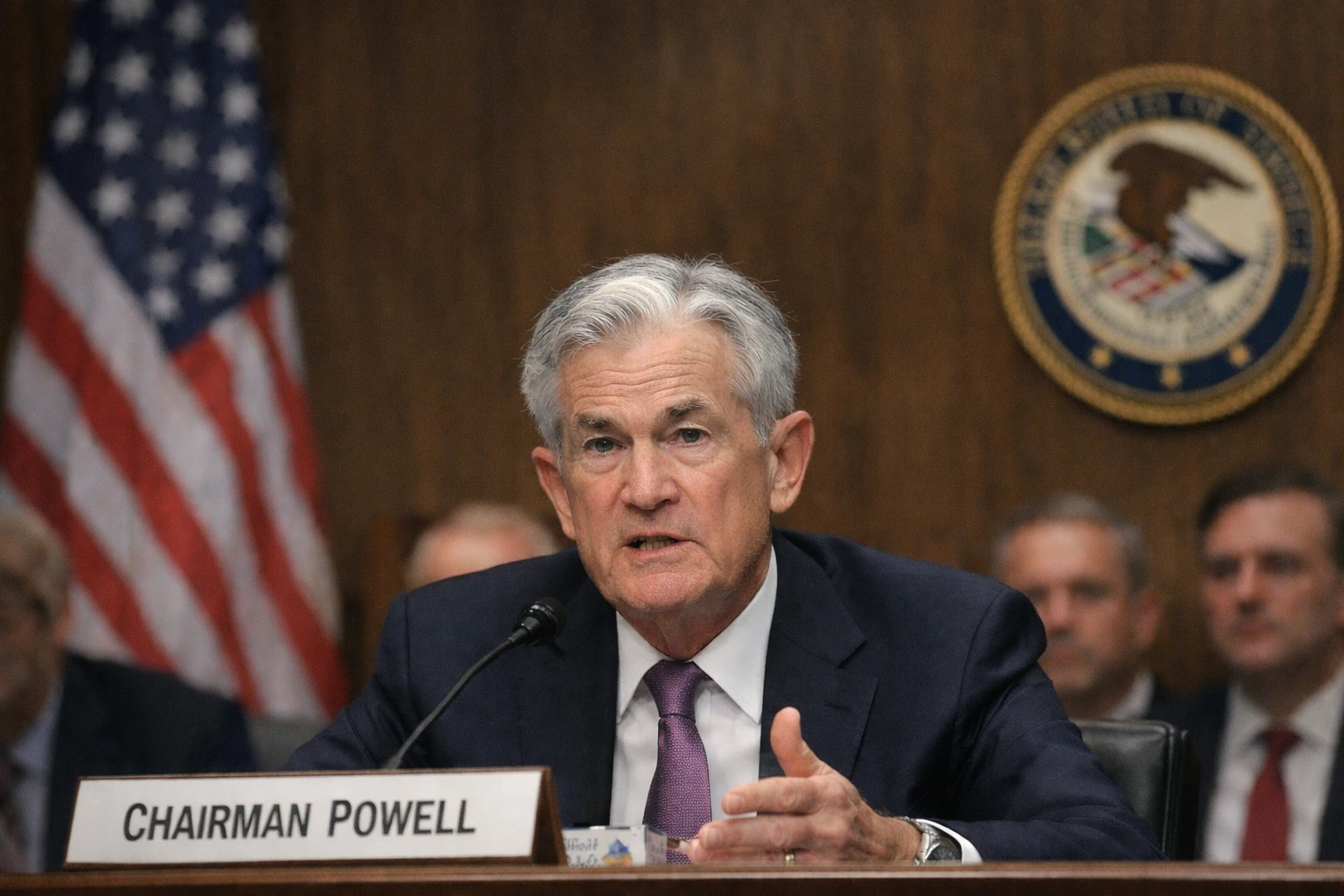
Federal Reserve Chair Jerome Powell has broken his silence, publicly linking the U.S. Department of Justice's criminal investigation against him to political pressure. He stated that the probe by federal prosecutors in Washington, D.C., centered on the Fed's headquarters renovation, is effectively the consequence of his refusal to lower interest rates as President Donald Trump demanded.
Powell: Investigation Is the Price of 'Disobedience'
In a rare statement, Powell said the investigation is "the consequence of the Fed setting interest rates based on what is best for the public, not on what the president prefers." He stressed that the core issue is "whether the Fed can continue to set rates based on evidence and economic conditions — or whether monetary policy will be subject to political pressure or intimidation." While the DOJ investigation formally examines whether Powell misled Congress about the scale of the Fed's headquarters renovation, his latest response clearly hints at a deeper political motive.
Trump's Escalating Pressure Tactics
The Trump administration's pressure on the Fed is not new. Over recent months, Trump has repeatedly attacked Powell and the Fed's rate decisions, threatening legal action over the headquarters renovation. More significantly, Trump attempted to fire Fed Governor Lisa Cook, a move blocked by the Supreme Court. Trump's economic adviser Kevin Hassett is now seen as a leading candidate to replace Powell when his term expires in May 2026. However, Hassett has publicly stated that even if he becomes Fed chair, Trump's views on rates would "have no impact on Fed decisions." Trump has already begun vetting potential successors.
Central Bank Independence Under Siege
Powell's remarks have thrown the issue of Fed independence into the spotlight. Central bank independence from political interference is traditionally seen as the bedrock of monetary policy credibility. If markets perceive that the Fed's decisions are influenced by political pressure, the fallout could include uncontrolled inflation expectations and reduced predictability of rate policy. For crypto markets, the uncertainty surrounding Fed policy is a key variable. If the Fed is forced to accelerate rate cuts under political pressure, risk assets could see a short-term boost. But long-term damage to the Fed's credibility could lead to sharper market volatility. With Powell's term winding down, the power struggle between the Fed and the White House is only set to intensify. This battle over the independence of U.S. monetary policy will be one of the most critical issues for global financial markets in 2026.