
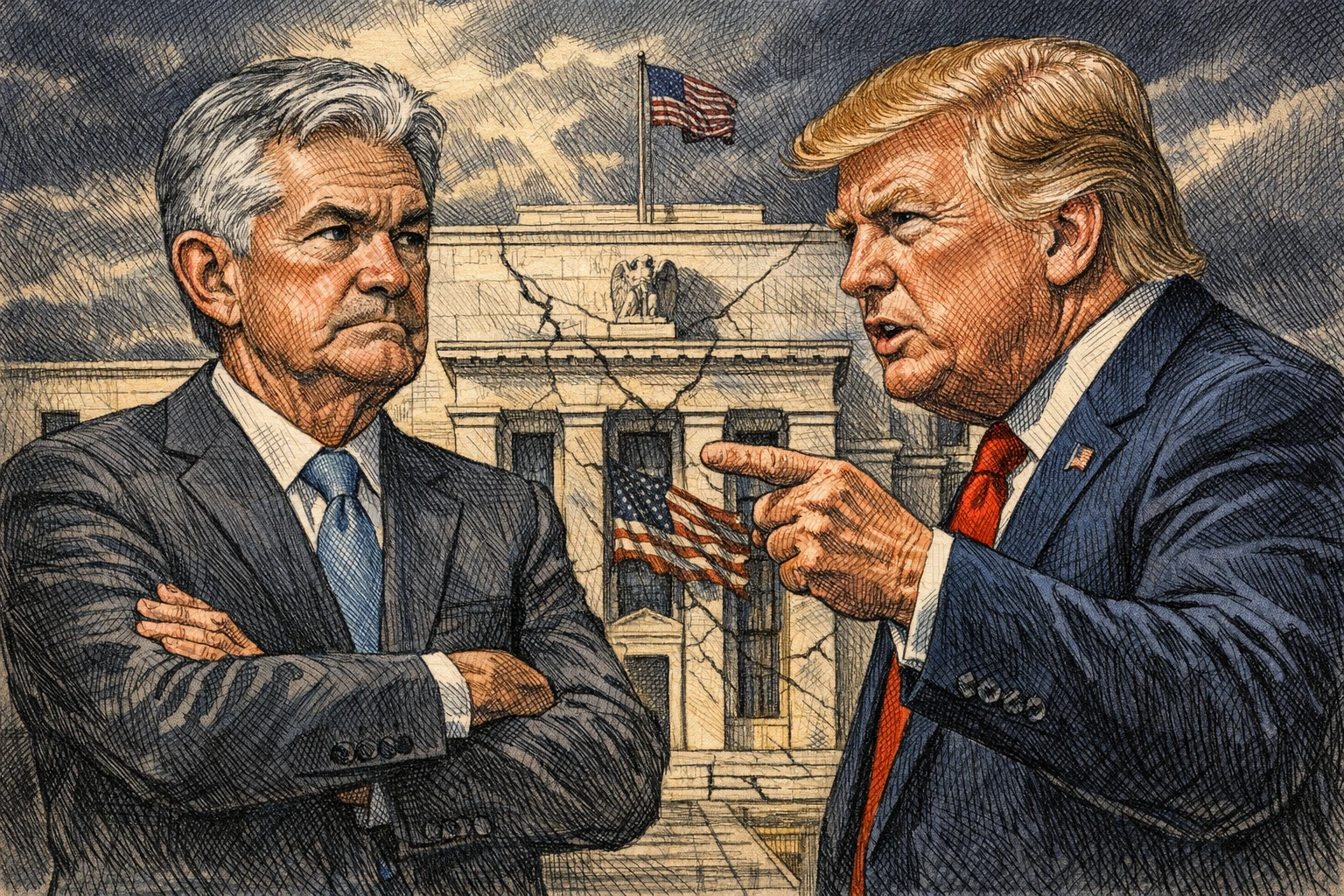
At the Milken Institute Global Conference in Los Angeles on May 6, Senate Banking Committee Chairman Tim Scott publicly called out Federal Reserve Chair Jerome Powell in unusually blunt terms: 'This is a significant mistake.' The trigger: Powell, who steps down as Fed chair on May 15, announced he would not leave the central bank entirely—he intends to remain on the Board of Governors, sitting inside the institution he once led while his successor takes the helm.
Scott: A 75-Year Tradition Broken by Powell
Scott did not hold back at the Milken conference. He pointed out an unwritten rule that had stood for 75 years: 'Every time you get a new chairman, the former chairman leaves.' That tradition had never been broken—until Powell.
Scott's concern goes beyond tradition; it is about tangible policy risk. 'What you don’t want are these philosophies in conflict,' he said. In his view, Powell staying on the board effectively creates a 'shadow voice' after incoming chair Kevin Warsh takes over—an unnecessary complication for the Fed's operations. Scott went further, alleging that Powell's move 'is a bit of a provocation to the president.' This marks a rare public rebuke of a top Fed official by the Republican chairman of the Senate Banking Committee. The Fed declined to comment.
Powell's Defense: Staying Until the Investigation Ends
To understand why Powell is not leaving, go back to the April 29 press conference after the FOMC decision. Powell stated: 'I am not leaving the board until this investigation is concluded in a transparent and definitive manner.' The investigation refers to a legal action launched by the Trump administration over the Fed's headquarters renovation—which Powell described as an 'unprecedented' attack on central bank independence. 'What has happened over the past three months leaves me no choice but to stay at least until I see where this is going,' he said.
Notably, Powell's term as chair ends on May 15, but his term as a governor on the Board of Governors actually extends to January 2028, giving him the legal right to remain. He also pledged to keep a low profile: 'There’s only ever one chair,' he said, promising not to overstep after Warsh takes over.
Last Chair to Stay on Board: 1948
If Powell indeed stays on the Fed board, it will be the first time in 78 years. The last occurrence was in 1948, when President Truman asked Marriner Eccles to remain as a governor after stepping down as chair, and Eccles stayed on for several more years. That era's power dynamics and political landscape were vastly different, but the historical parallel is striking. From 1948 to 2026, no one had crossed that line. Powell's choice to break it, at a politically sensitive moment, carries consequences not just from Scott's criticism but also tests the central bank's external credibility once again.
Warsh Takes Over: A Rare Two-Chair Era for the Fed
The confirmation process for Powell's successor is accelerating. Trump nominee Kevin Warsh passed the Senate Banking Committee by a 13-11 vote in early May, with a full Senate floor vote expected as early as next week. Once Warsh is confirmed, the Fed enters an unusual 'two-chair' scenario—Warsh as chair, Powell as a governor, both sitting at the FOMC table. Powell says he will stay in the background, but how long that assurance holds remains uncertain. Scott's remark at the Milken conference perhaps best captures the tension: 'It’s not good for the country, it’s not good for the Fed.' The next chapter of monetary policy, before Warsh has even formally taken the chair, is already filled with political noise.