World Cup Ignites Prediction Market: Retail Traders Face a Data Deluge
The 2026 World Cup has triggered an explosion in prediction market activity, with billions of dollars flowing into bets on match outcomes, group stage eliminations, final champions, and Golden Boot winners. While trading volumes and user engagement hit all-time highs, most retail traders struggle to generate consistent profits. The common practice of tracking 'smart money' – manually copying trades after seeing signals on social media or news platforms – proves ineffective because prediction market odds fluctuate in real-time, and opportunity costs vanish in seconds. Manual execution simply cannot keep pace.
The Smart Money Trap: Why High-Profit Addresses Lead to Losses
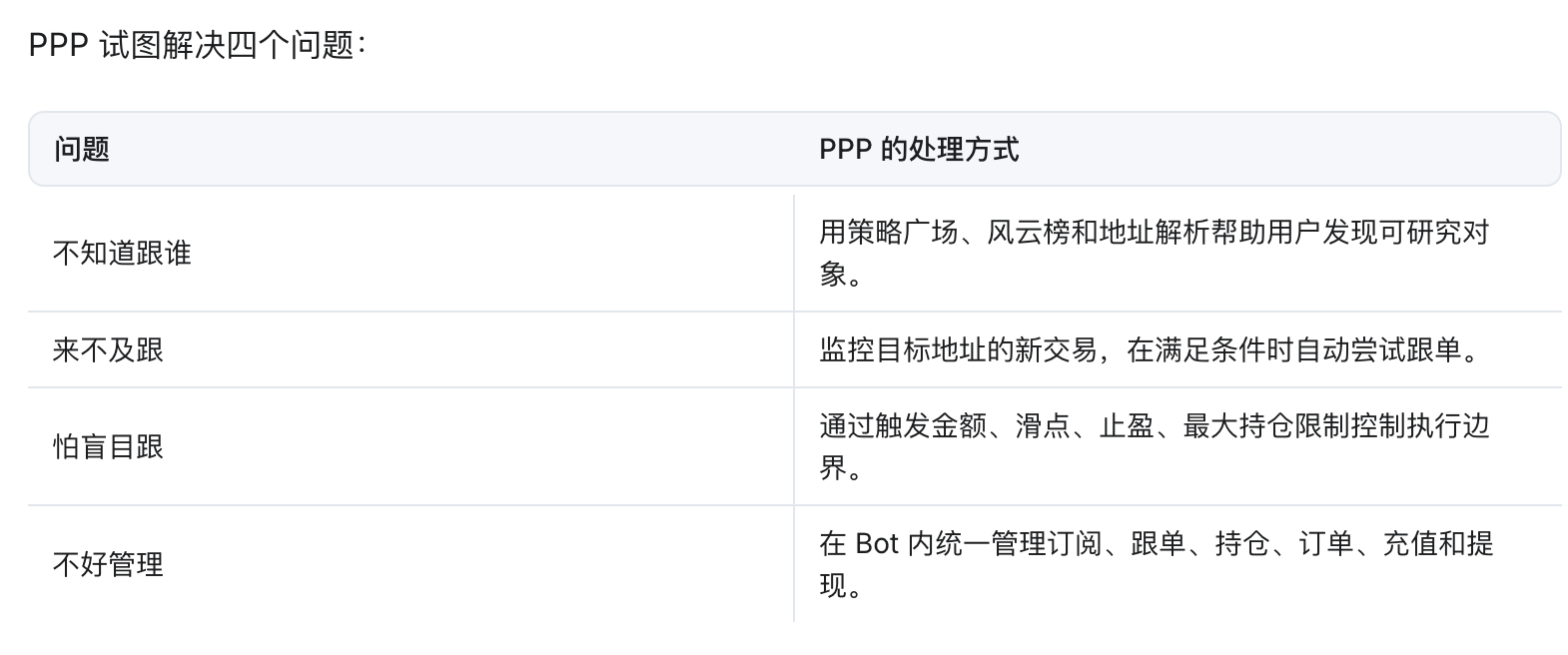
Some users turn to generic copy-trading tools, which often display addresses ranked solely by total profit or recent win rate. Blindly following million-dollar gains from such 'gurus' frequently results in losses. PPP (Prediction Position Platform) explains: 'Not all profitable addresses are suitable for copying.' Some addresses may profit from privileged information, extreme position sizing, one-time market events, or sheer capital scale. If users only look at profit rankings, they overlook critical factors like drawdown, liquidity, position management style, and actual copyability. A truly safe-to-copy address must demonstrate stable profitability over a large sample across a long period, with win rate, maximum drawdown, strategy consistency, and capital allocation all meeting rigorous thresholds.
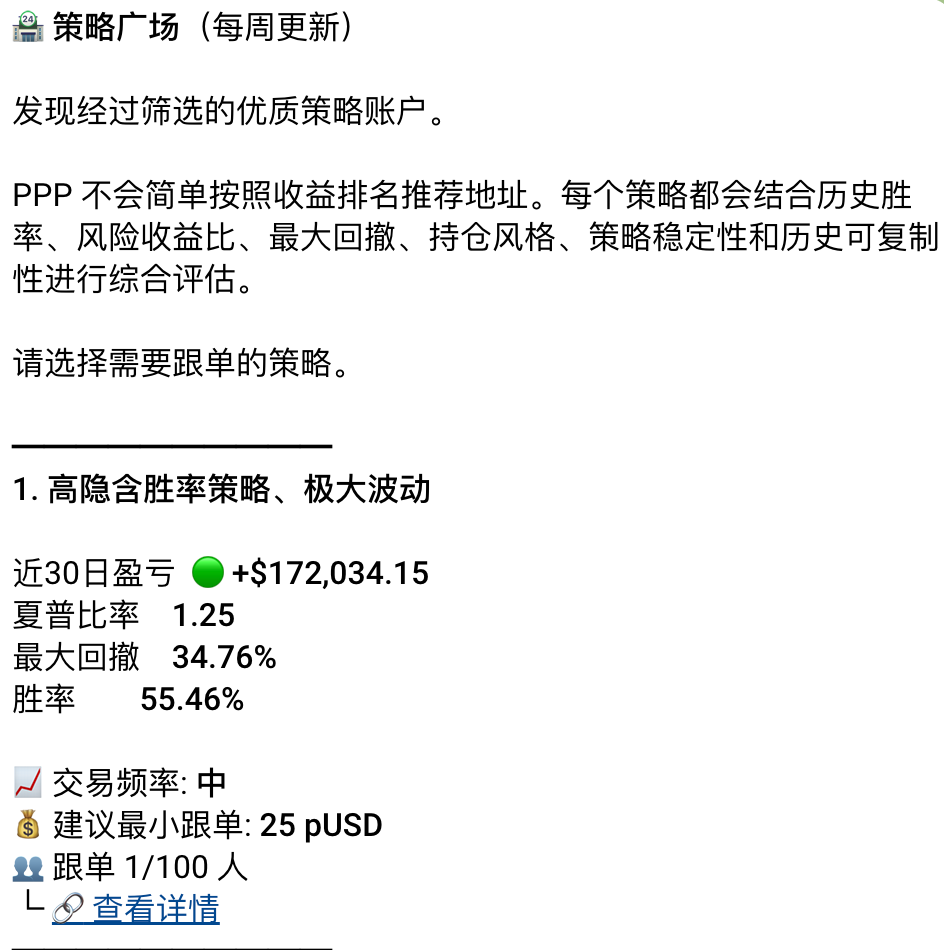
PPP’s Solution: AI Modeling + Manual Review Dual Screening
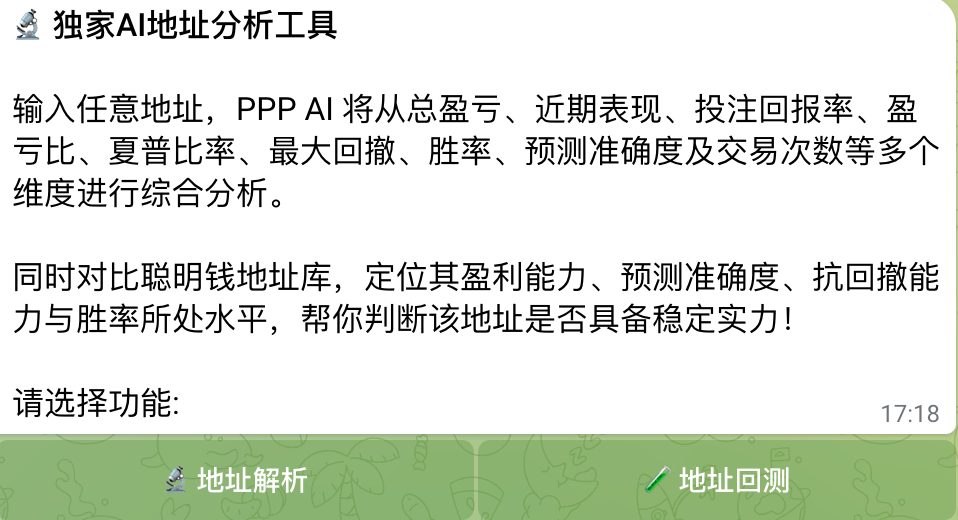
PPP is building a system that structures complex on-chain address data and trading signals into actionable strategies for ordinary users. Team member Lorne states: 'The market lacks not monitoring tools or copy-trading bots, but a mechanism that structures chaotic trading behavior into a format that users can understand, trust, and operate.' PPP employs a dual AI-modeling and manual-review approach, analyzing addresses across multiple dimensions: win rate, drawdown history, capital allocation discipline, historical fund size, on-chain activity frequency, copy-trading costs, and information advantage probability. The AI first filters out 'accidental profits' and 'anomalous trade samples,' then human reviewers conduct multiple rounds of verification to select statistically stable, continuously research-worthy addresses. While the core AI algorithm remains proprietary, PPP provides an 'AI Address Parsing Tool' that lets users input any address and compare it against the smart money database, evaluating its profitability, information edge, drawdown resistance, and win rate percentile.
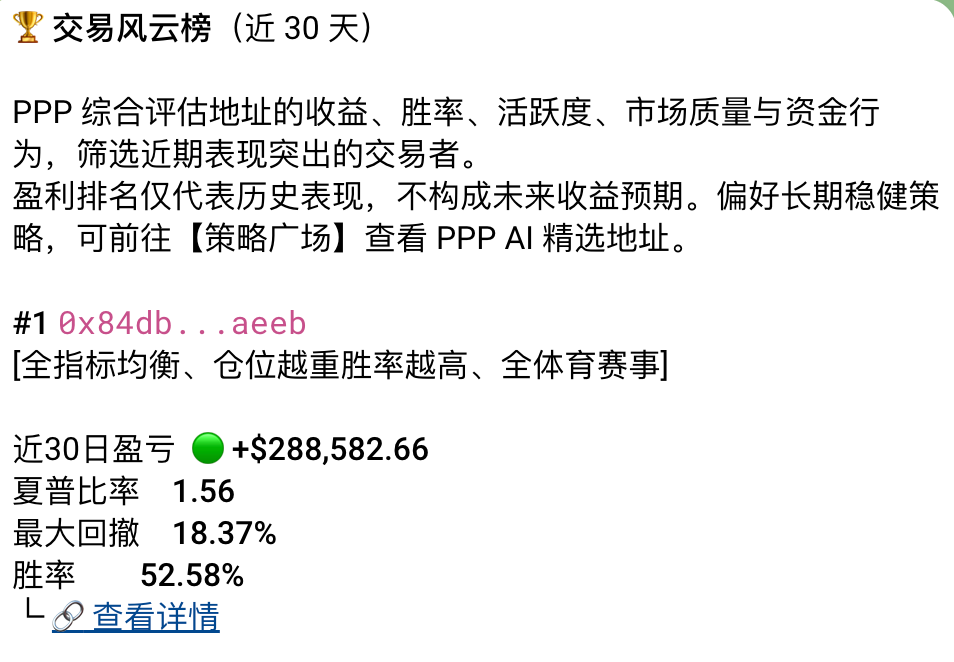
Strategy Plaza & Trading Storm List: Two Layers of Smart Money
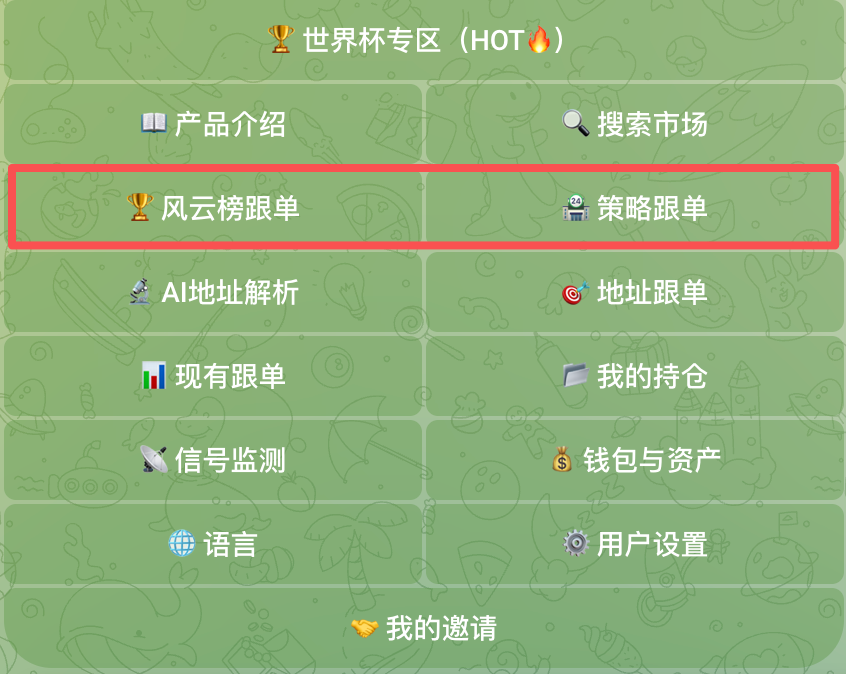
PPP stratifies verified replicable addresses into two core product tiers. Strategy Plaza aggregates stable strategies validated over extended periods. Entry requirements include: strategy win rate above market average, maximum drawdown below 30%, continuous historical performance over 90 days, and disciplined position sizing for every trade. This pool is reviewed weekly to ensure strategies remain effective. Trading Storm List features high-scoring addresses from PPP’s intelligent scoring model, including Win Rate Rankings, Profitability Rankings, and Risk Assessment Rankings. These focus on recent standout performers, with higher returns typically accompanying higher volatility – suitable for users seeking short-term opportunities rather than long-term stable copying. Each strategy is labeled with concise descriptions (e.g., 'High implied win rate, extreme volatility') to aid user differentiation.
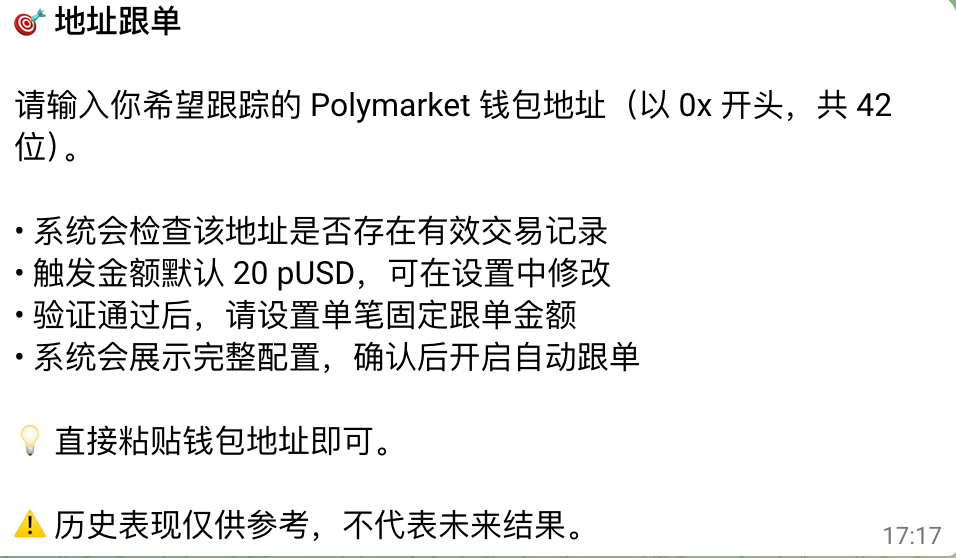
PPP recently launched a Telegram Bot product as its primary user interface. Users log in via a Telegram Mini App to create a non-custodial wallet – they retain full control (private keys can be exported). To copy trades, users select a strategy, review its key metrics, choose a copy amount or customize settings, and activate copying. The 'Copy Settings' feature allows adjustment of trigger amount, trade amount, slippage, take-profit, and maximum position limits per strategy. In a real test, I deposited $100 and copied two strategies (one from each tier). The next day, net value peaked at $164 – a 64% daily return. However, subsequent drawdowns occurred due to failing to set different copy amounts for varying risk profiles, causing small-probability events to erode funds. Lorne cautions: 'PPP cannot guarantee future profitability. Users should only trade within acceptable risk limits.'
Conclusion: PPP as an Information Asymmetry Compiler, Not Just a Copy Tool
After deep testing and conversations, PPP should not be viewed as merely a copy-trading tool. It represents a structured 'compilation' path from on-chain signals to executable strategies. Smart money does exist, but fragmented across countless addresses, strategies, and short-term fluctuations. Profit records are real, but the underlying risk structures, capital behaviors, and strategy stabilities are often masked by simple numbers. PPP's AI-plus-human-review approach denoises chaotic on-chain data, extracts truly replicable smart money strategies, and delivers them through a low-friction TG Bot. This effectively defends against the smart money trap and reduces information asymmetry in prediction markets. Yet, as Lorne emphasizes, no historical screening or backtesting can promise future returns. Prediction market profits come with high volatility and risk. PPP provides refined 'weapons' that improve win rates and avoid obvious pitfalls, but ultimate success depends on each user's capital management and risk appetite. As the prediction market evolves, PPP’s methodology will face the test of time in real-world market dynamics. For now, it offers a more deterministic entry point for ordinary users seeking to capitalize on the World Cup wave.