
Prediction Market Boom and the Smart Money Pitfall
With the 2026 World Cup underway, prediction markets have experienced an unprecedented explosion in activity. Billions of dollars are being wagered on match outcomes, group stage qualifications, championship winners, and Golden Boot rankings. Trading volumes and user engagement have reached all-time highs. Yet the vast majority of retail users find themselves staring at real-time probability fluctuations with no clear strategy to achieve consistent profitability.
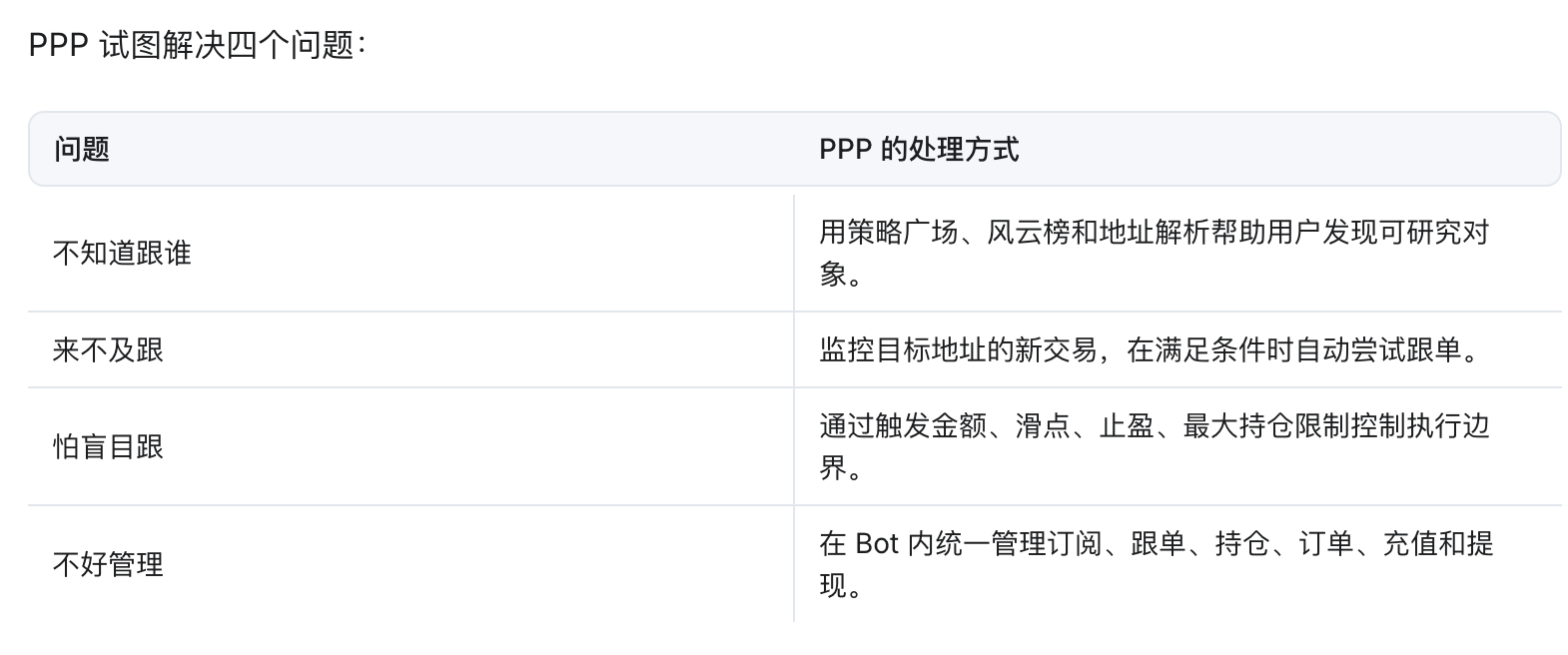
Many turn to social media or news platforms to track so-called 'smart money' wallets. However, the 'wait for signal, then manually copy' approach is inherently reactive – probabilities shift in milliseconds, and opportunity costs vanish before a manual order can be placed. Common copy-trading tools exacerbate the problem by ranking wallets solely by total profit or recent win rate. Users see millions in dazzling gains and blindly follow, only to suffer losses once they enter. PPP (Prediction Position Platform) puts it bluntly: 'Not all profitable addresses are suitable for copy-trading.'
Why Profit ≠ Replicability: PPP's AI + Human Curation Engine
PPP's team explains that some addresses profit through special information, extreme positions, one-time market moves, or large capital advantages. Retail users who only look at profit rankings overlook critical factors like drawdown, liquidity, position style, and actual follow-ability. A truly safe-to-copy address must demonstrate stable profitability over a large sample across a long cycle, with acceptable max drawdown, strategy consistency, and position allocation. Only addresses that survive multi-dimensional scrutiny possess a replicable profit logic.
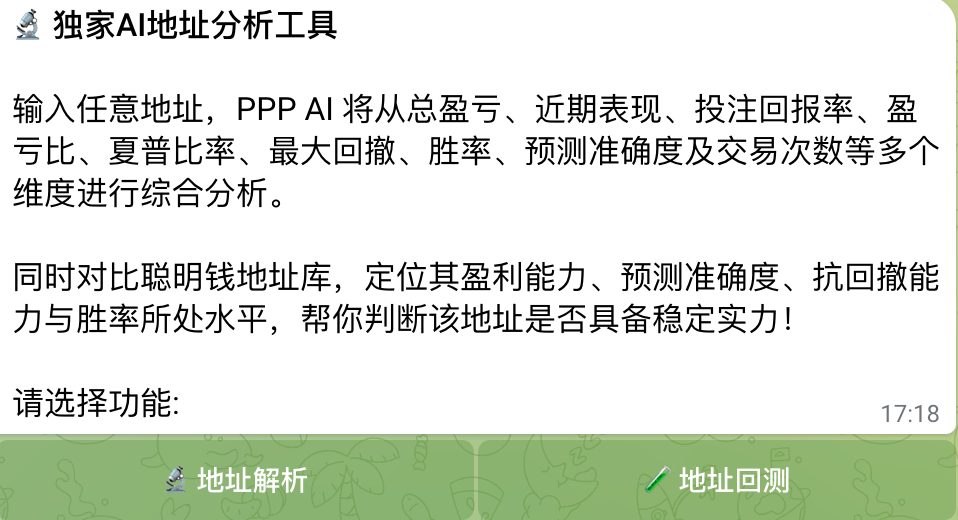
To solve this, PPP deploys a dual AI modeling + human review system. It analyzes dimensions including win rate stability, max drawdown, holding period, information advantage, capital size, and strategy consistency. The system first filters out 'accidental profits' and 'abnormal trade samples,' then undergoes multiple rounds of human review to select statistically stable wallets with sustained research value. The AI model itself is proprietary, but PPP opens its analytical power through an 'AI Address Analysis Tool' – users can paste any address and compare it against the smart money library to pinpoint its profitability, information edge, drawdown resistance, and win rate percentile.
Two Product Tiers: Strategy Square and Trading Leaderboard
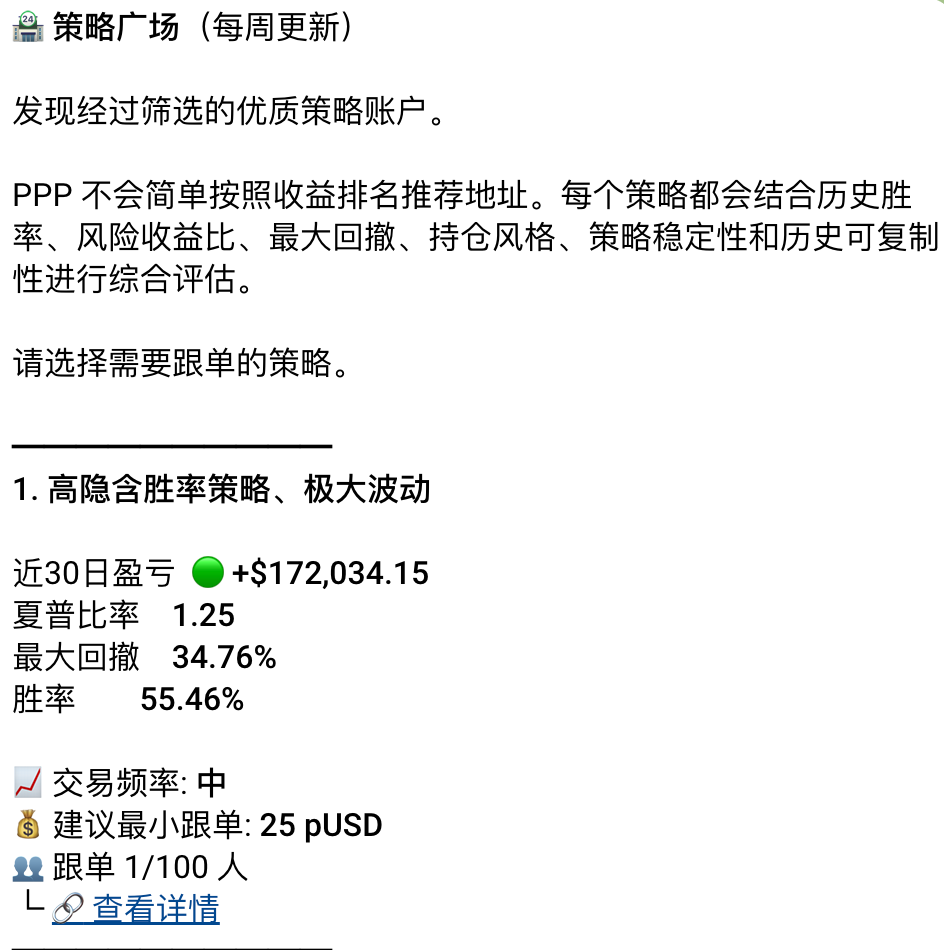
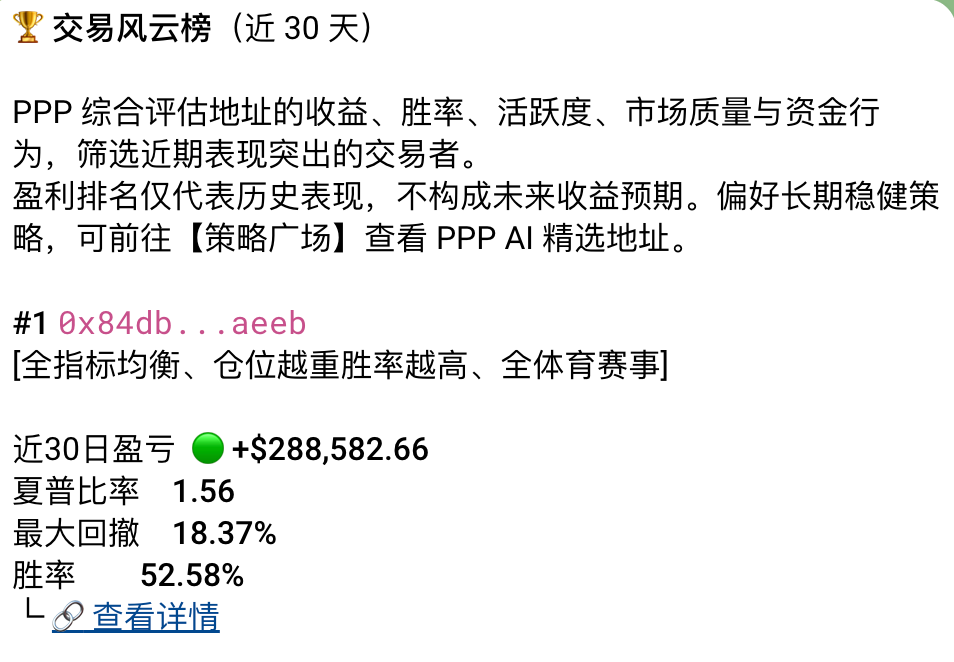
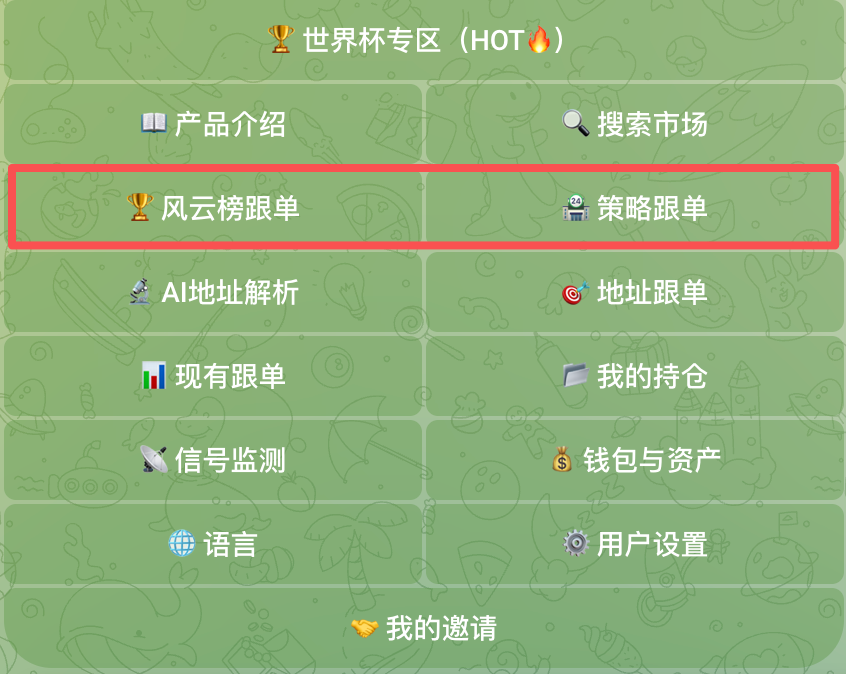
After curation, PPP stratifies replicable smart money addresses into two core products. The Strategy Square aggregates long-term verified stable strategies. Addresses in this tier must meet stricter criteria: consistent profit over a large sample, controllable max drawdown, and traceable strategy logic. The Square acts as a long-term strategy pool, with weekly reviews to ensure continued effectiveness. The Trading Leaderboard showcases addresses with outstanding recent performance (after removing accidental winners). This board suits users seeking short-term opportunities rather than stable long-term copy-trading. PPP explicitly warns that higher returns come with higher volatility. Each strategy and address is tagged with a concise style description (e.g., 'high implied win rate, extreme volatility') to help users understand differences and make informed choices.
Telegram Bot Experience: Non-Custodial Wallet, Customizable Copy Parameters
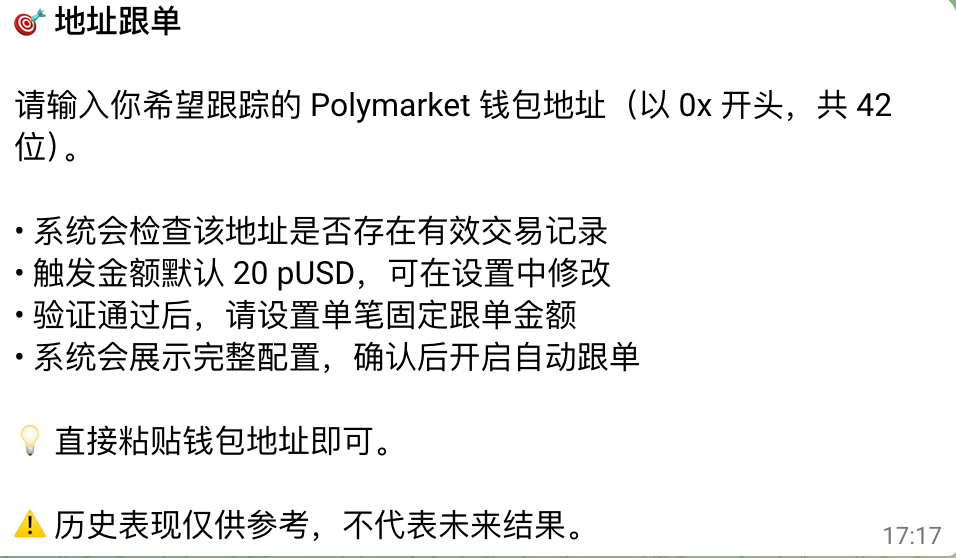
PPP recently launched its Telegram Bot product as the primary user interface. Users log in via a Telegram Mini App and create a non-custodial wallet – they retain full control of private keys and any potential future rewards (e.g., a possible Polymarket airdrop) are entirely theirs. After selecting a strategy, users review key metrics, then choose a copy amount or customize settings. The 'copy settings' feature allows adjustment of trigger amount, copy amount, slippage, take-profit, and max position limit to control execution boundaries.
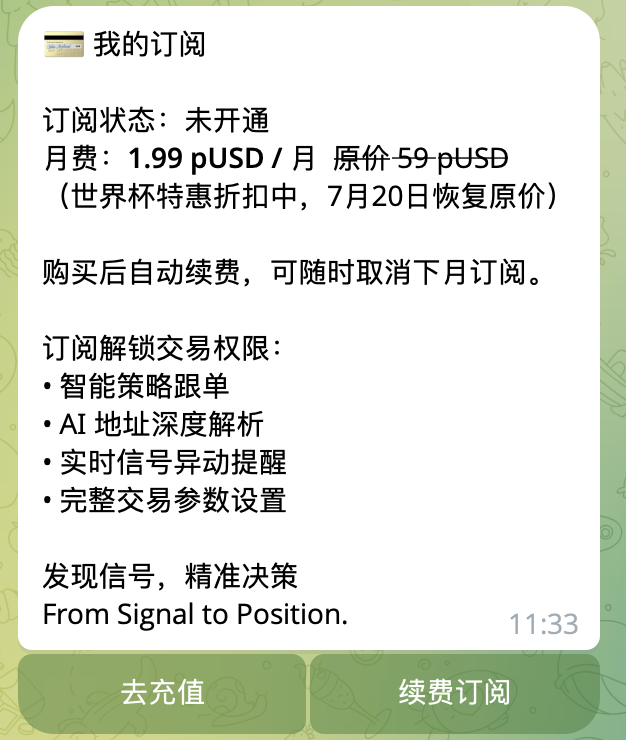
In a test, a reporter deposited 100 USDT and copied two strategies from the Strategy Square and two from the Trading Leaderboard. The next day, the account peaked at 164 USDT – a 60%+ daily return. However, subsequent drawdown occurred due to failing to set different copy amounts for different risk profiles, causing a small-probability event to erode capital. PPP team member Lorne admits: 'The platform cannot guarantee future profitability. Users should only risk what they can afford.'
Conclusion: From Copy-Tool to Structured Strategy Compilation
PPP should not be viewed merely as a copy-trading tool. It attempts to build a structured compilation path from raw on-chain signals to executable strategies. Smart money does exist, but it's scattered across countless addresses, strategies, and short-term fluctuations. Profit records are real, but the underlying risk structure, capital behavior, and strategy stability are often masked by simple profit numbers. PPP bridges this gap by denoising and structuring chaotic on-chain signals through AI + human review, extracting truly replicable strategies and delivering them via a low-threshold Telegram Bot. As Lorne emphasizes, no backtesting or strategy screening can guarantee future returns. Prediction markets come with high volatility and risk – PPP provides refined tools to improve odds and avoid obvious pitfalls, but ultimate success depends on users' own risk management and capital discipline.