
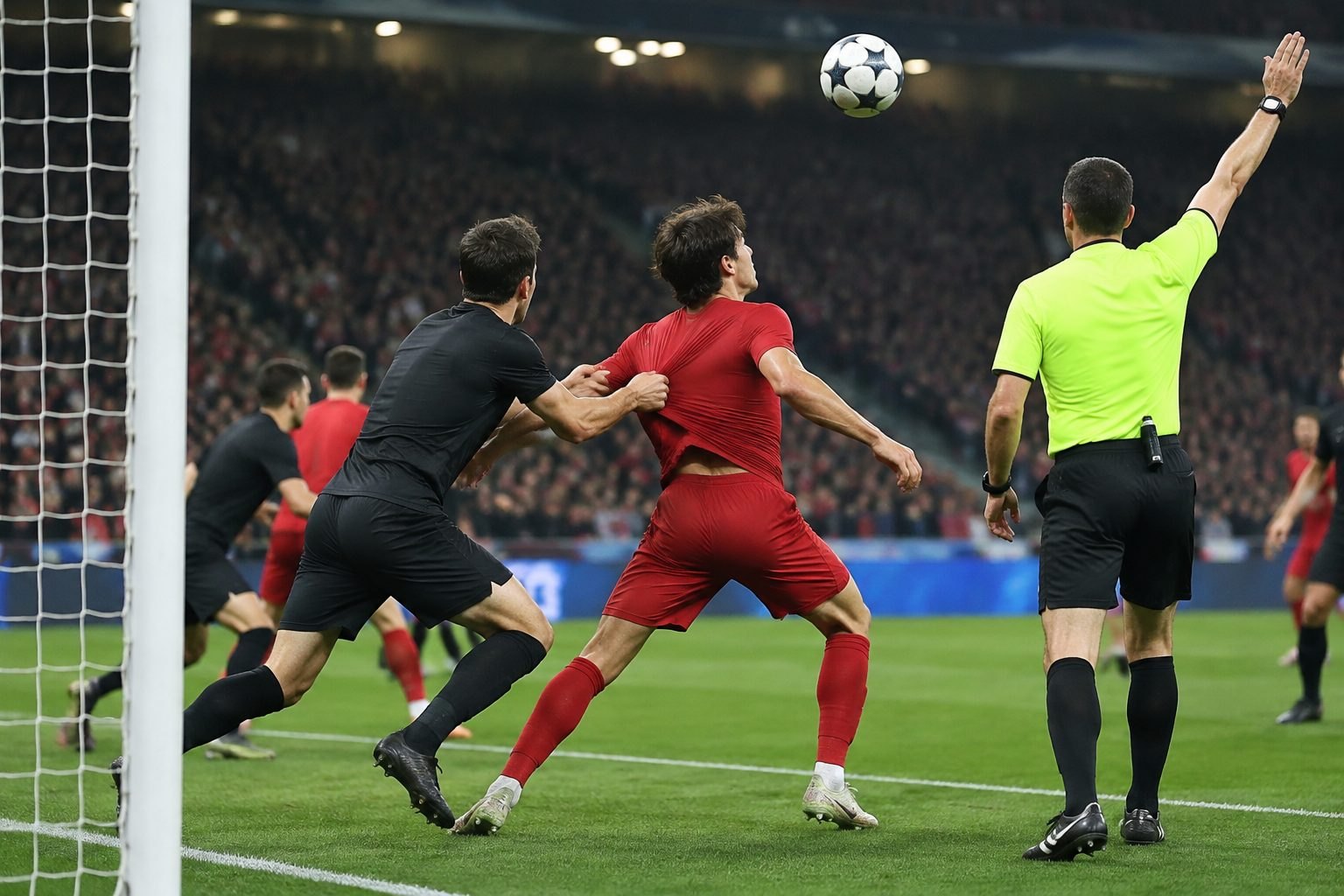
Yes. Holding an opponent is a direct free kick offence, and if that offence is committed inside the offender's own penalty area, the restart is a penalty kick. At corner kicks and free kicks, the referee must also follow a separate step-by-step process based on whether the ball is out of play or in play.
What the basic rule means
Holding sits within the list of direct free kick offences. That makes two points decisive: whether the ball is in play, and whether the offence is inside the offender's own penalty area.
Once the ball is in play, holding leads to a direct free kick or a penalty kick, depending on location. Before the ball is in play, the referee cannot award a penalty kick for holding at a corner kick or free kick.
How holding is handled at corners and free kicks
Here is the required sequence for holding at corner kicks and free kicks.
| When the holding happens | What the referee must do |
|---|---|
| Before the ball is in play | Warn the player |
| The holding continues before the ball is in play | Caution the player |
| Once the ball is in play | Award a direct free kick or penalty kick and caution the player |
Referees are reminded to make an early intervention and deal firmly with holding offences, especially inside the penalty area at corner kicks and free kicks. For example, before a corner kick is taken, a defender holds an opponent and impedes that opponent's movement inside the penalty area. The referee must warn first, then caution if it continues, and no penalty kick can be awarded at that stage because the ball is still out of play.
Holding across the penalty-area line
Here is how holding that crosses the penalty-area line is penalised.
| Situation | Decision |
|---|---|
| A defender starts holding an attacker outside the penalty area and continues holding inside the penalty area | Penalty kick |
| A defender starts holding an attacker inside the penalty area and continues holding when the attacker tries to get free and leaves the area, and the attacker then falls outside it | Penalty kick for the holding offence inside the penalty area |
Cards, denied chances, and the free-kick example
Holding can also change the disciplinary outcome. When a player commits an offence inside their own penalty area, denies an opponent an obvious goal-scoring opportunity, and the referee awards a penalty kick, the offender is cautioned if the offence was an attempt to play the ball or a challenge for the ball.
In all other circumstances, the player must be sent off. Holding falls into that second category, so holding inside the offender's own penalty area that denies an obvious goal-scoring opportunity brings a red card, not a caution.
For example, a free kick is kicked into the opponents' penalty area. While the ball is in the air, a defender holds an attacker and stops that attacker from jumping for the ball; another attacker, who had been in an offside position, then scores. The goal is disallowed because of the offside offence, and a penalty kick is awarded because the holding offence happened before the offside offence. If the holding denied an obvious goal-scoring opportunity, the defender is sent off; if it did not, the defender is cautioned.
FAQ
Is shirt pulling a foul?
A holding offence occurs only when a player's contact with an opponent's body or equipment impedes the opponent's movement. When a shirt pull is a holding offence, the restart depends on whether the ball is in play and whether the offence is inside the offender's own penalty area.
Can a defender hold an attacker at a corner?
No. Before the ball is in play, the referee must warn a player who is holding an opponent, and must caution that player if the holding continues before the kick is taken.
Is holding in the box always a penalty?
It is a penalty kick when the ball is in play and the holding is committed inside the offender's own penalty area. If the same holding happens before the ball is in play at a corner kick or free kick, the referee must instead warn the player, and caution the player if the holding continues.
What will Premier League referees focus on?
Under the League's refereeing points of emphasis for 2026/27, referees will enhance on-field recognition of clear holding actions with clear material impact and non-footballing holding actions. That includes penalising defenders who are clearly only focused on opponents and use holding in a way that affects an attacker's ability to play or challenge for the ball.


