
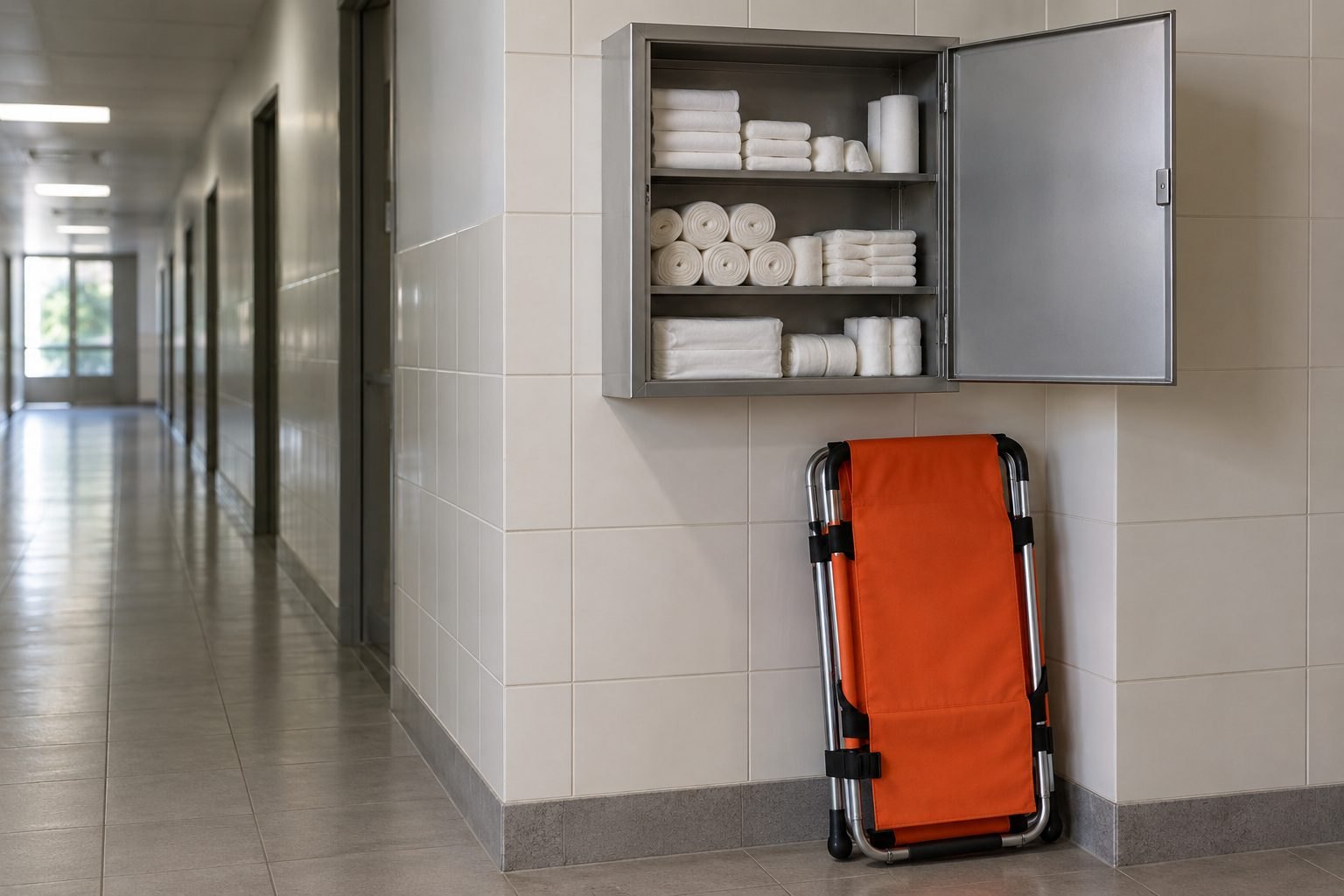
A Premier League medical and safety action plan is a written plan that every club must prepare and make available to the league on request. It sets out how injury risk is assessed and managed and identifies the club's first aid facilities and medical equipment.
What the plan must cover
Here is what the plan must cover.
| Area | What the plan must set out |
|---|---|
| Club employees | Protocols for assessing risk and managing injuries across the business |
| Players and match officials | Protocols for league matches, other matches and training |
| Emergencies at the club's own stadium | A dedicated protocol for emergency treatment during league matches |
| Equipment | All first aid facilities and medical equipment the club maintains |
The plan goes beyond matchday treatment. It reaches injury risk for the club's own employees as well as injury management for players and match officials in each of the settings above, so one document has to serve the club's wider business and its football operation alike.
There is also a separate requirement inside the wider plan for the club's own stadium. League matches there must be covered by a dedicated emergency treatment protocol rather than a general note folded into other procedures.
Who prepares it and how it is reviewed
The plan is drawn up under the guidance of the team doctor. That work is done in consultation with the medical coordinator, the senior physiotherapist, the club's safety officer, and anyone else the club considers appropriate.
The team doctor then reviews the plan regularly and amends it when needed. On top of that ongoing review, the plan must be reported to the club's board and approved once a year.
Operational duties beyond the written plan
Keeping the document is only part of the job. Each club also has to manage effectively all medical issues that may arise at a league match.
The same applies to the practical side of treatment. First aid facilities and medical equipment must be properly maintained and kept in full working order, so the written plan and the club's day-to-day readiness match each other.
What the home club must hand to the visiting club
Before each league match, the home club must give the visiting club the emergency treatment protocol. The home club must also obtain confirmation from the visiting club's team doctor that it has been received.
That exchange is narrower than handing over the whole medical and safety action plan. The required handover is the emergency treatment protocol, and the confirmation must come from the visiting team doctor.
FAQ
Do Premier League clubs have to keep a medical plan?
Yes. Every club must prepare one and make it available to the league on request. It is a standing requirement rather than something kept only for selected matches.
Who writes a Premier League club medical plan?
The plan is prepared under the guidance of the team doctor. It is produced in consultation with the medical coordinator, the senior physiotherapist, the club's safety officer, and any other person the club considers appropriate.
Does the plan need board approval?
Yes. The plan must be reported to the club's board and approved once a year. That annual step sits alongside the team doctor's regular review and any necessary amendments.
What medical equipment must a club keep?
The plan must detail all first aid facilities and medical equipment the club maintains in case treatment is needed. The club also has to keep those facilities and that equipment properly maintained and in full working order.