


For potential Chinese victims connected to the Prince Group asset probe, the smartest move right now is not jumping into any so-called compensation pool. It is putting together a personal, checkable timeline showing where the money actually went.
Daii said a bank transfer receipt can show which account sent funds, and on-chain records can preserve wallet addresses, amounts, and timestamps. By themselves, though, those records usually do not show which Prince Group-linked company actually got the money or which entity carries legal liability. On Oct. 28, joint provisional liquidators told Caixin that Chinese victims of telecom fraud and online gambling operations may be able to file claims later if the matter moves into liquidation and enough funds exist. Right now, there is no claims or distribution process in place.
Three dates, three different procedural stages
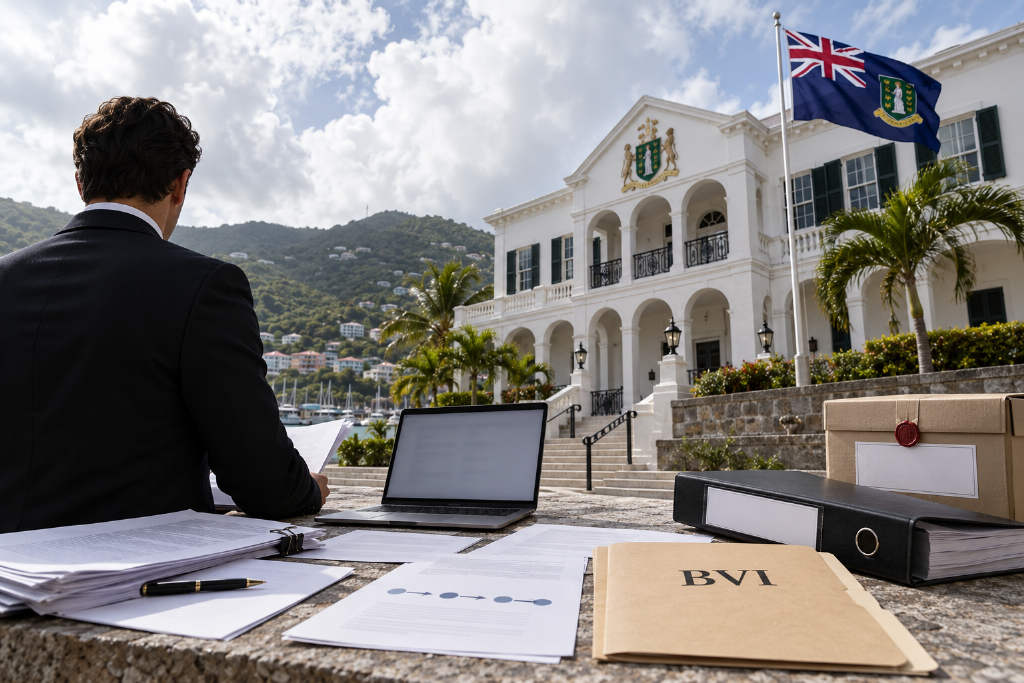
The 30 companies in question are incorporated in the British Virgin Islands, or BVI. That is the point. The BVI liquidation framework decides which company asset pool a victim would need to claim against.
On Jan. 9, 2026, the BVI court appointed three joint provisional liquidators for 28 companies tied to U.S. and U.K. sanctions, along with two more companies named in a U.S. civil forfeiture complaint. Their job is to take over company affairs, investigate accounts, and trace and protect assets. That appointment changes the list of possible debtors and assets victims may have to deal with later, but it did not launch a claims review or compensation process.
On June 11, the U.S. Bankruptcy Court for the Southern District of New York recognized the BVI proceeding under Chapter 15 of the U.S. Bankruptcy Code. That lets the provisional liquidators ask for help in the United States and coordinate recovery work there. But it did not decide which traced assets belong to which of the 30 companies, and it did not merge the U.S. criminal case, the Bitcoin civil forfeiture case, and the BVI company estates into one compensation pool.
The Oct. 28 update pushed the matter only as far as possible future filing. Nothing more. According to the liquidators, there is currently no claims or distribution process. A claims procedure, adjudication of requests, and distributions would be created only if the case later goes into formal liquidation and enough funds are available. Potential Chinese victims would not be shut out just because of nationality or location, but each person would still have to link a loss to a specific debtor and get through the liquidators' review.
Filing eligibility and claim recognition are separate hurdles
Section 209 of the BVI Insolvency Act governs proof of debt in a formal liquidation. Creditors have to submit a written claim. Liquidators may ask for a sworn statement, extra facts, and documentary evidence, and they may accept a claim in full, accept it in part, or reject it.
So victims are left having to prove several different things on separate tracks: the amount of loss, the payment path, and why one particular company in liquidation should carry contractual, tort, or other legal liability.
Overseas creditors in the BVI usually do not have to go through an extra filing procedure. But the report says that general rule does not mean Chinese victims in this case already have notice rights or recognized claims. Sections 446 and 447 cited in the statute sit in Part XVIII, which has not yet come into force. They cannot be used to argue that Chinese victims already hold the cross-border participation or notice rights described there. The company names, forms, filing address, and deadline here still depend on a formal notice.
The report also points to paragraph 37 and its footnotes in a U.S. civil forfeiture complaint. In that example, the U.S. government alleges that a California victim transferred more than $400,000 in crypto assets between July and August 2021. The funds moved through three addresses, and later more than $350,000 in Tether USD, or USDT, entered another address allegedly controlled by Chen Zhi. Transaction records may help show payment and trace where funds moved, but the on-chain USDT path still must be tied to the property or legal liability of a specific BVI company. The article is blunt on this: that narrative is an allegation by the U.S. government, not a fact already established by judgment.
127,271 BTC must be kept separate from BVI company assets
A separate U.S. civil forfeiture complaint targets about 127,271 BTC and says those assets are held by the U.S. government. The roughly $15 billion figure cited by the U.S. Department of Justice was a market valuation from an October 2025 announcement, so it moves with the price of Bitcoin. And the complaint does not prove that the full Bitcoin amount belongs to the liquidation estates of the 30 BVI companies or has been set aside for Chinese victims.
Even if a company later enters formal liquidation and has assets available, the order of distribution under Section 207 of the BVI Insolvency Act would still control what ordinary creditors get. Liquidation expenses and statutory priority claims are paid first. Other recognized claims come after that, and if there is not enough money within the same rank, payment is made on a pro rata basis.
The article uses an example to explain the rule, not to forecast this case. If a company has assets left equal to only 20% of the total amount of recognized ordinary claims after earlier expenses are paid, creditors of the same rank would in principle receive only about 20%.
The outcome could stall at several different points. Short version: lots can break. Traced assets could be shown by a third party to belong to someone else. Fraud losses could be established but still fail to connect to a specific company's liability. Claims could be recognized but paired with too few assets. Or asset ownership, company liability, and claims could all be confirmed before any distribution happens. The report says the documents that would materially change expectations are a formal liquidation order, the distributable assets of each company, the total amount of recognized claims, and a distribution notice. Group-level asset headlines are no substitute for those denominators.
The most useful work now is a documented personal timeline
Victims can start with the first contact and preserve materials by date: the name of the app or website, the counterparty account, what was promised, each receiving bank account or on-chain address, the amount, any historical repayments, failed withdrawal attempts, and police reports.
Bank statements can support fiat payments. Exchange records and transaction hashes can show where crypto assets were sent from. Full chat logs and platform screenshots can help explain the inducement process. Original files, exported records, and full context are usually easier to verify than cropped or forwarded screenshots.
When organizing the file, the article suggests adding two columns to each item: "what this proves" and "how this connects to a specific company." Simple but useful. If an unfamiliar account claimed to be a Prince Group employee, that proves only that the statement was made. Company registry records, the named bank payee, platform agreements, fund-tracing documents, or an effective judgment may be needed to build identity and liability further. If the company still cannot be identified, the original clues should be kept intact, and intermediate accounts should not be rewritten or deleted.
Once a formal notice appears, applicants should verify the full company name, case number, deadline, filing address, and required forms through the BVI government, the court, or the provisional liquidation office. At this stage, there is no public claims or distribution process. Any offer of an "internal quota," "early locked compensation," or paid access to an asset pool cannot replace official documents. The report also warns people not to hand over wallet private keys, recovery phrases, or remote-control access.
Those materials may help a request get into review. They do not guarantee claim recognition, payment timing, or any eventual distribution ratio.