
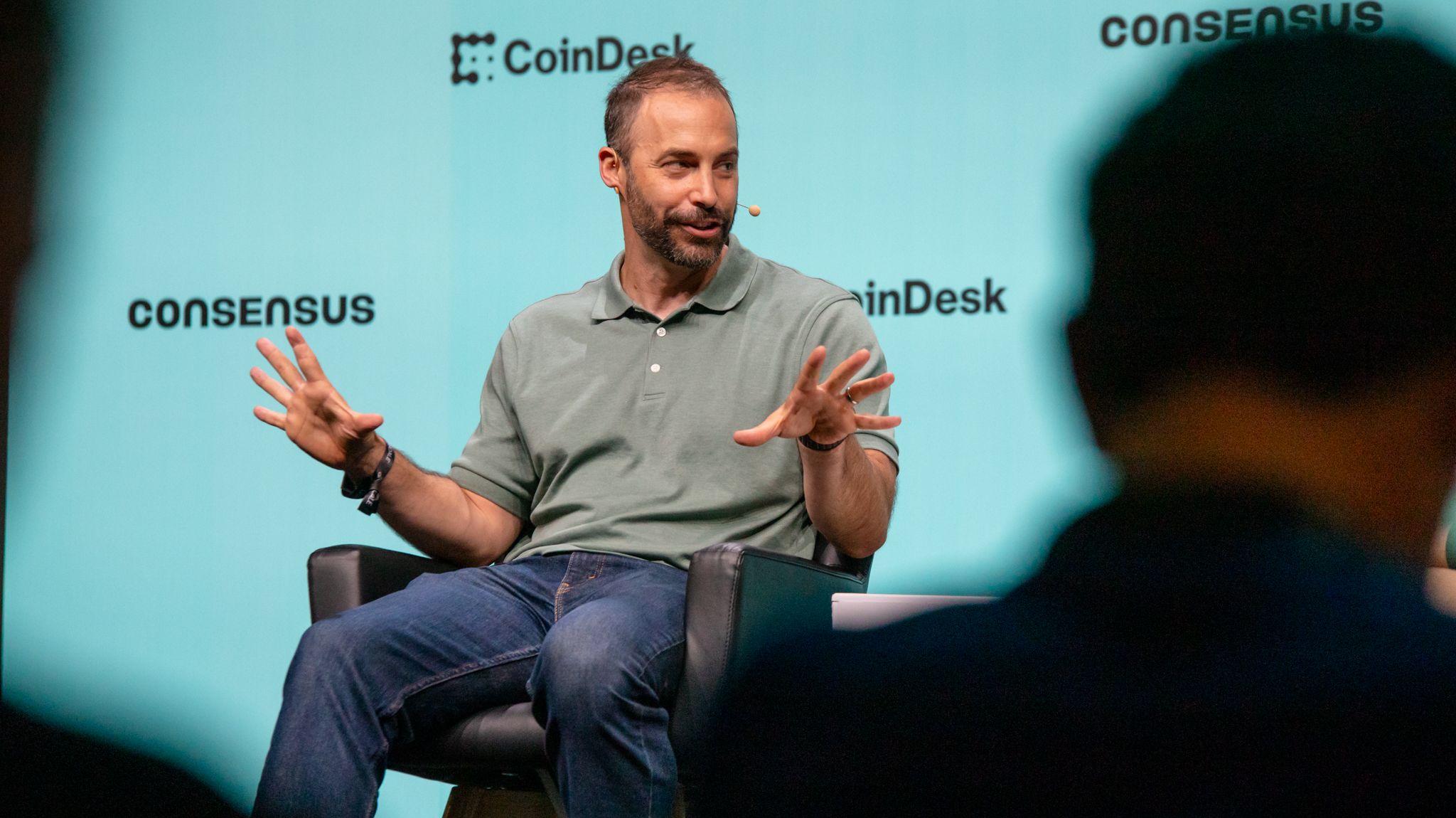
Project Eleven CEO Alex Pruden said the Bitcoin developer community should stop waiting for a clear quantum-computing timeline and start pushing a post-quantum signature scheme toward production. Speaking Wednesday at CoinDesk’s Consensus Miami conference, he argued that the risk trade-off already favors acting now rather than waiting.
In his view, the downside of moving early is limited: Bitcoin could add new cryptography and discover that it was not urgently needed yet. The downside of waiting is much harsher. Pruden said that a sufficiently capable quantum computer could use Shor’s algorithm, introduced in 1994, to derive private keys from public keys. He put the value of the assets at stake at roughly $2.3 trillion.
A network-wide shift that goes well beyond Taproot
Pruden said Bitcoin needs a new signature scheme that does not rely on the same classical mathematics behind ECDSA, the elliptic curve digital signature algorithm used today. The National Institute of Standards and Technology has already standardized post-quantum approaches based on hash functions and lattices, and discussion in the Bitcoin community has leaned toward the hash-based route. He pointed to BIP-360, proposed last year to lay the groundwork for a quantum-resistant Taproot output type, and to Blockstream’s implementation of a hash-based signature scheme on Liquid Network.
He warned that this transition would be much harder than the Taproot upgrade. Taproot took five years, he said, and even that process did not require every user to move. A post-quantum migration would be different. Every bitcoin holder, along with every wallet, exchange, and institution touching the asset, would need to take part.
Attackers could front-run pending transactions within a single block
Pruden described timing as a serious risk. If a quantum computer becomes capable before users complete the migration, an attacker could derive a private key from exposed information and then outbid the original transaction with a higher fee. He said this could happen within one block interval, allowing the attacker to preempt a pending transfer and seize the funds.
That warning also shapes his view on dormant bitcoin that may be vulnerable to quantum attacks. Pruden urged the community not to get stuck on that unresolved fight before dealing with the direct migration path. Harper framed the issue as covering more than 5 million dormant coins, including early mined blocks attributed to Satoshi Nakamoto through the “Patoshi” pattern.
Dormant coins remain a live dispute inside the debate
Pruden said the question of Satoshi’s coins is especially difficult because it puts two Bitcoin principles into tension: fixed supply and digital property rights. Asked for his personal view, he said dormant coins could potentially be “recycled” back to the end of the supply curve, extending Bitcoin’s mining incentive valley after block rewards are exhausted. If pressed, he said he would probably fall on the confiscation side, while adding that the final decision would come from the broader community, institutions, and the market.
On whether Bitcoin Core developers take the threat seriously, Pruden said the answer is mixed. Core is not a monolith, he said: some people clearly take the issue seriously, while others believe quantum computers may never arrive in a meaningful form. He contrasted that with the broader scientific view, saying that if one asks physicists, many would answer that it will happen, and a number of them believe the process is accelerating.
Pruden also said the same physics that makes quantum computing dangerous for current cryptography could also open the door to new cryptographic primitives. He pointed to key exchange protocols based on quantum entanglement and certified randomness, research areas connected to last year’s Turing Award.