


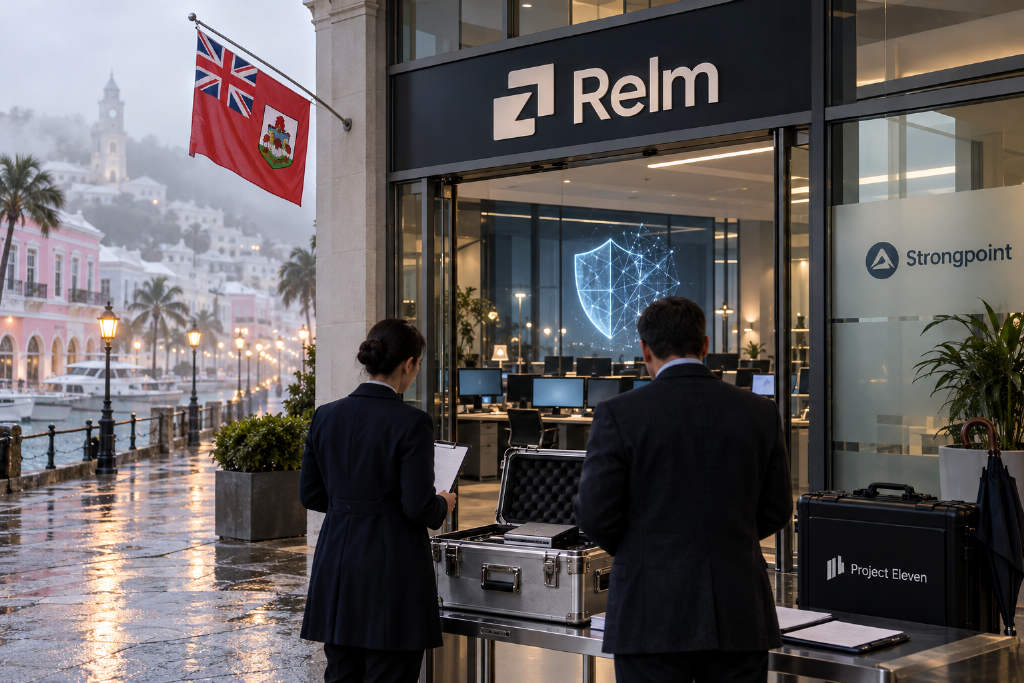
Project Eleven, a post-quantum security company, said Tuesday that Relm Insurance has joined as a development partner for Strongpoint, its custody product for institutions. The two companies will study whether the steps an institution takes to defend against future quantum computers can be weighed when an insurer underwrites its digital assets.
The companies said the arrangement is the first partnership to explore post-quantum security as a factor in pricing digital asset insurance. They also said the work is exploratory. According to the announcement, any effect on underwriting or insurance premiums would depend on further evaluation and on Relm’s own underwriting process. No discount, new policy, or timeline was announced.
What the partners plan to examine
The review will look at how exposed an institution’s keys are, how it signs and approves transactions, how ready it is to migrate, and which outside vendors it depends on.
Relm will also provide feedback on Strongpoint’s design, including its security controls, its auditability, and the kind of evidence a client might give an insurer to show it is prepared for post-quantum cryptography.
Joseph Ziolkowski, Relm’s founder and CEO, said in the release, “Quantum computing is a clear example of an emerging threat that should shape the way we assess risk today.” He said the work would examine how institutions identify their exposure, demonstrate effective controls, and prepare for the transition to post-quantum readiness.
Alex Pruden, Project Eleven’s CEO and co-founder, said Monday on Unchained while discussing the partnership: “I’m excited about partnering with Relm for Strongpoint because I think there’s a very real world in which, if you adopt some of these proactive solutions that we talked about, crypto agility, postquantum security, etc., I think there’s a cost saving. I think it can save you money on an insurance premium that would otherwise have to go up to account for these known and unknown unknowns.”
Relm is a Bermuda-domiciled specialty carrier founded in 2019. It writes coverage for companies in digital assets, AI, and other emerging sectors.
Why custody is getting attention
In theory, a sufficiently powerful quantum computer could work backward from a public key that is already visible to the private key controlling the funds.
Project Eleven launched Strongpoint on Oct. 7, with the Zcash Foundation as its first development partner. The platform runs classical and post-quantum signatures side by side and keeps an institution’s approval rules and audit trail separate from the cryptography, so the signing algorithm can be swapped out without rebuilding those controls.
Pruden said in Tuesday’s announcement that the open question is whether that transition happens on an institution’s own schedule or under pressure.
Coinbase told Bitcoin developers last week that a quantum-resistant upgrade has to work for big custodians. The company said its share of all bitcoin is about 5%. Earlier this month, Europol urged wallet providers to begin testing post-quantum upgrades.