
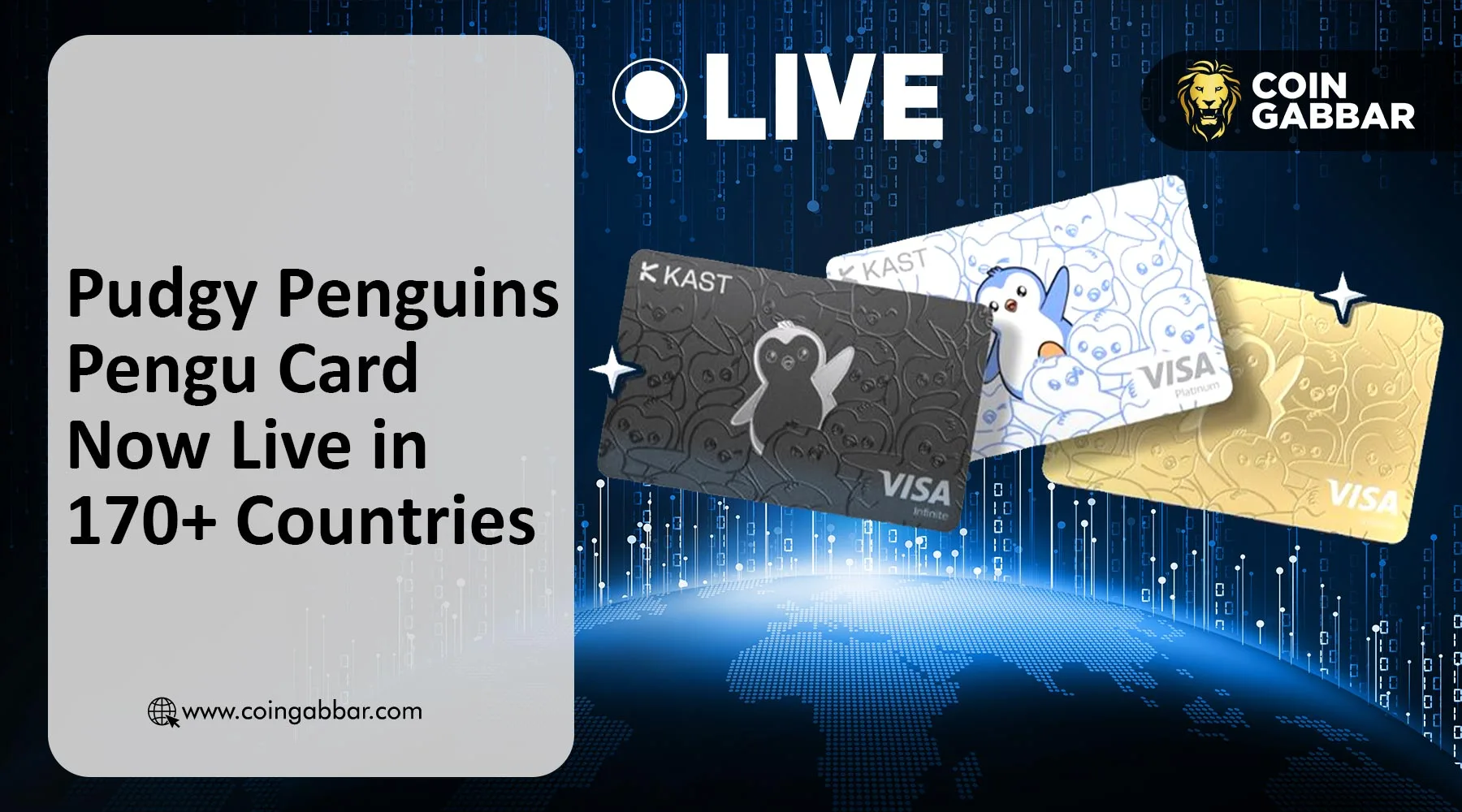
Pudgy Penguins has made a bold move into crypto payments. On July 23, the project unveiled the Pengu Card — a Visa debit card built in partnership with fintech firm KAST. The card is now live in over 170 countries and accepted at more than 150 million merchants globally.
The core pitch: users can spend cryptocurrencies and stablecoins directly at checkout, without first selling their holdings on a centralised exchange. Real-time crypto-to-fiat conversion happens at the point of sale, making the card usable both online and in physical stores. It can also be linked to Apple Pay and Google Pay, blurring the line between digital assets and traditional payment rails.
Three Tiers: From Free to Premium
The Pengu Card comes in three tiers: Standard, Black, and Gold. The Standard card is free and offers basic features. Black and Gold unlock higher cashback rates, priority support, and exclusive perks. This tiered strategy aims to attract both everyday spenders and high-value holders, turning the card into a versatile financial product for the digital economy.
Cashback and Yield: Earn While You Spend
Beyond payments, the card packs a rewards engine. Users can earn up to 12% cashback on purchases through a savings feature, and idle balances can generate 7-10% APY — with no lock-up period. Funds remain accessible at any time. This combination of spending incentives and passive income sets the Pengu Card apart from conventional debit cards.
Pudgy Penguins started as an 8,888-piece NFT collection in 2021 and has since grown into a broader ecosystem focusing on utility and mainstream adoption. The card is a natural extension of that vision, bringing the community together under a single financial infrastructure. Early buzz suggests strong demand for real-world crypto spending tools.
The launch reflects a broader industry shift: projects are moving beyond speculative trading toward tangible applications. By fusing NFT branding with fintech rails, Pudgy Penguins is staking a claim at the intersection of culture and utility. Still, crypto assets remain highly volatile — users should manage risk accordingly. This is not financial advice.