
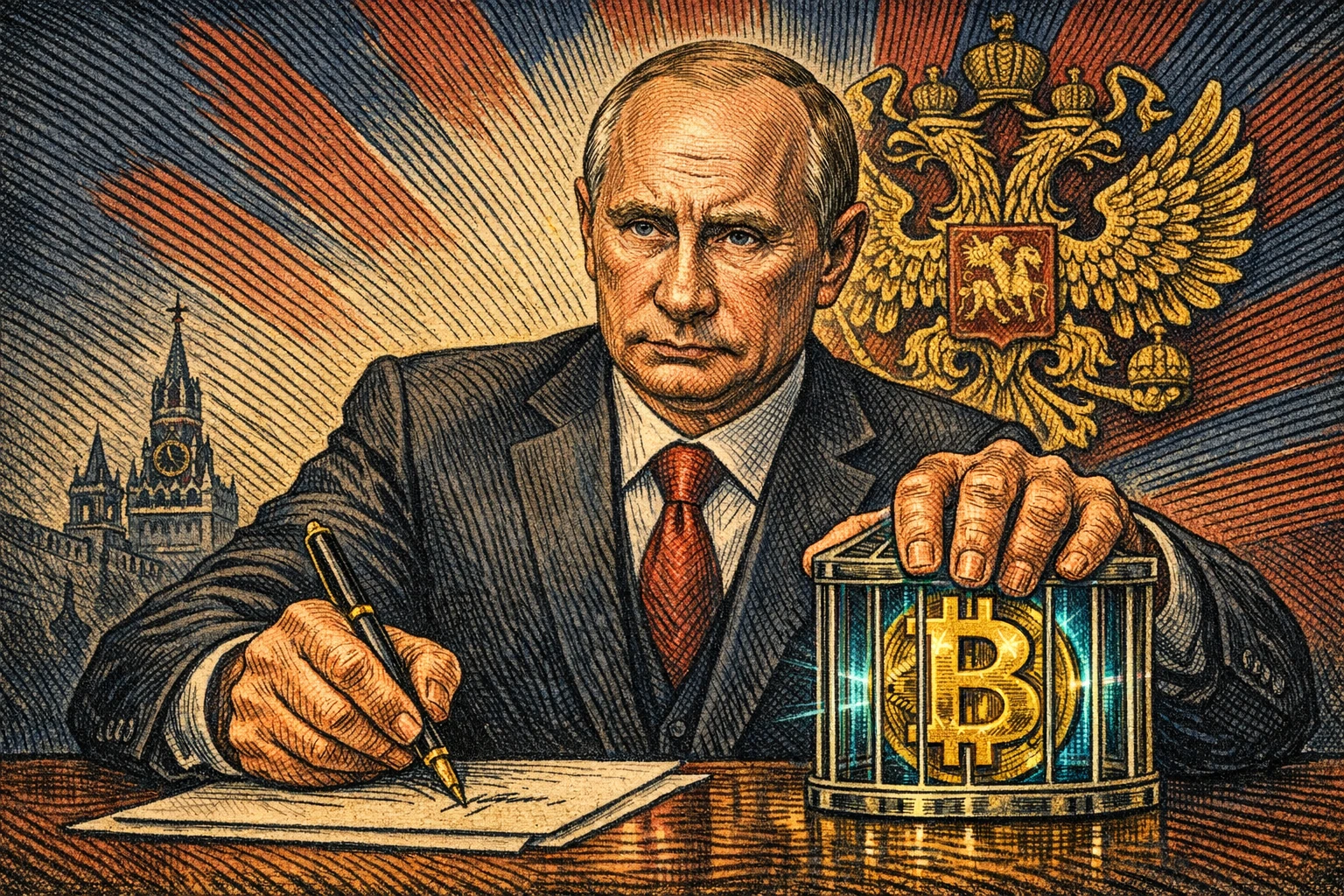
Russian President Vladimir Putin has signed a law amending the country's criminal code, officially classifying cryptocurrencies as intangible property and granting courts the power to seize Bitcoin and other digital assets during criminal investigations. According to Kommersant, the move brings crypto under the jurisdiction of state law enforcement.
Seizure Procedures Specified: Token Type, Quantity, and Wallet Address Required
Deputy Justice Minister Elena Ardabyeva said the law formalizes existing digital asset seizure protocols and provides a clear legal pathway for cooperation with foreign crypto exchanges. Under the new rules, prosecutors or police must specify the token type (e.g., Bitcoin, Ether), quantity, and relevant wallet address when seeking a seizure order. This standardized process aims to make crypto forfeiture as legally robust as traditional asset freezes or property liens.
Experts Warn: Kremlin May Block Foreign Exchanges This Year
Multiple analysts warn that the Kremlin could start blocking citizen access to foreign crypto exchanges as early as this year. Reports indicate Russian crypto traders pay an estimated $15 billion annually in fees to global platforms. Authorities aim to redirect this volume to domestic regulated exchanges through technical blocks. This contrasts with Russia's earlier 2025 relaxation of retail crypto buying limits, reflecting a classic “state co-optation” strategy: allowing crypto but only within state-monitored frameworks.
Russia's Dual-Track Crypto Policy: Opening and Tightening in Concert
Recent Russian crypto policy follows a clear two-track approach: Opening track: Putin legalized crypto mining last year, making Russia the world's second-largest mining hub; retail investors can now buy up to $3,846 annually in Bitcoin and Ether; the government promotes Bitcoin for international trade to bypass SWIFT sanctions. Control track: The new law empowers courts to seize crypto; plans to block foreign exchanges; miners must report income monthly and complete KYC; civil servants must disclose or liquidate digital asset holdings. This “legalize first, nationalize later” logic aims to bring decentralized assets under centralized state governance — Russia seeks not to eliminate crypto but to ensure it remains under state control.