
QCP Capital said in a macro market report that Trump has paused a new round of military action against Iran but will continue the blockade. After meeting Qatar’s prime minister on November 9, Trump said military operations had been suspended for the time being. The two sides still have significant differences and have not reached an agreement.
Oil prices fall as central-bank policies diverge
Brent crude settled at $92.57 a barrel, down 5.85% on the day. The price fell further afterward and was about 18% below its October 30 level. QCP Capital raised the question of whether lower oil prices can continue to ease pressure for further rate increases.
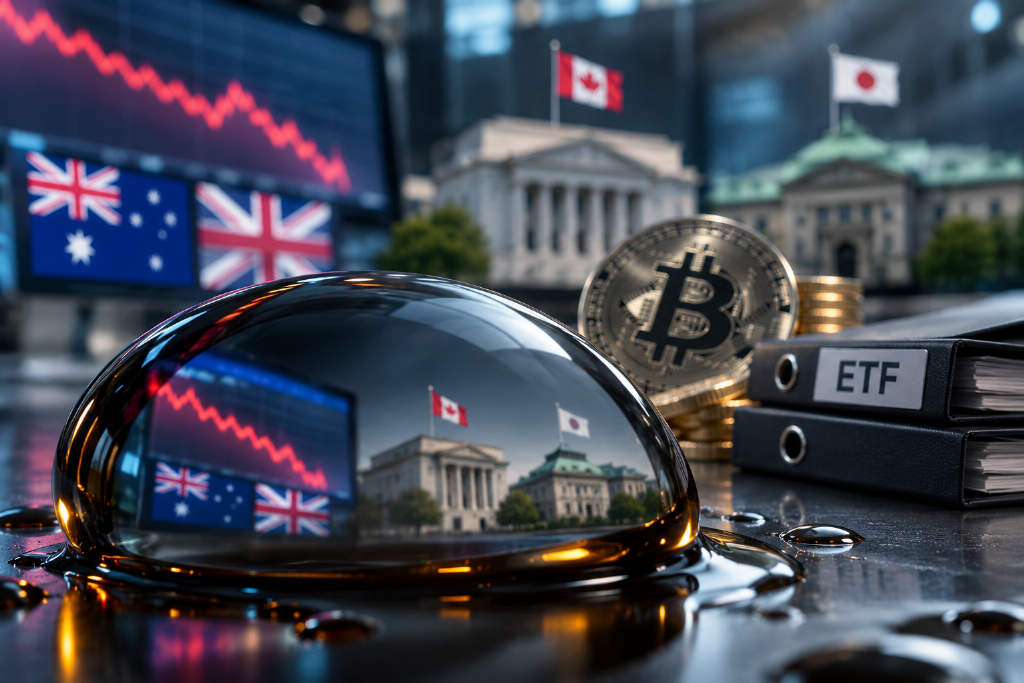
Monetary policy decisions were mixed across major economies. The Reserve Bank of Australia raised its policy rate to 4.85% in a 6-3 vote, while removing language indicating a policy bias toward another increase if necessary. The Bank of England raised rates to 4% in an 8-1 vote. The Bank of Canada and the Bank of Japan kept rates unchanged, while market pricing for rates in both countries moved lower.
Canadian employment fell by 4,700, compared with market expectations for an increase of 14,000. In Japan, the Nikkei 225 index dropped 6%, while the yield on two-year Japanese government bonds fell 12.8 basis points.
US data-center projects face tighter approval conditions
In the artificial-intelligence sector, the Democratic Party won both chambers of Congress and five governor seats in the United States. QCP Capital expects 59% of the data-center capacity currently planned in the country to face new restrictions or higher approval barriers.
Strategy buys 1,036 BTC
In crypto markets, Strategy bought 1,036 BTC for $81.9 million. The company also repurchased $188.3 million worth of STRC preferred stock. The buyback was about 2.3 times the amount spent on its Bitcoin purchase, with funding that included the sale of $283.8 million worth of MSTR shares.
Spot Bitcoin ETFs recorded cumulative net outflows of $1.2324 billion from November 2 to November 6.
QCP Capital said the market is watching whether a deadlock in the Iran negotiations could push inflation risks higher again and prompt the Bank of Canada and the Bank of England to resume rate increases first.



