
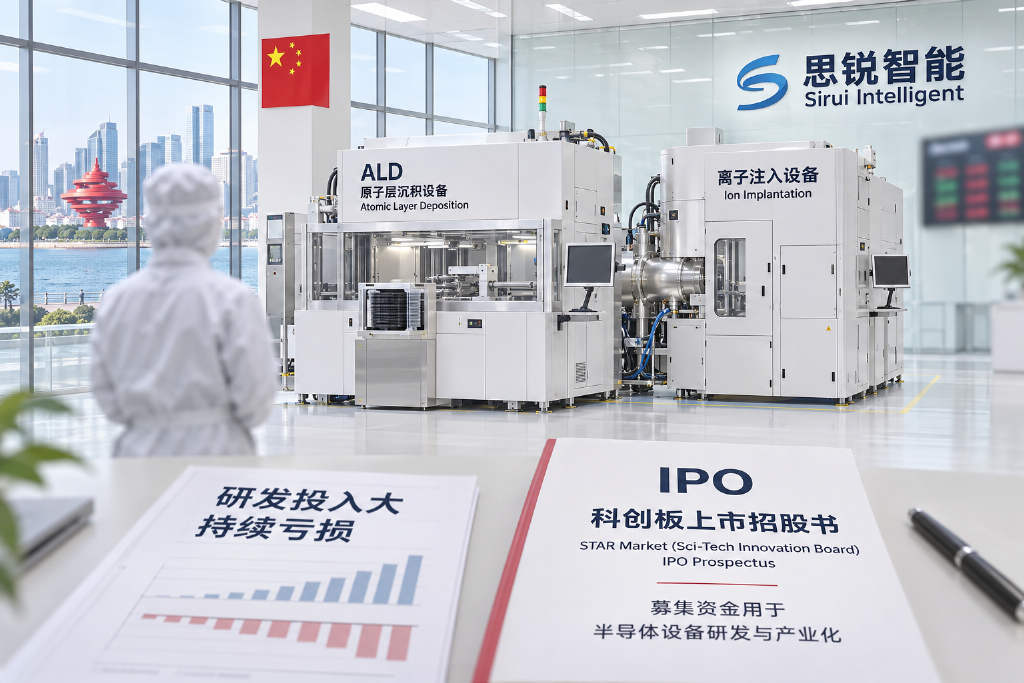
Qingdao Sirui Intelligent Technology Co. has disclosed a draft prospectus for a planned listing on Shanghai’s STAR Market, according to the filing. Guotai Haitong Securities is acting as the sponsor. The Shandong-based semiconductor equipment maker plans to raise 2 billion yuan for an advanced semiconductor equipment research and manufacturing center, a high-end semiconductor equipment research project and working capital.
Sirui develops, manufactures and sells atomic layer deposition equipment and ion implantation equipment for integrated circuits, power devices, research institutions and display devices. It also supplies spare parts and related technical services. The company describes itself as one of the few Chinese firms to have made key technology breakthroughs in both equipment categories, and says it holds a position in the atomic layer deposition segment.
Atomic layer deposition and ion implantation are core products
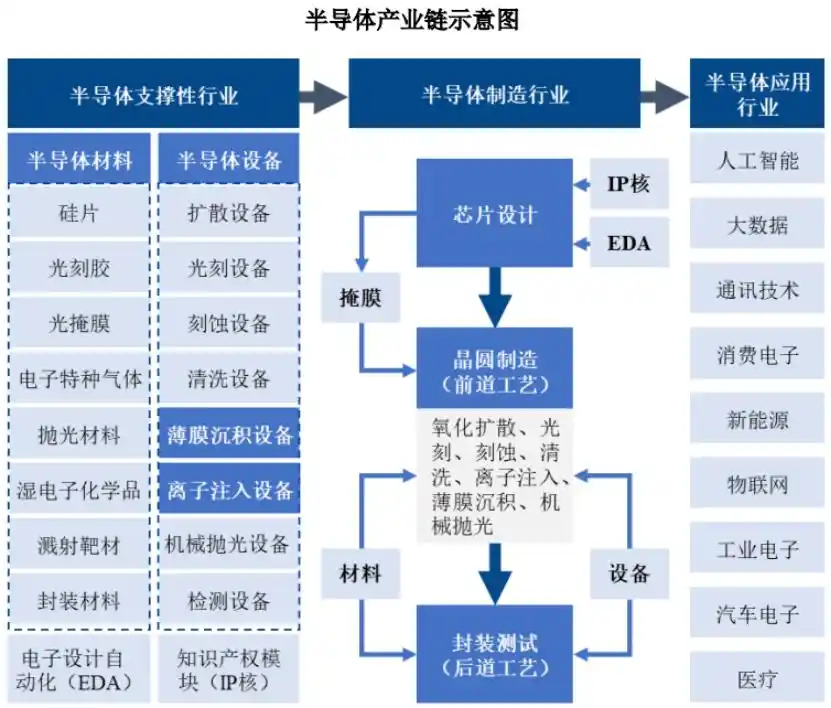
The semiconductor supply chain covers materials, equipment, electronic design automation and intellectual property cores on the upstream side. Chip design, wafer fabrication and packaging and testing make up the middle of the chain, while artificial intelligence, big data, communications technology, consumer electronics, new energy and the Internet of Things are among the downstream application areas.
Sirui operates in semiconductor equipment. Its products are used in front-end manufacturing, mainly in thin-film deposition and ion implantation. These processes form functional material layers and introduce dopants into semiconductor materials.
The company’s atomic layer deposition lineup includes the Transform, TFS, P, Spatial ALD and Genesis series. Its ion implantation products include high-energy, high-current, medium-current, hydrogen-ion and SiC series.
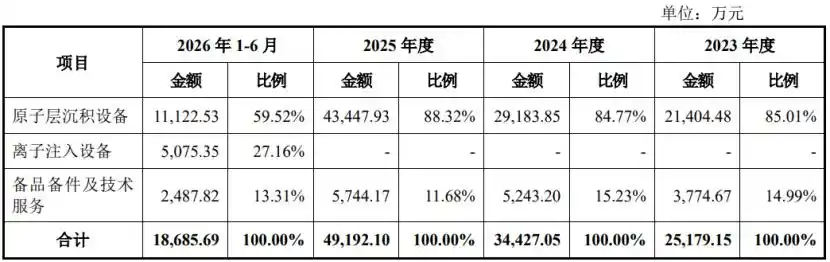
From 2023 through the first half of 2026, the share of revenue generated by atomic layer deposition equipment fell from 85.01% to 59.52%. Spare parts and technical services each accounted for more than 10% of revenue during the reporting period. Ion implantation equipment contributed about 27% of revenue in the first half of 2026.
Revenue has grown, but Sirui has not yet reached profitability. Revenue was about 349 million yuan in 2023, 363 million yuan in 2024, 495 million yuan in 2025 and 190 million yuan in the first six months of 2026. Net profit for those periods was approximately negative 304 million yuan, negative 271 million yuan, negative 267 million yuan and negative 231 million yuan, respectively.
The company therefore accumulated losses of more than 1 billion yuan over the three and a half years covered by the filing. It expects to reach the break-even point no earlier than 2029.
Sirui attributed the losses to its rising revenue scale and the time needed for operating leverage to emerge. Its products have high technical barriers and require substantial research spending. Research and development expenses represented 41.63%, 53.11%, 47.08% and 61.05% of revenue in the respective reporting periods.
Sirui also runs a global operation with research and manufacturing centers in China and Finland, which the company said has resulted in relatively high operating, management and coordination costs.
Suppliers, customers and inventory
Sirui purchases mechanical, electronic and electrical, vacuum, transfer, fluid and instrumentation systems, as well as consumables. Suppliers listed in the filing include Beijing Keruituo Technology, Wuxi Chengcheng Electronic Technology, Sumitomo Heavy Industries Cryogenics Shanghai and Jinkang Semiconductor Technology Shanghai.
Its customers include semiconductor manufacturers, display device makers and research institutions. The disclosed customer list includes Shanghai Xinwei Semiconductor, IMEC, Innoscience, Anhui Xitai, Visionox Technology, BOE and Piotech.
Sirui’s business covers more than 40 countries and regions. During the reporting period, most overseas business was conducted through its Finnish subsidiary Beneq, and overseas customers accounted for a relatively high share of revenue. Changes in overseas industry regulation or tax policy could expose the company to compliance and tax risks in those markets, according to the filing.
Inventory also increased sharply. At the end of the reporting periods, the book value of inventory rose from about 500 million yuan to roughly 1.3 billion yuan. Inventory’s share of current assets increased from 54.71% to 65.69%, leaving the company exposed to inventory write-down risk.
Competition remains intense across the equipment market
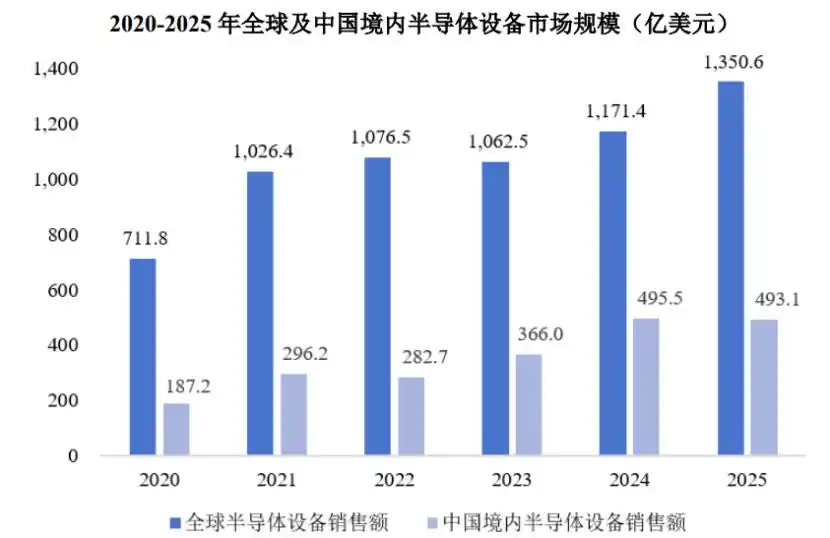
Demand for semiconductor equipment has benefited from growth in downstream applications such as artificial intelligence and new-energy vehicles. China has been the world’s largest semiconductor equipment market since 2020.
SEMI data showed global semiconductor equipment sales of $135.06 billion in 2025, up 89.74% from 2020. Sales in mainland China reached $49.31 billion, an increase of 163.41% from 2020.
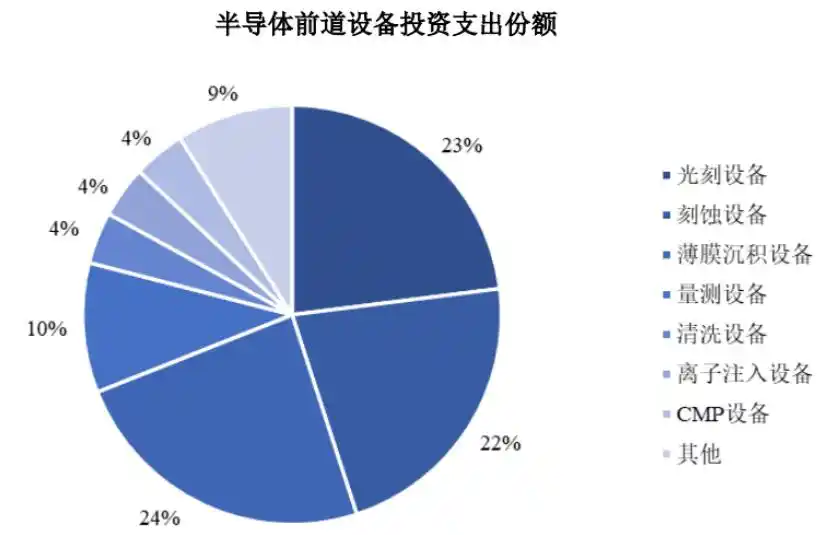
Front-end semiconductor equipment mainly refers to wafer fabrication tools, including lithography, etch, thin-film deposition, ion implantation, cleaning and chemical mechanical planarization equipment. Back-end equipment is used mainly for packaging and testing.
According to SEMI, wafer fabrication equipment accounted for 89.23% of global semiconductor equipment spending in 2024. Inspection and packaging equipment accounted for 6.45% and 4.32%, respectively. Within front-end equipment, lithography, etch and thin-film deposition are the main categories. Thin-film deposition and ion implantation, the areas linked to Sirui’s products, represented 24% and 4%, respectively.
The atomic layer deposition market is highly competitive and remains dominated by international companies. QY Research data showed that Piotech, Tokyo Electron and Lam Research together held 58.15% of the global atomic layer deposition equipment market in 2025.
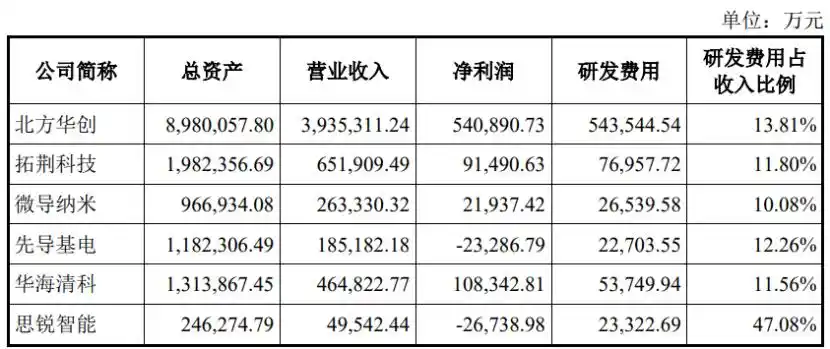
Chinese companies entered the sector later and have focused mainly on the domestic market. Their operating scale remains smaller than that of international leaders. In addition to Sirui, domestic participants include NAURA, AMEC and Wanye Microelectronics.
In 2025, Sirui held a 12.01% share of the atomic layer deposition equipment market for compound semiconductors, ranking third globally and first among Chinese suppliers. It ranked first globally in display devices, with a 14.72% share, and first in research applications, with an 8.29% share.
International companies including Applied Materials and Axcelis Technologies dominate ion implantation equipment. In 2025, those companies together accounted for 82.25% of the global market. International suppliers have long dominated China’s ion implantation equipment market, where domestic tools held a combined share of less than 6%.
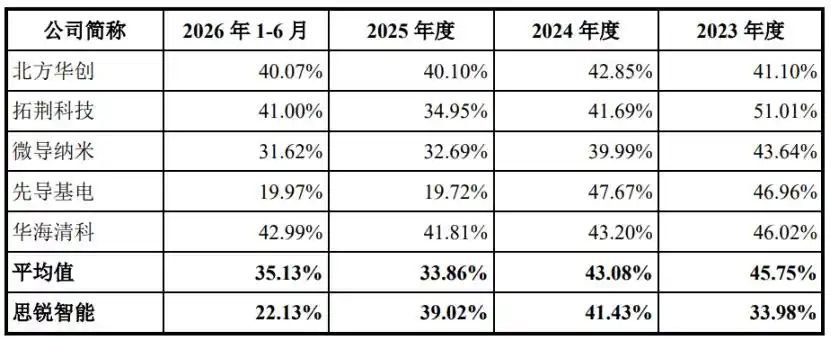
Compared with its peers, Sirui, which was established relatively recently, still has room to increase its total assets, revenue and net profit. Its gross margin on principal operations was 33.98%, 41.43%, 39.02% and 22.13% in the respective reporting periods, showing volatility.
The company’s gross margin was below the average for comparable companies in 2023 and the first half of 2026. Sirui attributed the gap mainly to a relatively high proportion of products with lower average selling prices and lower gross margins.
CRRC Sifang Institute is the largest shareholder
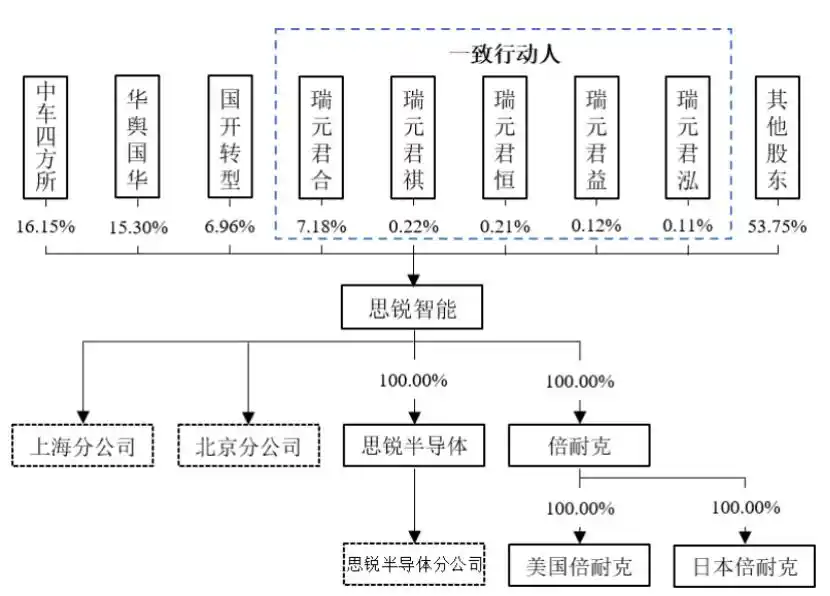
Sirui is registered in Qingdao, Shandong. Its predecessor, Sirui Limited, was established in 2018 with capital from Huayu Guohua and CRRC Qingdao Sifang Institute. The company was converted into a joint-stock company in 2025.
In 2018, Sirui Limited acquired 100% of Finnish subsidiary Beneq Group. Beneq’s main businesses are atomic layer deposition equipment and thin-film electroluminescent display technology. After the acquisition, Sirui carried out a series of integration and development measures at Beneq Group.
Sirui has a dispersed ownership structure, with no controlling shareholder or actual controller. The prospectus said this could reduce the efficiency of shareholder and board decisions on major matters. It could also leave the company exposed to a possible change in control after the listing, creating a potential business risk.
Before the offering, CRRC Qingdao Sifang Institute held 16.15% of Sirui, making it the largest shareholder. Huayu Guohua held 15.3% and was the second-largest shareholder. Employee shareholding platforms including Ruiyuan Junhe, along with Guokai Transformation, Guotiao Phase II, Huayu Gaoxin, Qianhai Zhaoxin, Hefei Shixi, Guoyun Dingxin and Chengdu Yuefa, were also shareholders.
Chairman and general manager Nie Xiang was born in 1978 and holds a master’s degree in business administration from Tsinghua University. He previously served as an assistant economist, economist, deputy director of the general office, office director, deputy general manager and director at CRRC Qingdao Sifang Institute. He has also served as a director and general manager of Sirui.
Director Yin Peiqiang was born in 1981 and holds a master’s degree in control theory and control engineering from Zhejiang University of Technology. Since April 2008, he has held a series of positions at CRRC Qingdao Sifang Institute, including electrical research and development engineer, chief engineer and deputy director of a systems development office, general manager of the electronics business and deputy chief engineer and head of the technology center.
Director Wang Jinyuan was born in 1988 and holds a master’s degree in chemical engineering and technology from Tsinghua University. She is a non-practicing certified public accountant. Her previous roles included technical manager at Huadian Heavy Industries’ coal chemical business, senior analyst at Shanghai iResearch Consulting and senior manager at Huayu Zhengxin. Since January 2020, she has served as assistant general manager and head of the investment department at CRRC Guochuang.
Deputy general manager and head of finance Guan Jianpeng was born in 1987 and holds a master’s degree in accounting from Dongbei University of Finance and Economics. He is also a non-practicing certified public accountant. His previous positions at CRRC Qingdao Sifang Institute included cost accounting manager in the finance department, deputy head of strategic investment and deputy general manager of the electromechanical parts business, and deputy head of strategic investment.
The filing was introduced by the WeChat account “Gelonhui New Stocks,” written by Fage Shuo Xin Gu.



