

Quant Network became one of the crypto market’s biggest movers over the past five days after The Clearing House, or TCH, said it had selected Quant to provide the underlying technology architecture for its On-Chain Money Initiative.
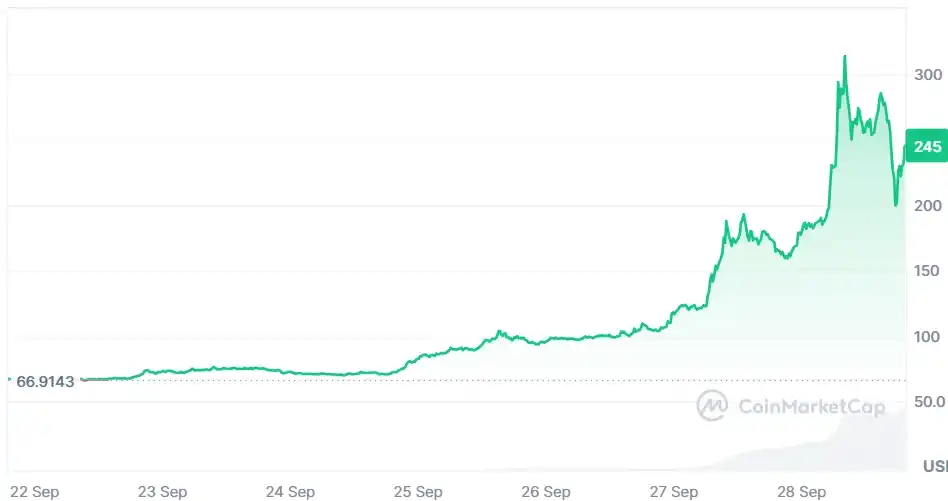
The announcement came on Sept. 24 and triggered a sharp rally in QNT, which gained about 300% over seven days after spending nearly a year trading below $100.
TCH is owned by 25 major U.S. commercial banks, including JPMorgan, Bank of America and Citigroup. Its RTP real-time payments network and CHIPS large-value clearing system handle substantial interbank settlement flows, with average daily processing across the clearing network exceeding $2 trillion.
For Quant, the mandate is more than a new business contract. It gives the company an entry point into the infrastructure layer of the U.S. banking system.
Quant has long focused on enterprise financial plumbing
From the start, Quant chose a business-to-business model. The company targeted banks, regulated institutions and large enterprises, building enterprise-grade interoperability infrastructure to connect conventional financial systems with different distributed ledgers.
The technical roots of that strategy go back to 2015. At the time, consortium chains and private chains were proliferating, but ledgers remained siloed. Traditional financial systems lacked a dependable translation and orchestration layer to interact with distributed ledgers, making cross-system value transfer difficult.
By late 2017, Quant had formally centered its product strategy on Overledger, a cross-ledger operating system that works independently of the consensus mechanisms used by underlying chains. Instead of rewriting the logic of those chains, it acts as an orchestration layer for messages, information flows and asset transfers across systems.
Its management profile also sets it apart from many crypto-native projects. Much of the team comes from traditional payments, cybersecurity and large multinational institutions.
- Founder and CEO Gilbert Verdian previously served as chief information security officer at Vocalink, a Mastercard company. He also held roles connected to the U.K. Treasury, the Federal Reserve’s payments security workgroup and committees linked to the Bank of England, and took part in work on ISO blockchain standards.
- Chief Product Officer Martin Hargreaves also came from Vocalink, holds an ACH automated clearing patent and has been involved with the Digital Pound Foundation.
- The CTO, COO and board members bring backgrounds in industrial-scale systems, multinational consulting, Wall Street wealth management and security work for large public- and private-sector organizations.
In 2018, Quant raised about $26 million through a token sale. During its business expansion phase, it also secured strategic funding from European venture firm Alpha Sigma Capital and brought in fintech advisory firm Alchemmy and Tech Nation, the U.K. government-backed technology innovation incubator network. That tied the company more closely to Europe’s local incubator and enterprise advisory ecosystem.
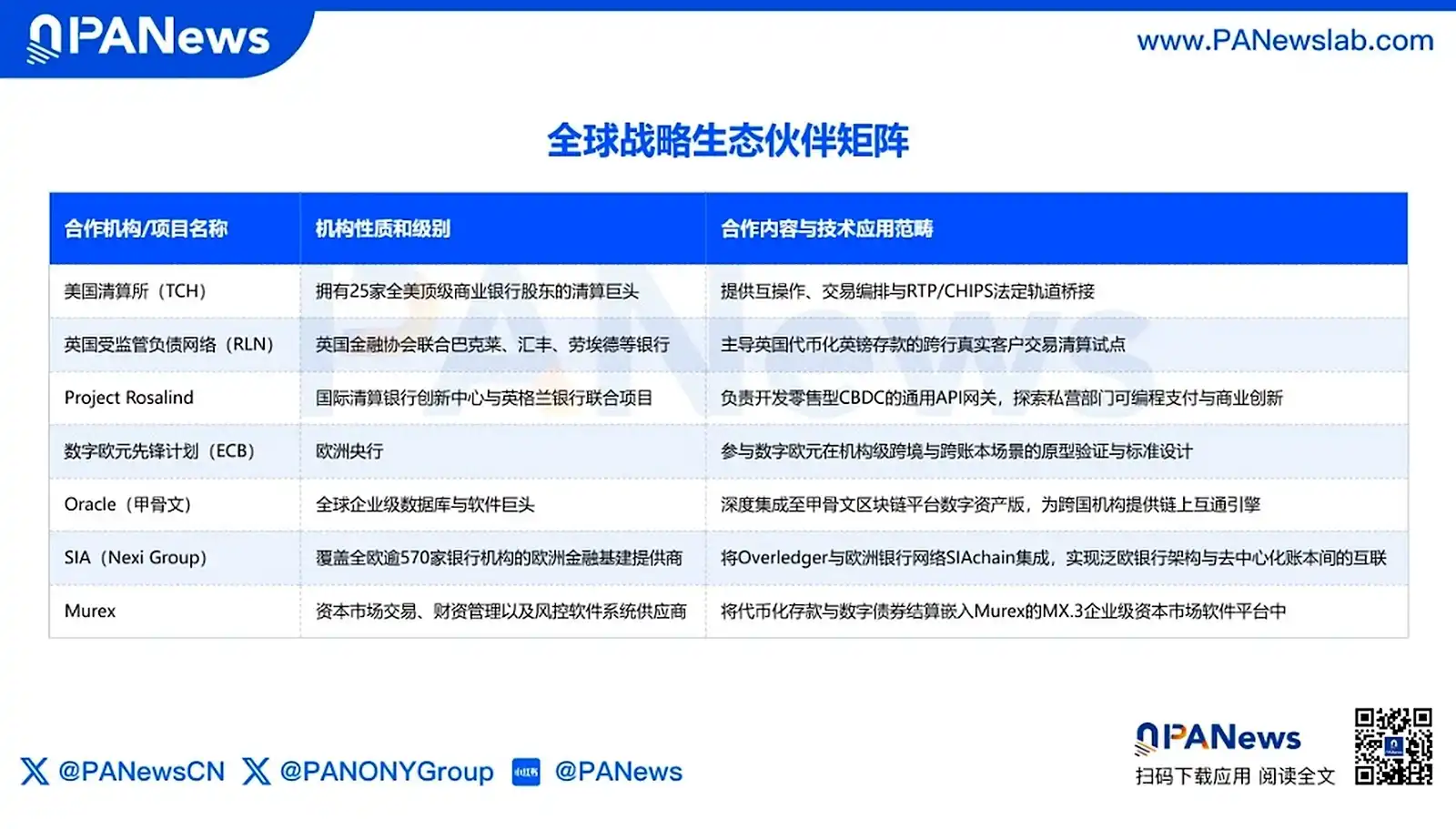
Before the TCH deal, Quant had already been involved in the U.K.’s RLN regulated liability network token project, the European Central Bank’s digital euro prototype work, and projects linked to Oracle, SIA’s European banking network and Murex capital markets systems. Its client and project footprint already extended across central banks, commercial banks and financial software groups in Europe and the U.S. The TCH partnership looks like a major push into a domestic U.S. clearing hub after years of institutional business development.
TCH is building a shared clearing layer for tokenized bank deposits
TCH announced the Quant partnership on Sept. 24, but the groundwork started earlier this year.
On June 5, TCH launched the On-Chain Money Initiative with broad support from most of its shareholder banks, covering nearly all top U.S. commercial banks. Its goal is to build a shared cross-institution clearing layer that allows tokenized bank deposits to move atomically and in real time within a regulated financial network.
That requirement lines up directly with Quant’s core product. In TCH’s design, Quant serves as the technical foundation for interoperability, transaction orchestration and process management in the on-chain money network, while also linking the system to existing fiat payment rails such as RTP and CHIPS.
Verdian framed the deal in broader terms, saying that because TCH sits at the center of the U.S. banking industry, the partnership will set a standard for banks globally.
Interbank clearing and settlement on blockchain systems has long faced two bottlenecks. Banks use different ledger architectures that do not naturally interoperate, and on-chain bookkeeping environments have not had native links to central-bank-centered fiat payment systems.
Quant’s answer is to use Overledger as a common orchestration engine spanning heterogeneous ledgers and bank systems. In operational terms, when a customer holds tokenized deposits issued by a commercial bank and sends a payment instruction, Overledger handles system coordination and message transformation across multiple environments.
The value proposition rests on a non-intrusive design. Participating banks do not need to dismantle existing compliance and risk-control systems or rebuild their operating stacks to connect tokenized deposits to a new on-chain clearing network.
Quant’s role sits in interbank clearing and settlement, while the ultimate focus of the initiative is tokenized deposits.
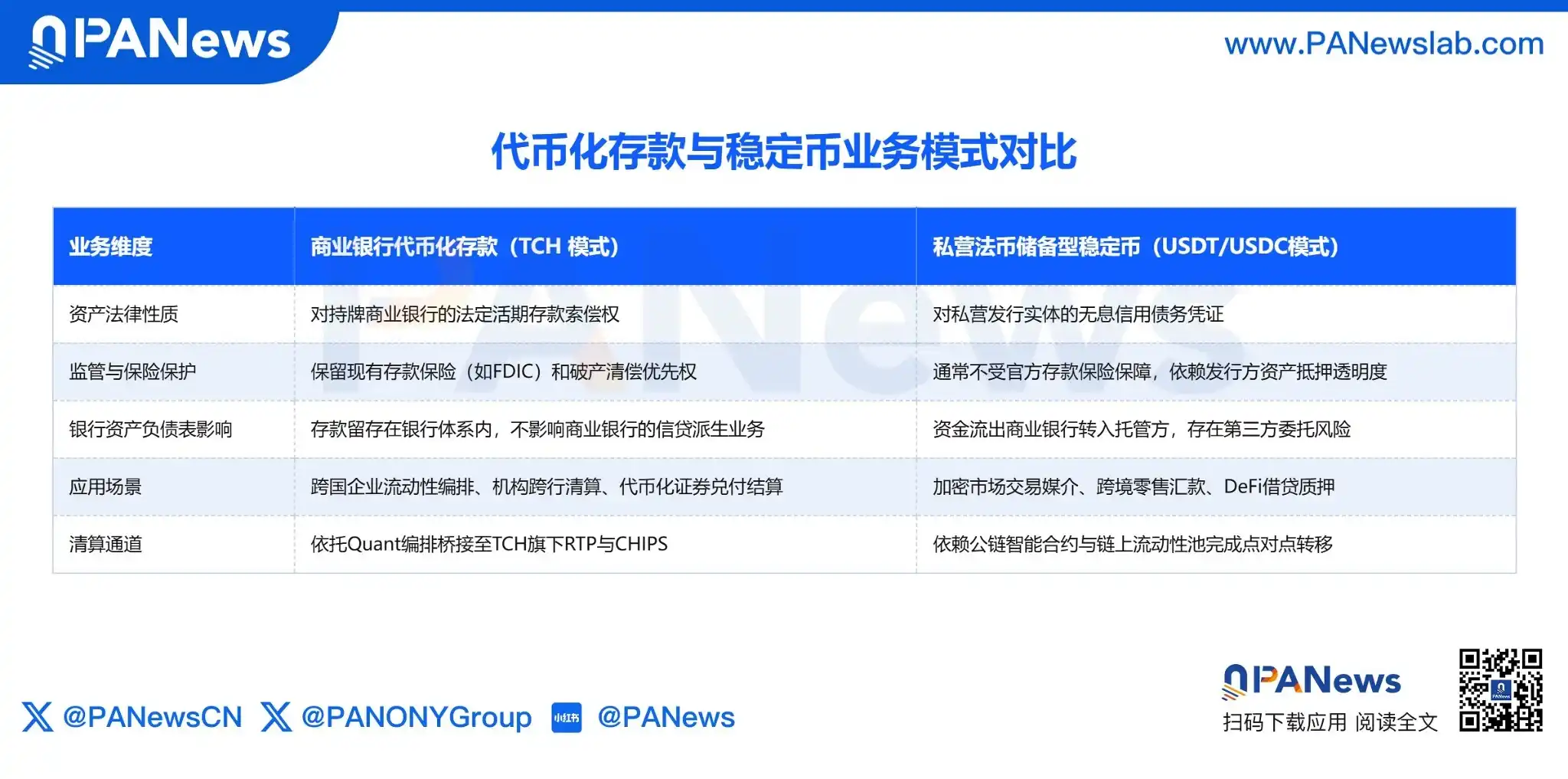
As described in the source article, tokenized deposits are still commercial bank deposits in substance. Traditional deposits or cross-border payments usually cannot be transferred or settled in real time outside banking hours. Stablecoins, by contrast, are issued and managed by specific private entities outside the bank deposit system and can generally move in real time.
For banks, tokenized deposits offer a digital, programmable form of transfer. That could help reduce the threat of deposit outflows toward privately issued stablecoins and turn batch settlement limited by banking hours into round-the-clock automated fund movement triggered by smart-contract conditions.
QNT has been repriced, but token value capture remains unproven
Independent analyst Jan Nieuwenhuijs publicly backed QNT on social media and said every investor should buy at least one QNT. The article noted that he had made a similar call for at least one BTC in 2013, and the market responded positively this time as well.
Even so, the TCH agreement is only a starting point. The recent move in QNT reflects a market repricing of Quant’s possible role inside traditional finance, but a critical gap remains between commercial adoption and token value accrual.
According to Quant’s white paper, institutions that connect to Overledger gateways and use cross-ledger interoperability services pay licensing fees and API settlement costs. With QNT supply described as close to fully circulating and capped, even modest institutional demand tied to adoption could, in theory, lock up some circulating supply and support a scarcity premium.
That thesis, however, is not guaranteed.
Quant allows clients to pay platform fees in U.S. dollars and also supports QNT payments. That means customers do not necessarily need to keep buying QNT in order to use the software.
In other words, a large enterprise contract for Quant does not automatically mean a large increase in demand for QNT. TCH is buying Quant’s software infrastructure service, not necessarily committing to large secondary-market purchases of the token. The company has not disclosed the contract size, revenue expectations or any token holding requirements.
Timing also matters. TCH’s tokenized deposit network is expected to open for pilot access only in the first half of 2027 and remains in the buildout phase today. That leaves several quarters before live deployment, which suggests QNT’s current price is driven more by commercialization expectations than by realized network revenue.
Competition is another factor. The market for tokenized banking infrastructure already includes strong participants such as JPMorgan’s in-house Kinexys and the Canton Network. TCH’s decision gives Quant an advantage in timing, but it does not amount to an exclusive win.
The partnership pushes blockchain deeper into bank settlement infrastructure
The TCH-Quant partnership shows how financial institutions are moving beyond surface-level asset tokenization and into the infrastructure of commercial bank deposits and always-on clearing networks.
Earlier market discussions around tokenization focused mostly on the asset layer. This time, the change is happening at the clearing layer itself, touching bank deposits, institutional settlement and payment system interfaces, all with a more programmable structure.
Quant has secured a meaningful seat at the table, but the roughly 300% move in QNT reflects much more expectation than delivered financial performance. The path from technology adoption to booked revenue, and then from revenue to token value capture, is still a long one.