
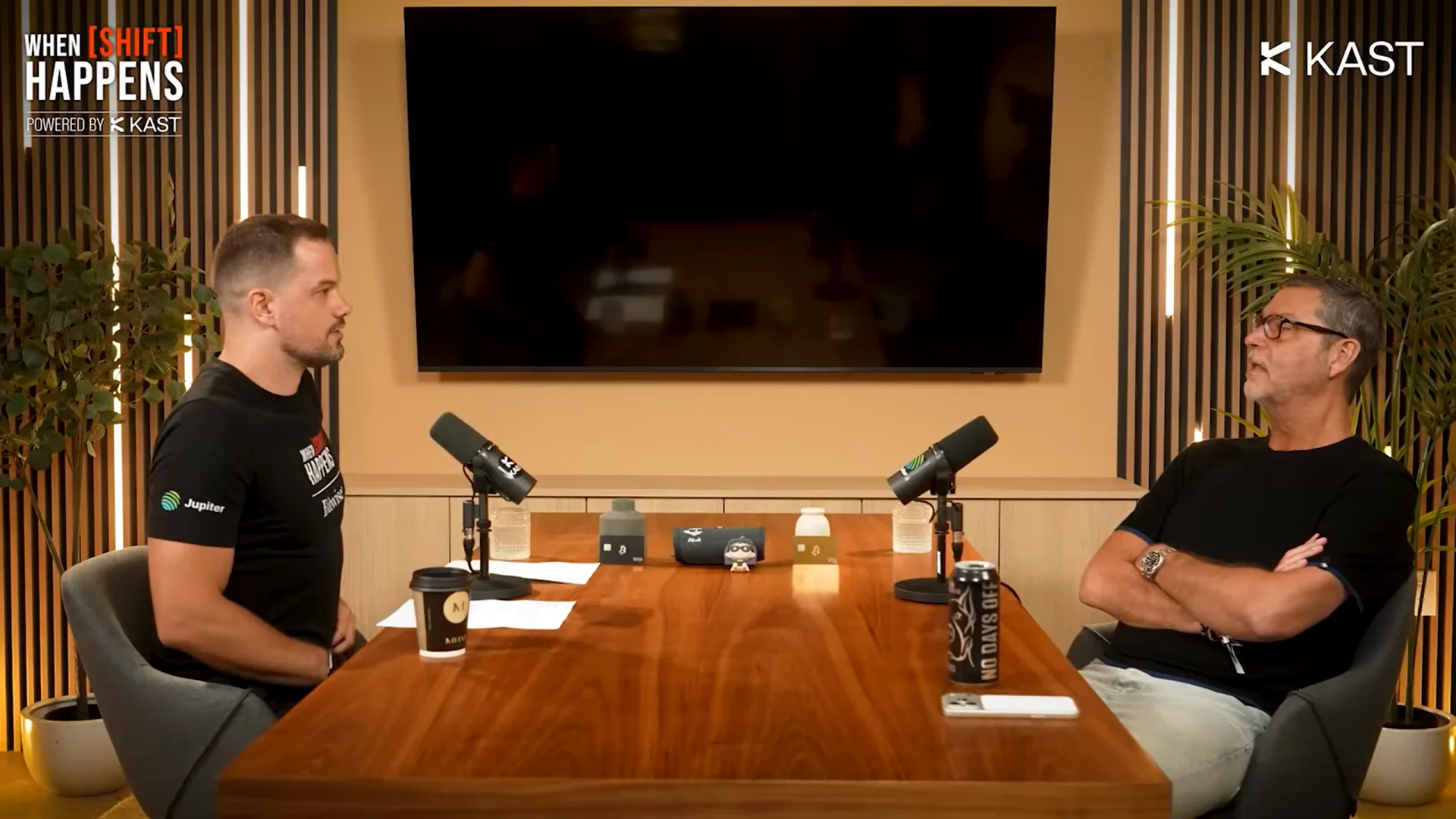
Real Vision co-founder Raoul Pal said in a recent appearance on the podcast When Shift Happens that the AI race is turning into the largest capital event in human history, and that crypto holders are positioned well if that trend continues. His central claim was blunt: an economic singularity could arrive in roughly four years, which is why he does not think investors should be too quick to sell core crypto holdings.
Pal said two forces sit behind the current market setup. One is expanding liquidity. The other is the global rush into AI. In his view, the contest over AGI is too large for major participants to slow down, because doing so would hand an advantage to rivals. He framed it as a state-level and corporate-level competition, with the US and China as the only countries able to sustain the costs at full scale.
Why Pal thinks an economic singularity is forming
Pal described the economic singularity as the point where existing systems can no longer keep up with the speed of technological change. He tied that to the familiar mix of population growth, productivity growth and debt growth, then argued that AI and robotics effectively create a new class of economic actors. In the interview, he said that if the world moves toward 10 billion, 50 billion, or even more intelligent agents, the pace of activity would exceed what current economic structures were built to handle.
He also contrasted AI with earlier technology adoption curves. Most past networks, he said, followed Metcalfe’s law, while AI looks closer to the kind of exponential scaling associated with Reed’s law. Pal cited an estimate that by 2028, AI could generate more text each year than all text produced by humans since the invention of the Gutenberg press. That matters in his framework because capital formation, business creation and market capture could all happen much faster than before.
Why he still favors crypto over a long horizon
Even with AI-linked equities attracting intense attention, Pal said crypto still stands out as one of the strongest risk-reward trades over a longer cycle. He acknowledged that chipmakers occupy a critical position in the AI stack, yet argued that crypto has what he called an unlimited total addressable market. His reasoning is tied to AI agents: if they scale in large numbers, they may carry their own wallets and operate directly onchain.
That changes the size of the addressable user base. Earlier crypto market projections were mostly based on human users. Pal said the picture looks very different once potentially unlimited AI agents are added. He also argued that fiat debasement is not going away, that financial infrastructure is moving toward blockchains, and that crypto investors still have time before institutional adoption is fully priced in. In his words, the worst phase has already passed because global liquidity is accelerating.
Bitcoin pullbacks, Layer1 networks and his positioning
On Bitcoin’s move down from recent highs toward the $60,000 area, Pal said this should be read as a painful correction inside a bull market rather than a bear market. He pointed to crypto history, saying that 50% drawdowns in Bitcoin are normal within major cycles, while altcoins often fall harder. He used Solana as an example, noting that it dropped 80% in the previous cycle before its major upside move. What makes the current period feel worse, he said, is the longer, choppier structure of the correction.
Pal drew a sharper distinction between Bitcoin and smart-contract Layer1 assets. Bitcoin, in his view, remains a store-of-value asset aimed at capturing part of global savings. Layer1 networks, by contrast, are the base infrastructure layer of the digital economy and may capture far more upside if blockchain usage spreads across finance and AI-driven applications. He said the market could eventually narrow to three to five core chains.
Among the projects he mentioned, Ethereum was presented as the network with the densest concentration of economic value and developer talent. Solana, he said, has already proven that it can succeed at scale. Sui remains earlier in its lifecycle, but Pal argued that its programmability, throughput and finality place it in a different category technologically. He also rejected the use of traditional discounted cash flow models for blockchain valuation, arguing that low fees and speed are features of competitive networks, not signs of weakness.
What he bought in the dip and why he prefers holding
Pal said he used the pullback to buy some Sui and a smaller amount of Zcash. His case for Zcash combines privacy and its resistance to quantum-computing threats, though he added that such assets could face government pushback. The broader point was consistent with the rest of his framework: he buys when markets are deeply oversold rather than trying to trade every swing.
He said that if an asset reaches the lower end of its logarithmic trend channel and enters an oversold zone of about one to two standard deviations, buying and then doing very little has historically delivered stronger compounding than attempting to sell tops and re-enter bottoms. Most people, he said, fail at that game. His conclusion was simple: in crypto, the people who made the most money were often the ones who did the least.
DeFi, NFTs and the next four years
Pal dismissed the idea that DeFi is finished because of recent hacks. He argued that security failures force better products to be built, and that the biggest future users of DeFi may be machines rather than humans. AI agents, as he described them, could rebalance assets, move across chains and settle trades in milliseconds without relying on consumer-facing interfaces.
He also kept a constructive view on NFTs, though he tied a full recovery to a broader revival in crypto activity. Pal said he is preparing an NFT fund that would split capital between widely recognized trophy assets and mid-tier artists with stronger convex upside, while also taking part in NFT-backed lending.
His larger message stayed the same throughout the discussion. AI, autonomous agents, fiat debasement and the migration of finance onto blockchains may arrive on the same timeline. Pal said the economic singularity is about four years away, and he sees that window as the period to accumulate and hold digital assets rather than exit early.