
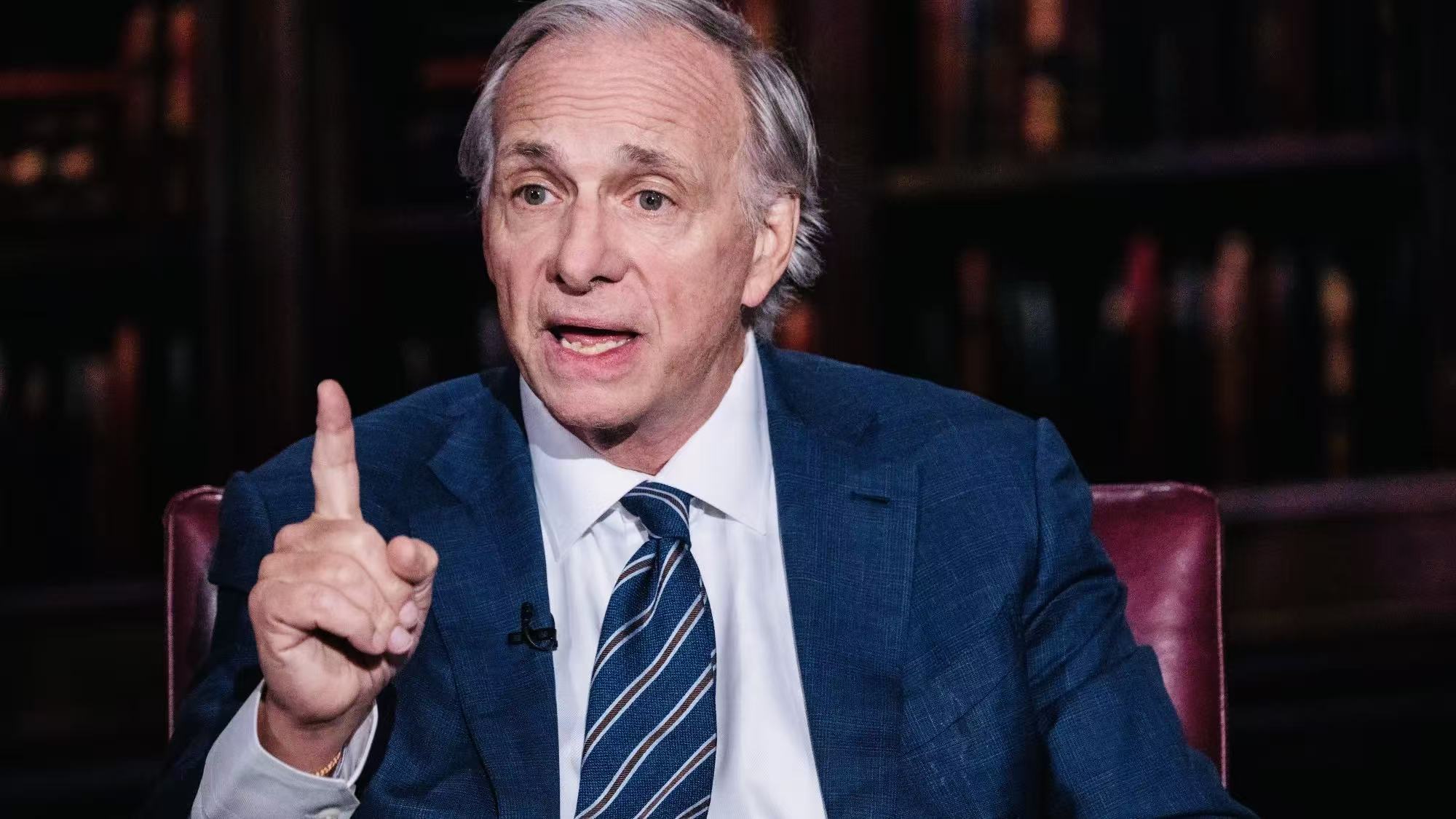
Bridgewater founder Ray Dalio said at the World Governments Summit in Dubai that the world is on the edge of a capital war, as geopolitical tensions and market instability raise the odds of financial confrontation. His message was blunt: investors need to pay attention to sanctions risk, disruptions in cross-border capital flows, and the possibility that access to funding and market demand could become politicized. In that setting, he said gold remains the preferred hedge.
Dalio says financial pressure is becoming a geopolitical weapon
Dalio described a capital war as a situation in which countries or institutions use money as a weapon. That can include trade embargoes, blocking capital from entering markets, or using debt holdings to exert pressure. He said the world is now “very close” to that threshold. The danger, in his view, comes from mutual fear across major blocs. Once that fear begins driving policy, a broader financial conflict can emerge quickly.
He pointed to recent US efforts to bring Greenland under its control as a source of tension between the United States and Europe. Dalio also said European investors holding dollar assets may worry about sanctions exposure, while the US may worry about losing access to European capital and buying support. That two-way concern, he argued, leaves the system more fragile.
Historical precedents suggest controls can follow confrontation
Dalio linked the current moment to earlier periods of international conflict. He cited the sanctions imposed by the United States on Japan before World War II as an example of how capital pressure can develop alongside geopolitical strain. He said similar dynamics could appear today between the US and China, and that capital dependence between the US and Europe could also become a vulnerability.
He added that capital wars have often come with foreign exchange restrictions and broader capital controls. That is not just a theoretical risk, according to Dalio. Institutions including sovereign wealth funds and central banks have already started preparing for the possibility of such measures.
Gold remains his preferred defensive asset
Against that backdrop, Dalio said gold still deserves a place in portfolio construction. He argued that gold offers useful diversification, tends to stand out during weak market periods, and behaves more steadily during stronger cycles. His focus was not on short-term price swings. It was on how much gold should sit inside a diversified portfolio built to withstand uncertainty.
Dalio said gold is up about 65% since last year and down about 16% from its peak. Investors, he said, should not fixate on short-term moves alone. The more important question is how much gold to allocate in order to spread risk across a portfolio.