
REA, a free project aimed at AI-assisted reverse engineering, has turned into one of the hottest repositories on GitHub.

According to Decrypt, the project, short for Reverse Engineer Anything, went from fewer than 10,000 GitHub stars on Oct. 6 to more than 100,000 by Monday. On Oct. 11 alone, it picked up more than 30,000 stars. The repository had existed since April with limited attention before interest accelerated sharply.
What REA actually does
Apps and games are distributed as machine code, the low-level instructions processors read directly and humans generally cannot. Decompilation tries to turn that output back into readable code. Reverse engineering covers a broader task: figuring out how software works by watching its behavior, examining the data it sends, or inspecting code where possible.
REA is built around that process. In practice, a user can point an AI agent at a program, ask how a feature works, and let the system trace it from what appears on screen down to the binary. Decrypt said the setup works with desktop applications, Android apps, and websites.
The repository does not include its own decompiler. Instead, it connects AI coding assistants such as Claude Code and OpenAI’s Codex to established professional tools, including Ghidra, the reverse-engineering suite the U.S. National Security Agency released publicly in 2019. The connection layer is MCP, or Model Context Protocol, a standard created by Anthropic so AI models can plug into external tools.
Despite the attention around the project, its own documentation is restrained. The readme says REA 「does not claim to recover original source code or automatically clone an application」.
Decrypt also noted that this approach stays in a relatively legal gray zone because the developer is not reading the original code directly, but shipping a similarly coded alternative that behaves the same way without being an exact copy.
Game mods, ports, and cross-platform experiments are spreading
Decrypt described a growing list of projects tied to REA or to related techniques.
Among the examples in the report: players watched Spider-Man swing through Gotham from Batman: Arkham City, while another project packed about 1,600 Minecraft items into a FromSoftware game and had creepers fighting Elden Ring boss Malenia. One modder also dropped Escape from Tarkov guns and menus into Skyrim and titled the result 「Escape from Skyrim lol」.
Older console exclusives are also being moved to new platforms. In September, a fan used an open-source AI model and a recompilation toolkit to bring Fable 2 to Windows, according to the report. It remains the only mainline Fable game never released on PC. The AI got it booting in about an hour, followed by a much longer period of manual fixes.
Decrypt cited another example in which GTA V was made to run natively and smoothly on iOS, something the report said Rockstar Games itself never did.
Paid software is now part of the same conversation
The same methods are also being applied to subscription software, although Decrypt was clear that the example it cited was not built with REA itself.
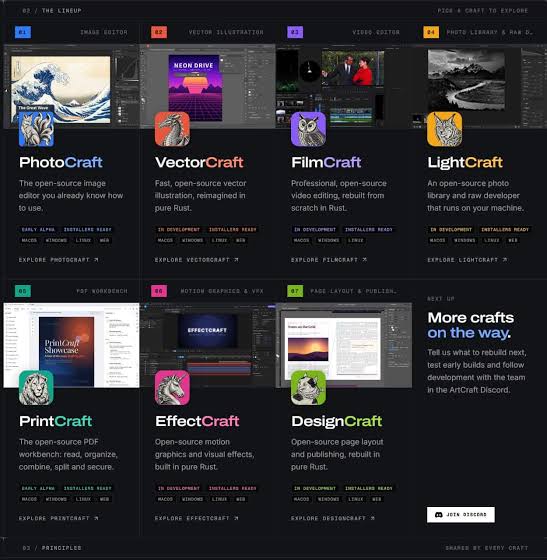
Developer Brandon Thomas used Claude Opus 5.5 to create ArtCraft, a set of free, open-source applications written in Rust. The report said the software is meant to mirror Photoshop, Illustrator, Premiere, Lightroom, and other Adobe programs across Mac, Windows, and Linux.
Thomas said repeated Adobe cancellation fees pushed him to start the work. Decrypt added that Adobe agreed in March to a $150 million settlement with the U.S. Department of Justice. The Justice Department had accused the company of hiding early termination fees and making subscriptions difficult to cancel, while Adobe denied wrongdoing.
Thomas described ArtCraft as a clean-room rebuild. That means the code is written from scratch using public documentation and observed behavior, without access to the original source code. Decrypt compared that legal strategy to the one Compaq used in the 1980s to clone IBM’s PC BIOS.
Even so, the software remains early. On the project website, the apps are labeled 「early alpha」 or 「in development」. Decrypt said one pixel artist had already called the Photoshop alternative 「completely unusable」.
Lower technical barriers bring legal and security pressure
The report argued that anything running on a user’s own device can now be read by an AI agent, given enough patience and enough tokens. That weakens one of software’s oldest forms of copy protection: the sheer difficulty of reading machine code.
Decrypt framed the result as a mixed shift. Cheaper clones and stronger game preservation may follow, but so may easier piracy and fewer places for security flaws to stay hidden.
Studios and publishers have already started responding. Activision has pulled footage of an AI-decompiled Call of Duty: Modern Warfare 2. Bethesda also sent a cease-and-desist letter over an AI-made browser game called Fallout: New York. The project’s creator later wrote: 「Due to copyrights I had to take down this game. BUT I will have an updated version of the game up and running soon! If you want to play it now and give me feedback as I fix things just reply to this comment and I'll DM you the new link.」
Decrypt wrote that this appears to be one of the few defenses studios currently have against a trend that could force far more software into the open.
REA is still shipping updates
REA itself is moving quickly. Between Oct. 3 and Oct. 11, the project released eight versions, according to the report.
At the application layer, progress looks slower than some early claims suggested. Thomas has already backed away from a promise to match Adobe’s feature set within a month. He now says the effort will take months.