
Caladan’s latest report paints a harsh picture for the Web3 gaming sector: 93% of blockchain game projects are now effectively dead. The category consumed $15 billion in pursuit of a token-powered future, yet players never embraced it at scale. According to the report, token values tied to the sector are down about 95% from their 2022 peak, while funding flowing to game studios had contracted 93% by 2025. More than 300 Web3 games have already shut down.
Losses spread across projects, guilds, NFTs and retail participants
The report describes the decline as a broad capital unwind rather than a problem limited to a few weak teams. Venture investors, NFT buyers, gaming guilds and even users drawn in by Telegram tap-to-earn products were caught in the same collapse. In one example, Hamster Kombat lost 96% of its players within six months of launch. YGG, once one of the most visible gaming guild tokens, now trades 99.6% below its November 2021 all-time high.
Several projects highlighted in the report show how severe the breakdown became. Pixelmon raised $70 million through NFT sales but still has not delivered a public test version after four years of development. Ember Sword was shut down last May after seven years and $18 million in spending, with no refunds. Gala Games became entangled in litigation, and one co-founder was accused of misappropriating tokens valued at $130 million. Square Enix also halted its Web3 experiment Symbiogenesis last July.
Players wanted entertainment, not an exit queue
Caladan argues the core failure was not simply weak market conditions. The bigger issue was a faulty assumption about what players actually wanted. Many blockchain games were built around a play-to-earn structure in which users bought tokens or NFTs to enter, earned similar assets through gameplay, and relied on fresh capital from new entrants to support prices and liquidity. Once that flow slowed, the model broke quickly. Token prices fell. Rewards became less attractive. Users left, and in-game economies deteriorated with them.
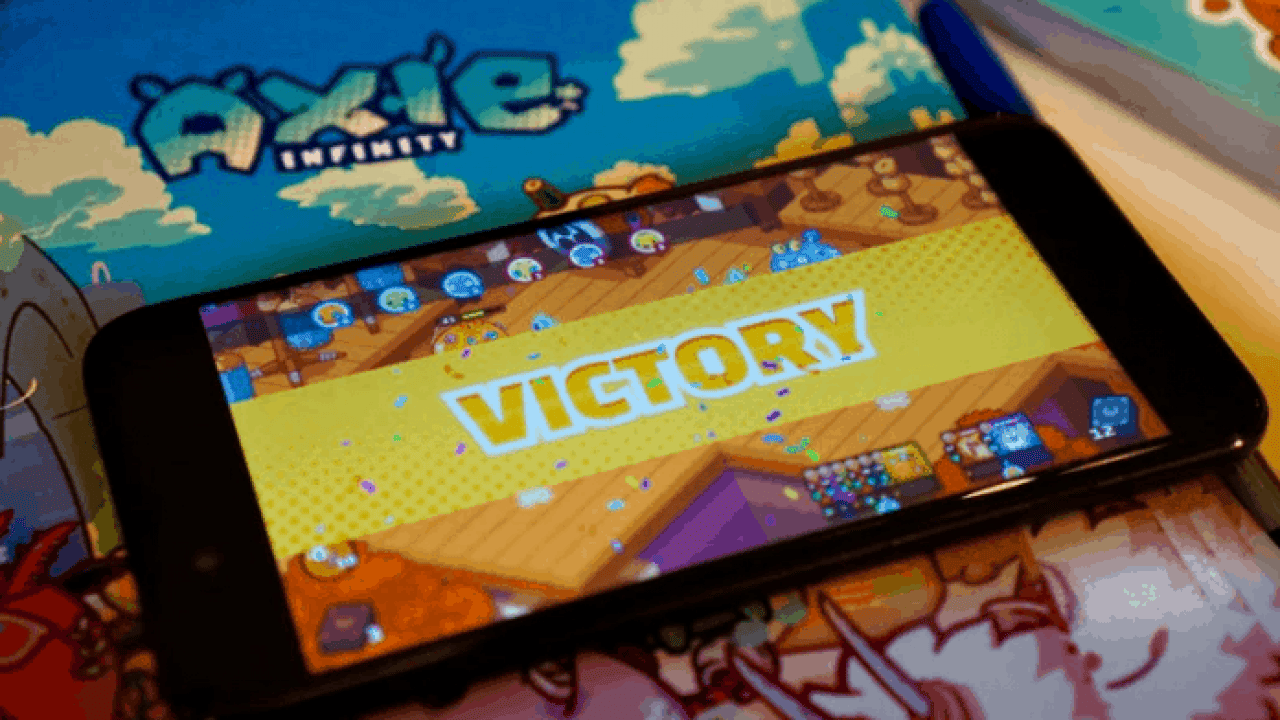
DappRadar data cited in the report shows how sharply usage can fall. Axie Infinity, once the flagship name in the sector, went from a peak of 2.7 million daily active users to roughly 5,500 now. Caladan also cited a Coda Labs survey showing that even during the height of the boom, only 12% of players had tried a Web3 game. Capital ran far ahead of actual demand.
Funding arrived early, development took years, and money moved elsewhere
The report says many teams raised tens of millions of dollars, and in some cases more than $100 million, before proving they could ship a viable game. That weakened the pressure to build products capable of retaining players. At the same time, game development often takes three to five years, while tokens begin trading immediately and need constant attention to hold value. The mismatch was structural. By the time some projects were close to launch, their tokens had already lost market support.
Capital rotation made the trend clearer. In 2022, Web3 gaming attracted 62.5% of all Web3 venture funding. By 2025, that share had fallen to the single digits as money shifted to AI, tokenized real-world assets and Layer 2 infrastructure. Even Animoca Brands, one of the sector’s biggest backers, has cut gaming’s share of its investment allocation to about 25%, while increasing focus on stablecoins, RWA and AI.