
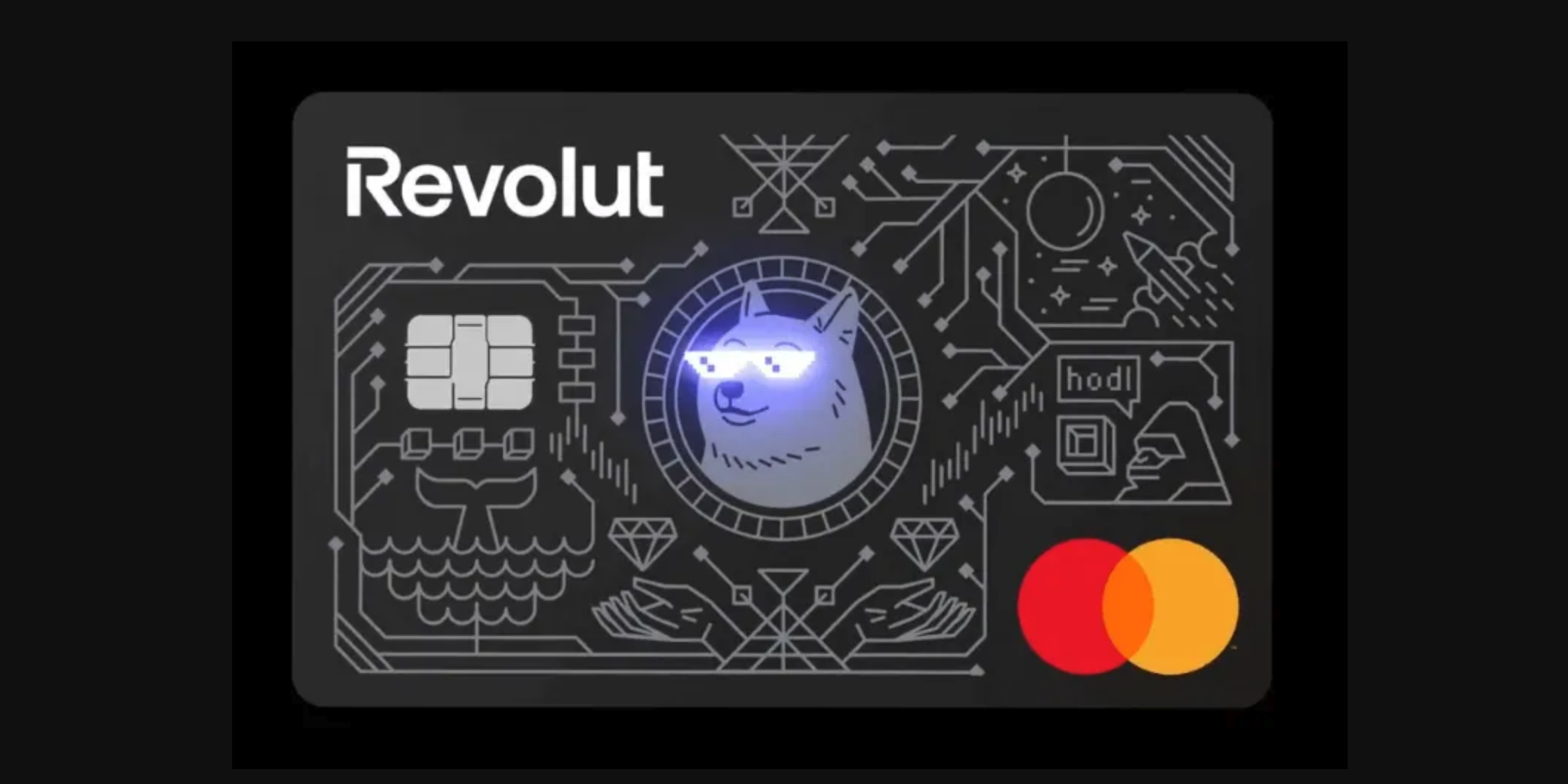
Revolut dropped its first physical crypto card on May 18, 2026 — Dogecoin-themed with an LED light that glows on tap. The tagline "Much light. Very tappy." borrows the Doge meme tone. The real hook is zero swap fee: the card auto-converts crypto balances into the merchant's settlement currency at the moment of payment.
£100,000 per transaction, 100 swaps per day
The card links directly to users' crypto balances inside the Revolut app. Single transaction cap: £100,000. Up to 100 conversions per 24 hours. Supported at all Visa and Mastercard acceptance points globally. In theory, anyone with a Revolut account and supported coins can spend crypto like a regular debit card, without paying extra swap fees.
UK and EEA first, three countries excluded for different reasons
Initial rollout covers the UK and European Economic Area, but excludes Hungary, Switzerland and Portugal. Official reason: limited early supply. Hungary's absence has a clear cause — the country passed harsh crypto regulations in 2025, imposing up to 8 years in prison for unauthorized crypto transactions, making it too risky for Revolut to launch there. Switzerland and Portugal were excluded without public explanation, likely due to local license scope.
Bank license secured, US charter filed
In March 2026, Revolut received a full UK banking license from the PRA and FCA, and filed for a US bank charter the same month. Last week, the FCA also approved Revolut to offer leveraged investment products, discretionary portfolio management, and private wealth advisory. The company is steadily shedding its "just a currency exchange app" label. This Dogecoin tap card is the retail flagship: letting users spend crypto in daily purchases without converting to fiat or leaving the Revolut ecosystem.
A coffee purchase comes with a tax bill
Every swipe has a tax sting. The UK Cryptoasset Reporting Framework (CARF) took effect on January 1, 2026. HMRC rules treat each crypto payment as a "disposal", triggering capital gains tax (CGT). Buy a £4 coffee with Dogecoin: if the cost basis is lower than the market price at the time of payment, the difference is subject to CGT at 18% to 24%, with an annual allowance of only £3,000. Worse, CARF requires crypto service providers to proactively report user transactions to HMRC, with the first filing deadline on May 31, 2027. Revolut will hand over every card transaction to tax authorities — no "stealth spending" possible.