
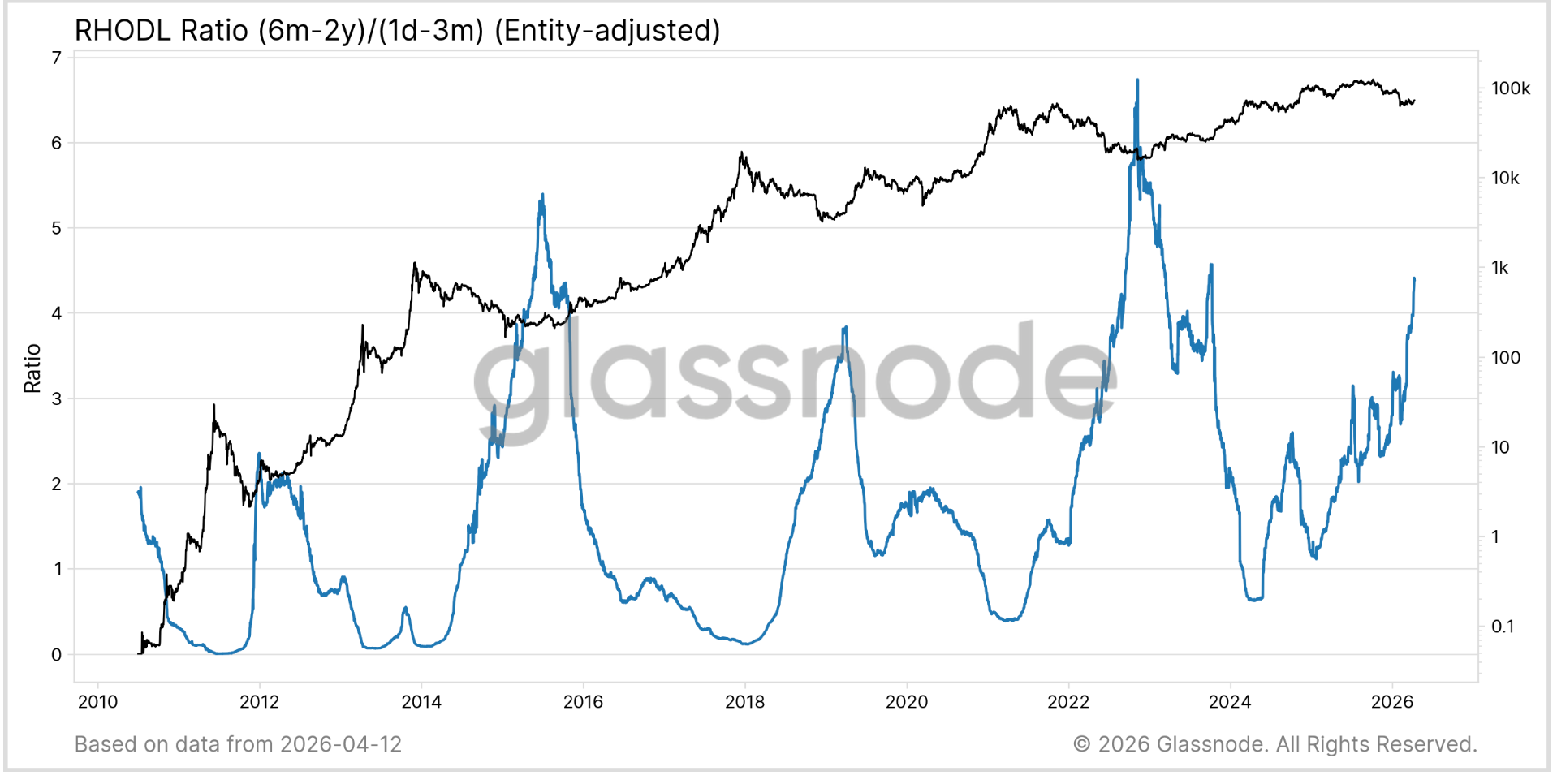
Bitcoin's on-chain RHODL ratio, tracked by Glassnode, has fallen to 4.5, a level that historically aligns with market bottoms rather than tops. The metric compares the value of coins held by long-term investors (6 months to 3 years) against short-term participants (1 day to 3 months). The only higher readings were 5 in 2015 and 7 in 2022, both cycle lows.
How the RHODL Ratio Works
A rising RHODL ratio indicates coins are aging and speculative activity is fading, as renewed demand from new entrants dries up. This pattern typically emerges after sharp corrections, and the current reading suggests the 50% drawdown over the past six months has sufficiently flushed out short-term holders.
What the Signal Means Now
At 4.5, wealth is concentrating in older coins, a condition that preceded previous cycle bottoms. However, pushing to even higher levels (e.g., 7) would require a near-complete collapse in short-term holder activity and demand exhaustion — conditions less evident today. Bitcoin has recovered 25% from February lows, perpetual funding rates turned negative, and the S&P 500 is hitting all-time highs, creating a mixed macro backdrop.
Different Market Context
Unlike 2015 and 2022, the current environment lacks full demand exhaustion. The price recovery, negative funding rates, and strong equities complicate the picture. While the RHODL ratio suggests a bottom may be in place, further confirmation hinges on short-term holder behavior and liquidity trends.