
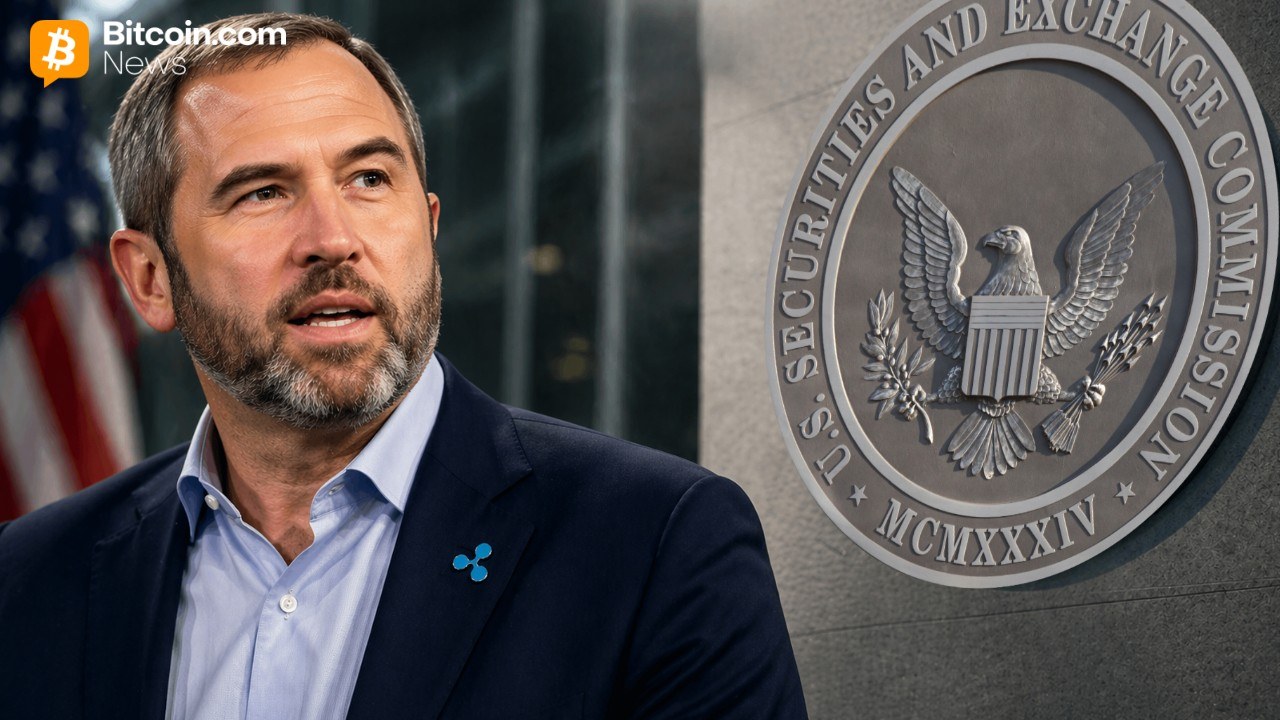
Ripple CEO Brad Garlinghouse said on April 20 that sentiment in U.S. crypto markets is improving as the Securities and Exchange Commission changes course. He tied that shift to investor protection and market growth, while praising SEC Chair Paul Atkins for promoting a clearer regulatory path instead of relying mainly on enforcement.
Garlinghouse contrasts Atkins with the prior SEC approach
In a post on X, Garlinghouse compared Atkins with former SEC Chair Gary Gensler, whose tenure drew criticism for regulation through enforcement. Garlinghouse wrote that Atkins is “a breath of fresh air and sanity” and said he is focused on what matters: protecting investors and supporting innovation that benefits investors and markets.
His comments matched Atkins’ recent public messaging. The SEC chair has framed the agency’s direction around regulatory clarity, capital formation, and support for blockchain-based finance, rather than a heavier enforcement posture toward digital assets.
SEC outlines clearer oversight and lower compliance friction
On April 21, Atkins described a push for a more formal framework covering digital assets and tokenized markets. He pointed to clearer oversight, lighter compliance burdens, and closer coordination with the Commodity Futures Trading Commission. He also said the SEC was nearing an “innovation exemption” that would let market participants facilitate on-chain trading of tokenized securities within a limited compliant structure while longer-term rules are still being developed.
The message from the agency is that regulation should keep pace with changing market infrastructure. Investor safeguards, in Atkins’ description, remain part of that design.
The Ripple case remains central to the policy debate
The evolving regulatory stance comes after the long-running Ripple case helped define a key line in crypto oversight. Filed in December 2020 and concluded in August 2025, the case established a distinction between institutional XRP sales and public market trading. The court ruled that programmatic XRP sales on exchanges were not securities transactions, while direct institutional sales violated securities laws.
Ripple initially faced a $2 billion demand. The company was later hit with a $125 million penalty, which was reduced to $50 million, and both sides eventually withdrew their appeals to formally end the dispute. In his April 20 remarks, Garlinghouse also said the SEC under Gensler had “lost its way” and had “declared war on a technology.”
That dispute still shapes how the industry reads the SEC’s new tone. The immediate question in the U.S. market is whether the agency can turn this shift into a predictable compliance framework for digital assets.