
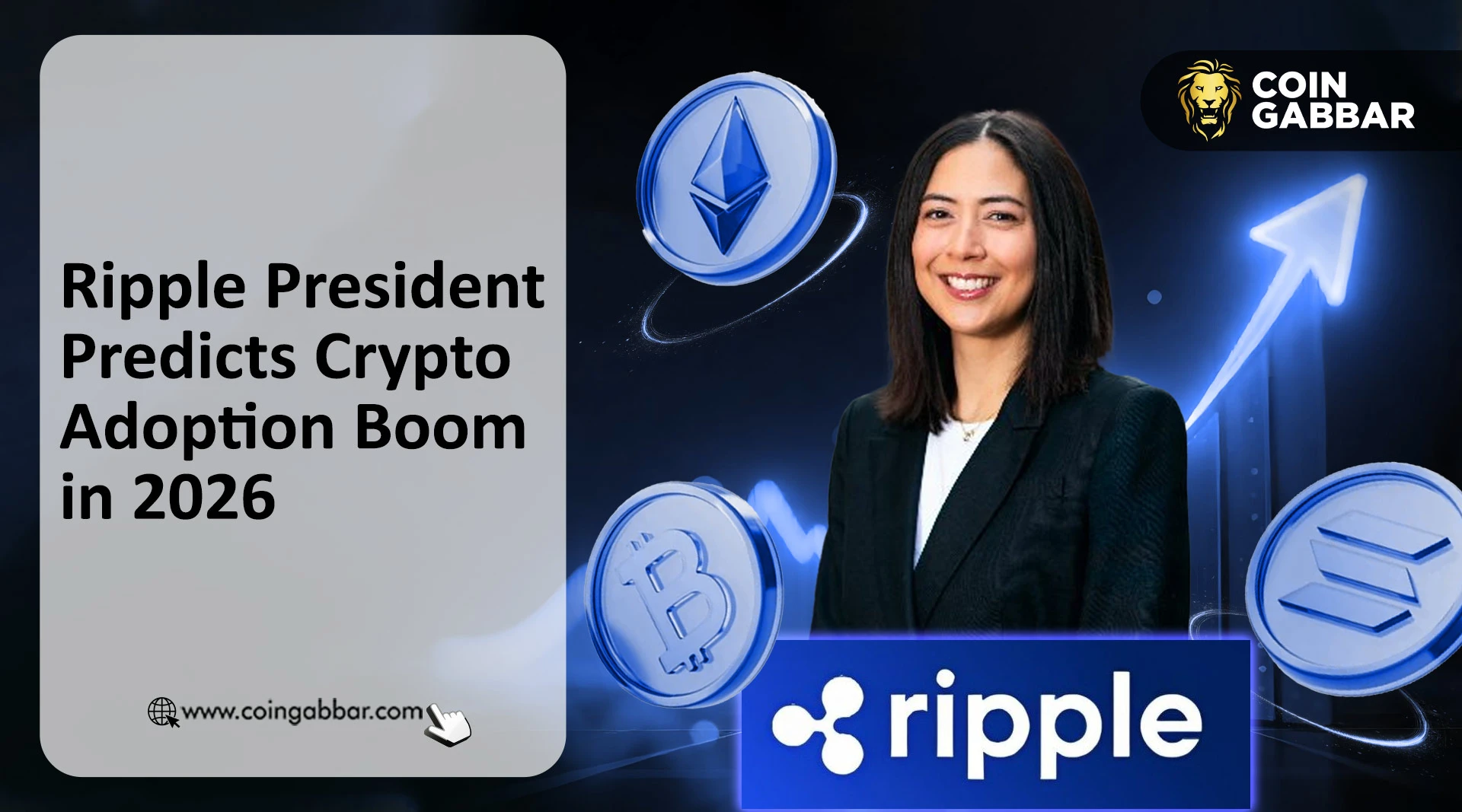
The crypto market is under sharp pressure. In the past 24 hours, the sector has fallen 3.44%, wiping out gains made in 2026, while more than $1 billion in crypto positions were liquidated. Bitcoin longs alone lost over $190 million. Even with that backdrop, Ripple is keeping a bullish stance on adoption. Ripple President Monica Long said 2026 could be the year crypto moves from tests and pilot programs into large-scale real-world deployment.
Long described the next phase as a “production era.” Her point was not centered on short-term price action. It was about utility. She said digital currency is moving beyond trading and increasingly becoming part of the operating layer of modern finance, with banks, corporations and governments using digital asset tools for payments, treasury operations and asset tokenization.
Ripple is focusing on stablecoins, custody and onchain financial infrastructure
According to the source material, Ripple’s growth thesis is tied to infrastructure rather than market hype. The company is building regulated systems that can support stablecoins, custody services and onchain assets. In that framework, stablecoins sit near the center of Ripple’s view of the future financial system.
The article says RLUSD and other regulated stablecoins are expected to serve as a base layer for global settlement. It also states that stablecoins already process a large volume of transactions and represent a market value above $300 billion. Visa and Stripe are also integrating stablecoins into their systems, with the goal of improving cross-border payment speed, liquidity and cost efficiency.
Corporate adoption is presented as a major 2026 catalyst
Long also pointed to corporate use as a key driver. The source says that by 2026, nearly 50% of Fortune 500 companies are expected to have formal digital currency strategies. Those plans would span stablecoins, tokenized assets, onchain treasury tools and digital financial products. In that view, crypto is moving away from being treated as a risky experiment and becoming a practical business tool.
Ripple’s visibility at Davos was framed as another sign of institutional acceptance. Brad Garlinghouse appeared at the 2026 World Economic Forum in Davos on panels with central bankers and financial executives, including BlackRock. The article also says Ripple co-sponsored USA House with Microsoft. That public presence was presented as evidence that the company is gaining more trust from traditional finance and large technology firms.
XRP stays under pressure as traders watch the $1.88 level
That confidence has not translated into stronger XRP price action. Based on CoinMarketCap data cited in the article, XRP was trading near $1.90, down 2.9% over 24 hours and 12.5% over the past week. The reported headwinds include the loss of $1.95 support, $55 million in outflows from the Grayscale XRP ETF, a 4% drop in Bitcoin and more than $1 billion in market-wide liquidations.
XRP is now testing support at $1.88. The source says a break below that level could push the price toward $1.81. For a recovery, XRP would need to hold above $1.88, ETF selling would need to ease, and the broader market would need to stabilize. A move back above $1.95 would be read as a sign of renewed strength.