
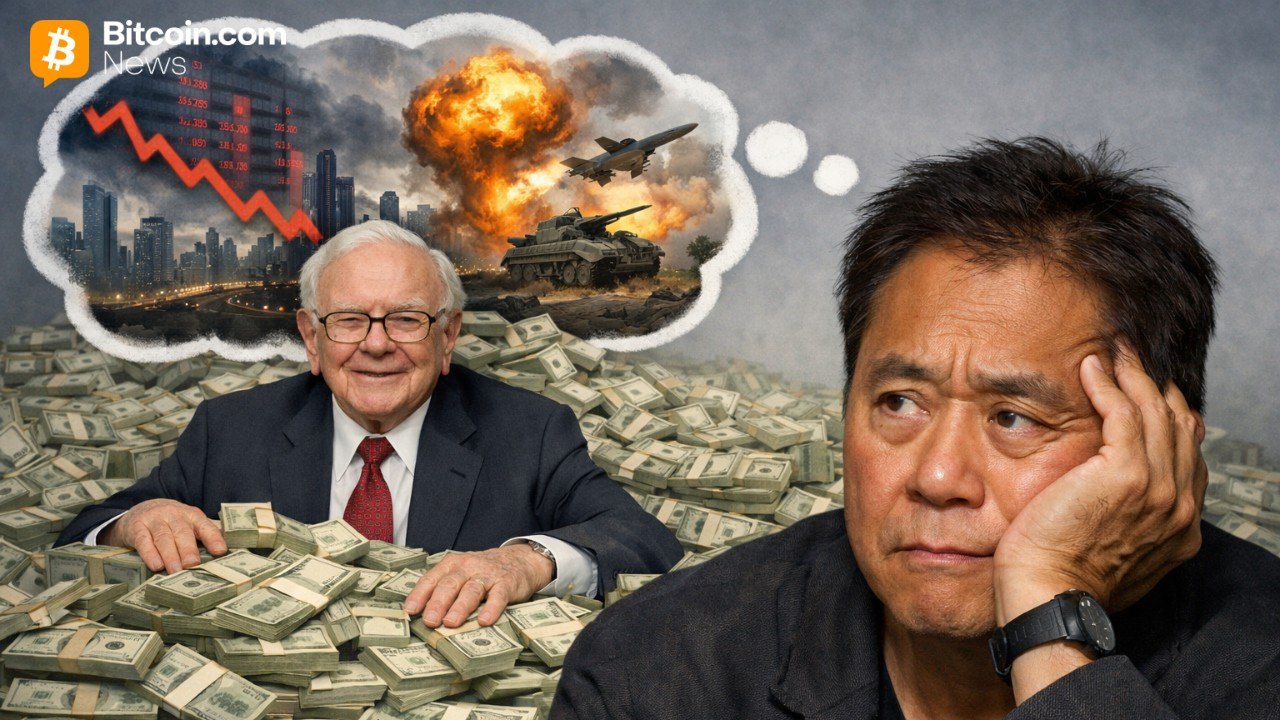
Rich Dad Poor Dad author Robert Kiyosaki escalated his warnings on March 15, declaring that a “giant crash” is accelerating while he shifted millions of dollars in cash into bitcoin, ethereum, gold, silver, and oil wells. Kiyosaki acknowledged Berkshire Hathaway chairman Warren Buffett's large cash hoard but took his own path: “Last week I took millions in cash and purchased more oil wells, more gold, silver, and bitcoin. I doubt Warren Buffett would do what I do.” He added that “cash is not trash in a crash.”
Kiyosaki vs. Buffett: Divergent Cash Strategies
On X, Kiyosaki warned that private credit funds are panicking as investors withdraw money and “major big name banks and brand name financial institutions are in trouble.” He described the situation as a “crash accelerates.” Instead of hoarding cash like Buffett, Kiyosaki deployed it into hard assets. For those without a crash plan, he advised that “the smartest thing you may consider doing is nothing.”
Real Asset Allocation: Oil, Precious Metals, and Crypto
Kiyosaki said he continues moving into oil, silver, gold, bitcoin, and ethereum. Capital merely shifts during financial stress, he argued, and geopolitical factors are boosting energy prices: “As long as Iran keeps shooting oil tankers in the Strait of Hormuz, the price of oil from my Texas oil wells keeps going up.” He frequently promotes bitcoin alongside gold and silver as scarce “real assets” due to its fixed 21 million supply, arguing that market downturns create accumulation opportunities.
Giant Crash Prediction and Private Credit Risks
Kiyosaki reiterated that the “giant crash” he predicted in his 2013 book Rich Dad's Prophecy is unfolding and could become the largest stock market crash in history. He cited three key risks: stress in private credit markets, unresolved issues from the 2008 financial crisis, and heavy exposure of retirement savings to stocks and bonds. Despite admitting he could be wrong, Kiyosaki concluded: “I am confident after a giant crash the price of gold, silver, and bitcoin will go up.” He continues to accumulate these assets, viewing the downturn as a buying opportunity.