
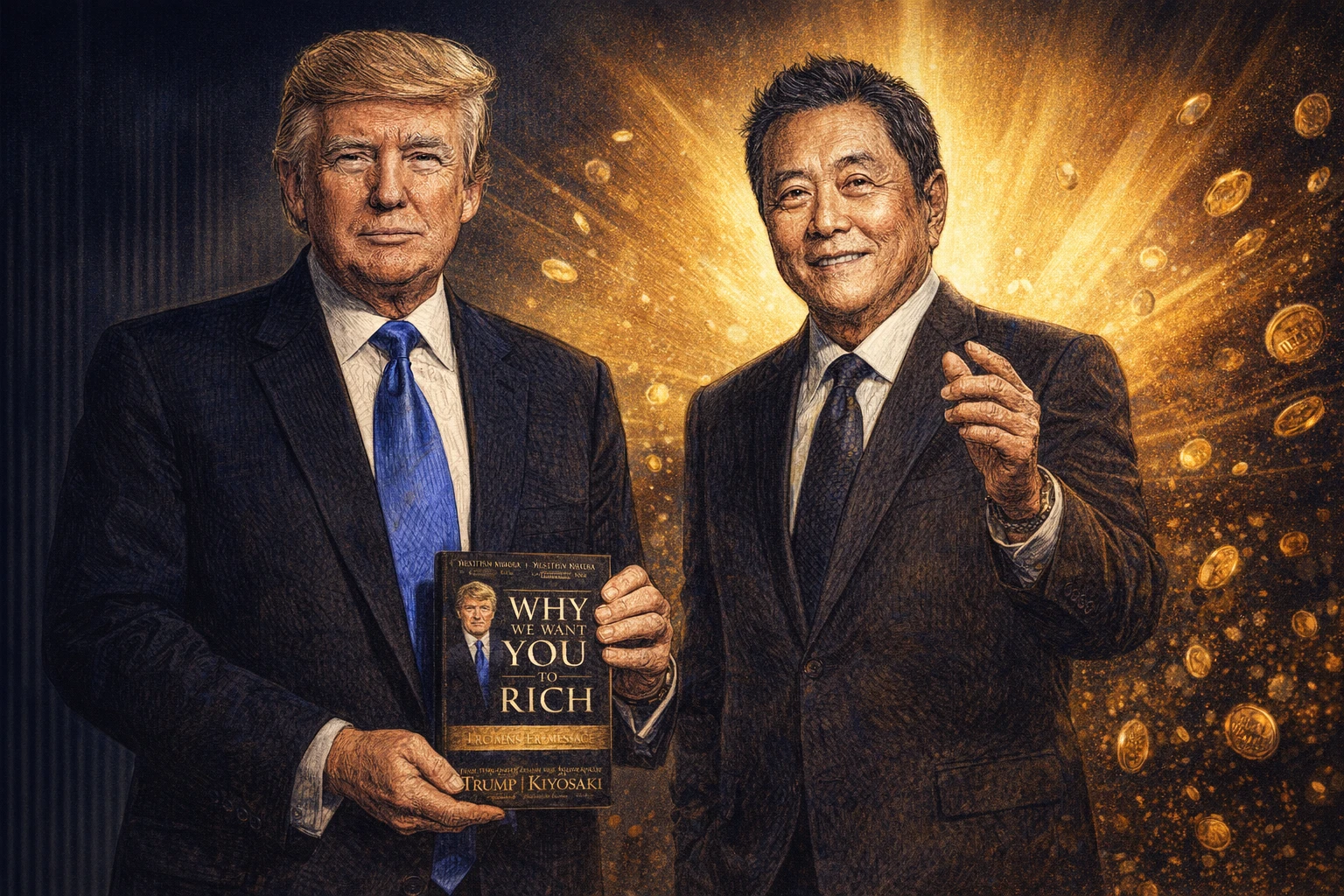
Robert Kiyosaki, author of Rich Dad Poor Dad, renewed his bullish view on gold on June 29 in a post on X, saying he still expects the metal to reach $35,000 per ounce within five years. He paired that call with a familiar line: profits are made when an asset is bought, not when it is sold.
Spot gold slipped to around $4,040
During trading on June 29, spot gold briefly fell about 1% to around $4,040 per ounce. Based on that level, Kiyosaki’s target would imply roughly 76% upside from current prices. The world’s largest gold ETF, SPDR Gold Trust, reduced its holdings by 2.00 tons in the previous session, bringing total holdings down to 1,005.08 tons. That move suggested some institutional investors were taking profit during the pullback.
Kiyosaki keeps the focus on entry price and long-term positioning
Kiyosaki has spent years arguing in favor of both gold and Bitcoin. The framework he repeated here is straightforward. Entry price determines the profit potential. Market swings are normal and should not dominate long-term allocation decisions. And the investors who build the most wealth, in his view, are those who position early rather than chase short-term moves.
The source also points to his earlier comments. In 2025, Kiyosaki said U.S. bank bailouts showed that “fake money” had fully taken over, and he urged investors to buy Bitcoin, gold, and silver. In May this year, he argued that a “fragile petrodollar” problem rooted in 1974 had already detonated, adding that Bitcoin and gold are the real forms of money.
Near-term signals point to pressure on gold
While Kiyosaki kept his long-range target intact, market signals on the day were less supportive. Kieran Tompkins, an analyst at Capital Economics, said gold is behaving more like a risk asset than a safe-haven one, and that cooling speculative enthusiasm could put more pressure on prices. At the same time, a stronger U.S. dollar climbed to its highest level since November of last year, weighing on precious metals.
The source also noted that several banks raised margin requirements on the Shanghai Gold Exchange, while China Construction Bank and ICBC suspended personal deferred precious metals business. Kiyosaki’s bullish thesis, as presented here, remains tied to a longer-term view of a weakening dollar and rising global uncertainty. If gold were to reach $35,000 per ounce, the move would imply an annual compound growth rate of about 12% from current levels.