
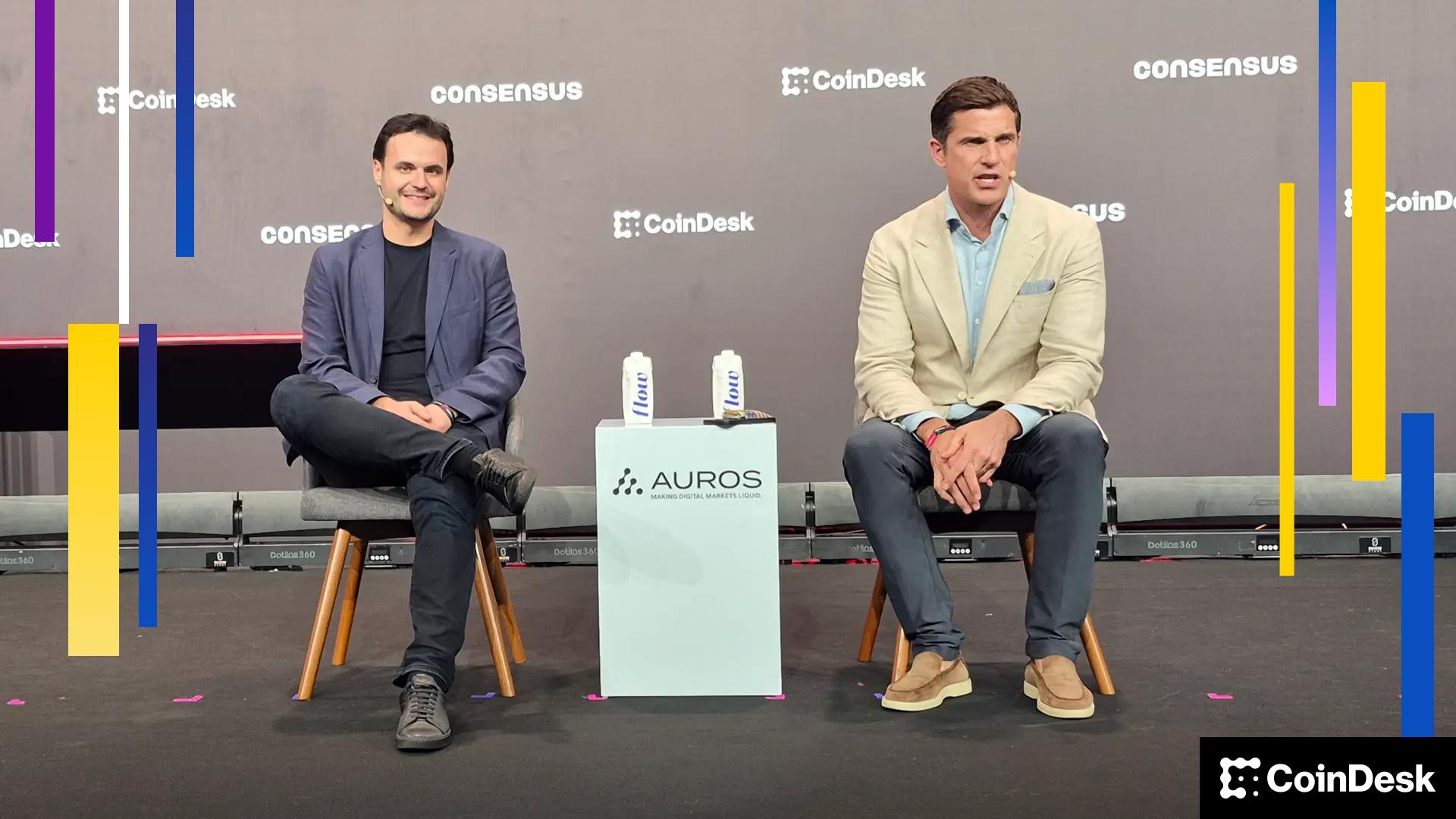
Stablecoin yields should be passed directly to the consumer, not held by platforms or banks — Robinhood General Manager Johann Kerbrat made that case Wednesday at CoinDesk's Consensus Hong Kong conference, while calling out traditional finance's outdated settlement system.
The stablecoin yield debate heats up
Kerbrat said consumers should decide what to do with their savings, but must be warned of the risks. “We think we should be able to pass the yield to the consumer. They don't want to be locked into a stablecoin earning no interest if they can do it on a high-yield savings account,” he said. He noted stablecoins are not FDIC-insured, a key difference from bank accounts, and that fintechs, issuers and trading platforms must clearly explain those differences.
The debate is central to the CLARITY Act being discussed in the U.S. Congress. Traditional bankers have argued such yields could catastrophically compete with the core deposit business of U.S. banking. Farley, the moderator and CEO of Bullish (CoinDesk's parent), noted the crypto market is down 60%-65% and retail sentiment is sour after the Oct. 10 event. Kerbrat said Robinhood remains optimistic based on actual client behavior: “We see a lot of people buying the dip and growing their portfolio,” a stark contrast to prior downturns when retail largely stayed away.
T+1 settlement called 'antiquated relic,' atomic settlement touted
Kerbrat described the current T+1 (one-day) settlement model as “operating on borrowed time” and an “antiquated relic.” The 24-hour waiting period for stock trades is a systemic risk, he argued, and modern blockchain technology has already made it obsolete. He advocated for “atomic settlement” — where ownership and payment transfer simultaneously, eliminating settlement periods altogether. Robinhood is pushing into tokenization via the newly announced Robinhood Chain, an Ethereum Layer 2 built on the Arbitrum stack, aiming to enable 24/7 trading of tokenized real-world assets like U.S. stocks and ETFs.
Sources familiar with the move said round-the-clock trading likely won't happen until end of 2026, when Nasdaq or NYSE roll out their digital asset platforms. But competition is already underway: the NYSE announced mid-January plans to launch a blockchain-based 24/7 tokenized securities trading venue later this year; Nasdaq revealed similar plans in December. ICE, the NYSE's parent, is also upgrading its clearing infrastructure and exploring tokenized collateral.