
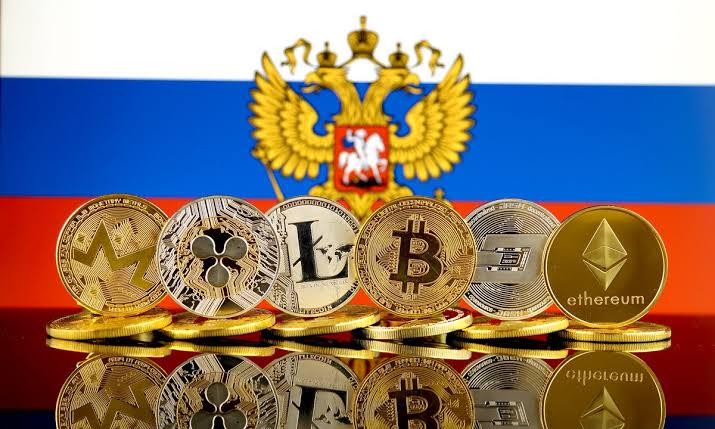
Russia has formally written the use of digital currencies in cross-border settlements by foreign trade participants into law. Yet before that legal change arrived, one ruble-pegged stablecoin had already been moving through that channel for more than a year: A7A5.
The new law is meant to create a state-backed compliance route. A7A5 grew through a very different structure. That gap now sits at the center of the token’s next chapter.
A ruble stablecoin issued from Kyrgyzstan
The first batch of A7A5 was minted in February 2025 by Old Vector, a company registered in Kyrgyzstan. The token is pegged to the ruble, and its reserves are held at Promsvyazbank, or PSB, a bank at the core of Russia’s defense system that has been under Western sanctions for years.
Beyond the issuer itself, the A7 network associated with the stablecoin has been identified by the U.S. Treasury as linked to Moldovan oligarch Ilan Shor. Shor was sentenced in absentia in a $1 billion bank fraud case and is under sanctions from the U.S., the U.K. and other jurisdictions.
According to reports cited in the source article, A7A5’s cumulative on-chain transaction volume had exceeded $100 billion by January 2026. In less than a year, it became one of the world’s largest non-dollar stablecoins, with roughly 250,000 transfers and more than 41,000 accounts.
That background alone set A7A5 apart from an ordinary stablecoin project from the start.
Sanctions did not shrink it
One of the most striking parts of A7A5’s history is how it responded to sanctions pressure. It did not contract. It expanded.
In August 2025, the U.S. Treasury took action against Grinex, the main trading venue for A7A5. But the token’s trading activity did not fall the way many expected. Its market capitalization rose instead and at one point briefly approached $500 million, accounting for more than 40% of the total market value of non-dollar stablecoins at the time.
Some reports, citing on-chain data, said a considerable share of A7A5 tokens went through a burn-and-remint process in new wallets after sanctions hit related exchanges. As described in those reports, that process could break the visible link between frozen addresses and newly issued tokens.
Still, the article notes that this point has not yet been confirmed by formal reports from primary blockchain analytics firms such as Elliptic or TRM Labs. The exact proportion and timing remain unverified.
Even without settling that question, a simpler fact stands out. Garantex was shut down, Grinex was sanctioned, and A7A5 still did not disappear. It kept growing. At minimum, that suggests freezing a handful of exchanges is not enough on its own to kill a crypto settlement channel.
A legal identity built around a letter
Russia already had a 2021 law on Digital Financial Assets, known as 259-FZ. Under that framework, licensed information system operators can issue regulated digital financial assets, or DFAs. Those assets are required to run on private chains and are typically issued by licensed institutions such as Sberbank and Alfa-Bank.
By design, that is a different category from a public-chain stablecoin like A7A5.
According to an analysis from Harvard University’s Davis Center cited in the source article, the Russian central bank issued a “no-objection letter” in October 2025. Some research institutions interpreted that as a sign of tacit regulatory acceptance for A7A5’s use in cross-border transactions.
The article is careful on this point. That wording reflects analysis by research institutions, not a public official characterization used by the Russian central bank itself.
A7A5’s formal status is described as a “foreign digital right,” or FDR. That status does not fully align with the original design logic of 259-FZ, but regulators chose to let it pass. In practice, the route A7A5 followed over the past two years was not built on a bespoke law written for it. It was opened first through an ambiguous central bank document that gave cross-border use room to develop.
The new law opens a highway, but A7A5 came up on another road
The new Duma law effectively turns what had been a side route into a formal legal path. The use of digital currency in foreign trade contract settlement is now written directly into statute rather than resting on an interpretive letter.
But the law creates a domestic registry-based system. Exchanges, clearing institutions and brokers must all be entered into the Russian central bank’s registry, and banks and financial institutions will face tighter compliance requirements.
A7A5 is built in almost the opposite way. Its issuer sits in Kyrgyzstan. Its trading venues include overseas exchanges and public-chain DeFi protocols. That cross-border setup reduces, in objective terms, the impact of enforcement by any single jurisdiction.
That also creates the central paradox for the token. If A7A5 wants to benefit from the compliance premium created by the new law, it would need to move closer to Russia’s domestic registry system. But once clearer institutional and fund-flow traces are left behind, the same feature that gave it resilience — the ability to be reminted and remain hard to freeze — becomes weaker.
The state wants a channel that is visible and controllable. A7A5’s value has rested on something much less visible and much harder to control. Whether those two models can coexist remains an open question.
The bigger threat may come after sanctions
The article argues that A7A5’s real problem may not be sanctions themselves, but the possibility that sanctions eventually end.
As talk of a Russia-Ukraine ceasefire has grown, A7A5 executive Oleg Ogienko has said publicly that the token would still have a reason to exist even if sanctions were lifted, pointing to faster and more convenient cross-border settlement.
That statement also points to a harder issue. If the sanctions-driven environment that helped justify A7A5 fades, the token would have to compete on more conventional terms against dollar stablecoins with far deeper liquidity.
The Duma’s new law, meanwhile, is not simply preparing the ground for another stablecoin. It is setting up a broader state-level framework for cross-border digital asset settlement. In that system, a new compliant stablecoin, regulated digital financial assets, and the digital ruble could each take on different functions without forcing Russia to rely on a single token already caught up in sanctions-related controversy.
The Russian central bank is also planning broader use of the digital ruble. With the legal framework and central bank digital currency moving forward in parallel, Russia appears to be trying to shift from a shadow settlement network that emerged through market practice to a digital settlement system led by the state and kept within regulatory reach.
A7A5, the newly formalized legal channel, and the digital ruble are now running on three parallel tracks. Which one gets pushed aside, and which one remains after any ceasefire, is still unresolved.