
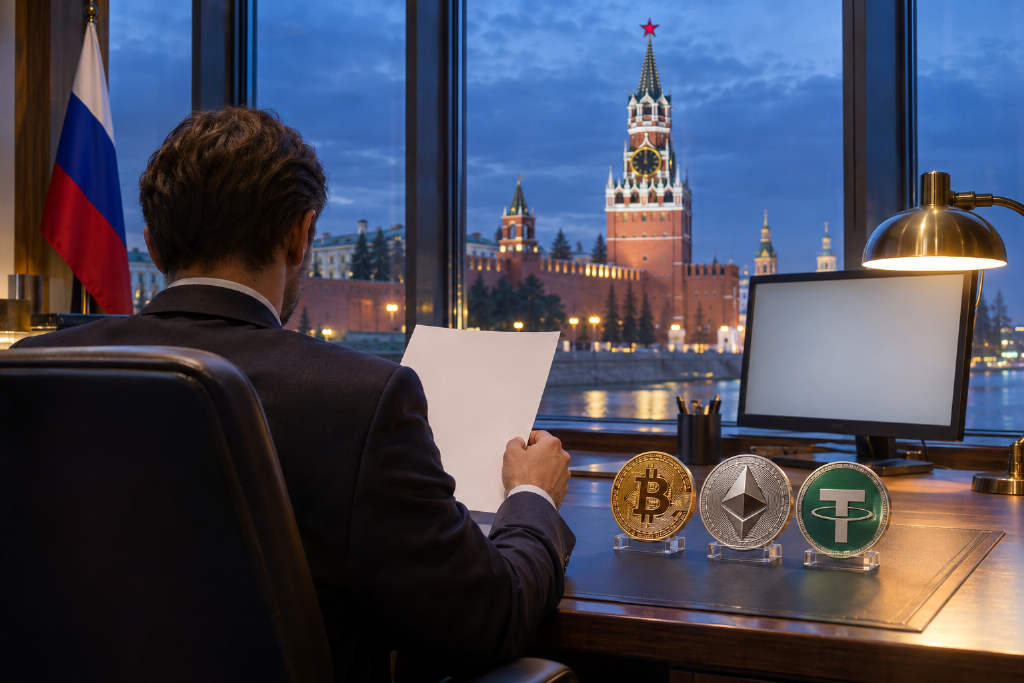
Russia’s central bank said exchanges may begin offering cryptocurrency trading on Nov. 22, 2026, but only after agreeing on trading rules with the regulator. The Bank of Russia published the instruction on Nov. 11. It covers transactions in digital currencies and digital rights and has been registered by Russia’s Justice Ministry.
The arrangement follows other measures cited in the supplied background. A crypto law signed by Vladimir Putin has core provisions that took effect on Sept. 1, the same day the mandatory rollout of the digital ruble took effect.
Exchanges must record participants and trades
Under the new instruction, exchanges must register participants involved in crypto trading. The listed categories include brokers, trustees managing assets and central counterparties, or CCPs.
Platforms must also create records of orders and executed trades and maintain ongoing monitoring of trading activity. The rules set out requirements for price information as well. Exchanges must calculate the current price, volume-weighted average price, market price and closing price, giving crypto-asset transactions a formal record of quoted values.
Both the course of trading and its results must be reported to the Bank of Russia under procedures already used for other assets. Opening this business therefore requires more than adding crypto assets to an exchange’s list. The exchange must also establish participant registration, trade monitoring and reporting operations.
Non-qualified investors face a 300,000-ruble limit
For investors, the Bank of Russia approved a list on Nov. 6 of assets that non-qualified investors may buy. Bitcoin (BTC), Ether (ETH) and USDT are included. The instruction takes effect on Nov. 17 and sets out which assets may be admitted to public trading. Exchanges must meet separate operating requirements when they begin the business.
Non-qualified investors may buy through brokers, asset managers or crypto exchange providers. The available channels include exchanges and over-the-counter markets. Purchases made through any single intermediary, however, may not exceed 300,000 rubles in a year.
Qualified investors are not subject to the same limits on eligible crypto assets or purchase amounts. Regardless of investor category, anyone trading must first pass a test and read a disclosure on the risks of cryptocurrency investment.
Asset selection uses liquidity measures
When selecting assets available to non-qualified investors, the central bank considered market capitalization, average daily trading volume and at least five years of pricing history from overseas trading venues. The bank said it used those criteria to select assets with higher liquidity and reduce the risks faced by non-qualified investors in crypto assets.



