
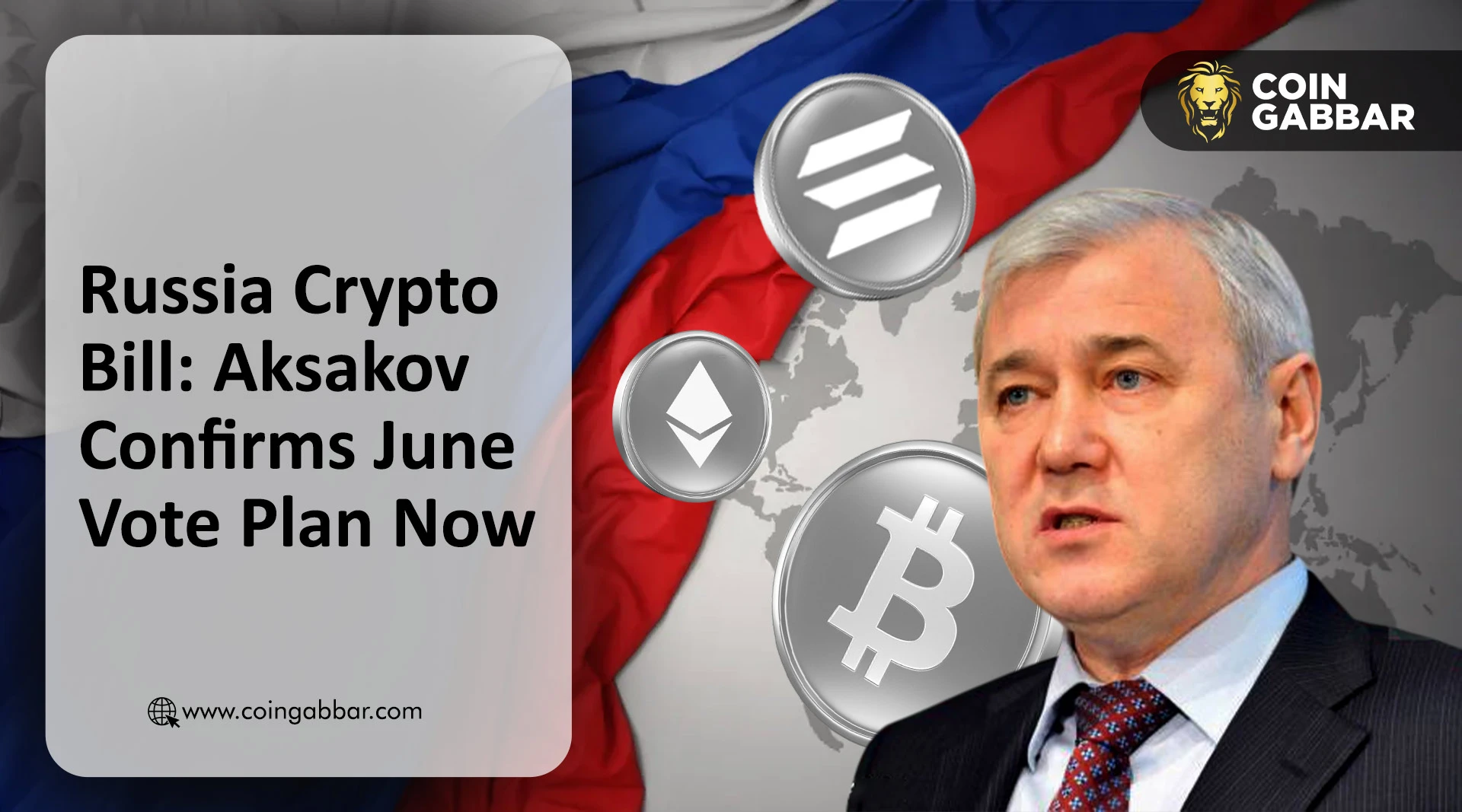
Russia’s digital asset bill has reached a decisive point. Anatoly Aksakov, chair of the State Duma Financial Markets Committee, said a full regulatory framework for digital assets will be ready for lawmakers to vote on by the end of June. If passed, the rules are expected to take effect from July.
Retail caps and exchange licensing sit at the center of the proposal
The proposal would move virtual assets into a clearer legal structure after years of operating in a gray area. For retail investors, the framework includes an annual trading cap and limits on the kinds of digital assets they may hold. Crypto exchanges would need to comply with stricter licensing and compliance standards, and only approved platforms would be allowed to offer trading services. The message is plain: unlicensed venues would face direct pressure under the new regime.
The Central Bank of Russia would also gain authority to determine which virtual assets qualify for trading inside the regulated market. Lawmakers are still discussing investor protection rules, trading safety standards, licensing requirements for exchanges and brokers, penalties for unregistered or illegal platforms, and systems for transparency, monitoring, and reporting.
Parliamentary work continues as implementation steps take shape
The bill is still being refined in parliament, with debate focused on structure, responsibility, and enforcement. The current timeline calls for the draft to be prepared for a parliamentary vote by the end of June, followed by possible implementation in July. The rollout would include mandatory registration for digital asset exchanges, enforcement of annual retail trading limits, and activation of central bank oversight mechanisms.
The framework also makes room for stablecoins in a specific use case. According to the proposal, stablecoins would be permitted for foreign economic activity through licensed brokers, extending their role beyond market trading and into cross-border payments tied to international commerce.
Regulatory clarity is paired with tighter control
The bill shows Russia pushing to treat crypto more like a supervised financial instrument. Supporters of the approach point to clearer legal boundaries, stronger investor safeguards, and better transparency across the trading ecosystem. Licensed exchanges may also increase trust in the market. At the same time, strict investment caps, higher compliance costs for platforms, and heavier supervision could reduce some trading activity.
The design of the bill is notable for combining restrictions with a targeted payments channel. While trading access would be narrowed and monitored, stablecoins would still have a place in licensed cross-border economic use. That balance sits at the heart of Russia’s latest digital asset push.