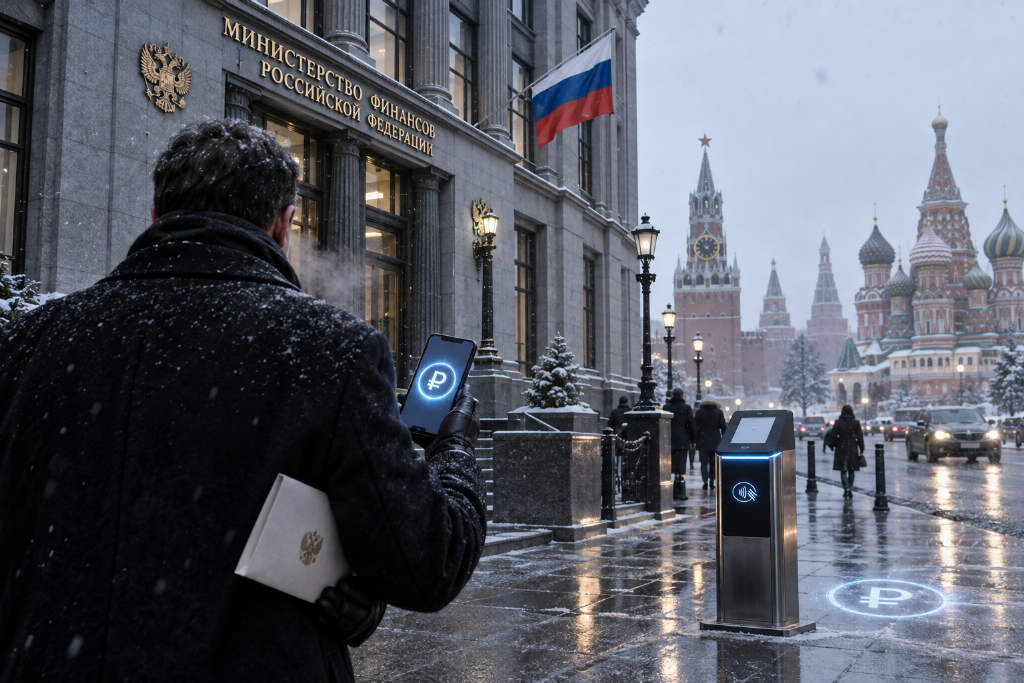
Russia’s Finance Ministry said Friday that some employees have received salary payments in digital rubles for the first time, marking an early internal use case for the country’s central bank digital currency. The ministry said participation in salary payments made through the CBDC is voluntary for Russian citizens and has been in effect since Oct. 1. It did not disclose how many employees took part, the total amount paid, or which departments were involved. According to a ministry press release, about 16 million digital rubles, or roughly $192,200, were disbursed during a 2025 federal budget expenditure pilot. The ministry said it then applied the validated payment channel to its own payroll process. Work to integrate the digital ruble into the budget process is being carried out jointly by the Bank of Russia and the Finance Ministry. Development of the digital ruble began in 2021. Cointelegraph reported on July 2 that Russia planned to launch the CBDC on Sept. 1, with major banks and retailers set to support related transactions, while EU authorities announced restrictions on the currency in April.
Russia’s Finance Ministry said Friday that some employees have received salaries in digital rubles for the first time.
The ministry said salary payments made in the central bank digital currency are voluntary for Russian citizens and have been in effect since Oct. 1. It did not disclose the number of participants, the total amount paid, or the specific departments involved.
According to a ministry press release, about 16 million digital rubles, or roughly $192,200, were disbursed in a 2025 federal budget expenditure pilot. The ministry said it then applied that validated channel to its own payroll process.
Work to incorporate the digital ruble into the budget process is being carried out jointly by the Bank of Russia and the Finance Ministry. Development of the digital ruble began in 2021.
Cointelegraph reported on July 2 that Russia planned to launch the central bank digital currency on Sept. 1, with major banks and retail businesses set to begin supporting related transactions at that point. The report said the currency would be introduced as a complement to the fiat ruble and would initially be accepted by financial and credit institutions. EU authorities announced restrictive measures on the currency in April.
This article was originally published by Bit.Fan. For more cryptocurrency news and market insights, visit www.bit.fan. Disclaimer:
The market information, project data, and third-party content displayed on this platform are for industry information sharing only and do not constitute any form of investment advice or return commitment.
Cryptocurrency trading carries high risks. Users should fully assess their risk tolerance and make independent decisions. All profits, losses, and legal responsibilities are borne by the users themselves.