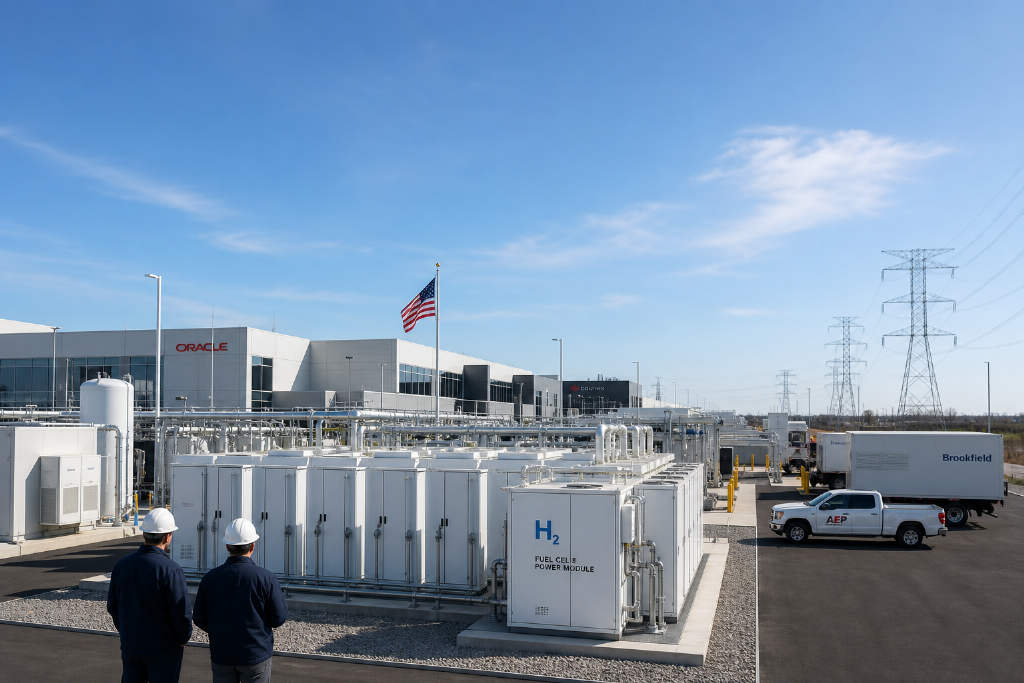
Rystad Energy says data center developers are turning to on-site fuel cells as grid congestion stretches interconnection timelines in the United States. The research firm estimates fuel cell market revenue will rise from about $2.8 billion in 2025 to roughly $30 billion by 2030, a tenfold increase. Signed orders already total around 9 gigawatts, including framework agreements involving Oracle, American Electric Power, Equinix, and Brookfield.
Rystad also projects cumulative fuel cell demand from data centers at 10.4 gigawatts between 2026 and 2030. By 2030, about 40% of U.S. data center capacity could use on-site generation, according to the report. North America is expected to account for 91% of global installed on-site generation capacity. On the supply side, combined manufacturer capacity could reach 4 gigawatts per year by 2030, up from 1.8 gigawatts now. The firm added that solid oxide fuel cells represent about 53% of cumulative stationary deliveries, while Bloom Energy holds nearly all major-load contracts in visible orders.
ChainCatcher reported that Rystad Energy expects data center developers to shift toward on-site fuel cells as grid congestion tightens power access.
The firm said fuel cell market revenue could climb from about $2.8 billion in 2025 to roughly $30 billion in 2030, marking a tenfold increase. Signed orders stand at around 9 gigawatts, including framework agreements involving Oracle, American Electric Power, Equinix, and Brookfield.
Rystad said interconnection timelines for large-load grid access in the United States now run from three to six years. It projects cumulative fuel cell demand from data centers at 10.4 gigawatts from 2026 through 2030. By 2030, about 40% of U.S. data center capacity could rely on on-site generation.
North America is expected to account for 91% of global installed on-site generation capacity. Combined manufacturing capacity could reach 4 gigawatts per year by 2030, up from 1.8 gigawatts at present.
By technology type, solid oxide fuel cells make up about 53% of cumulative stationary deliveries. Rystad added that Bloom Energy holds nearly all major-load contracts among visible orders.
This article was originally published by Bit.Fan. For more cryptocurrency news and market insights, visit www.bit.fan. Disclaimer:
The market information, project data, and third-party content displayed on this platform are for industry information sharing only and do not constitute any form of investment advice or return commitment.
Cryptocurrency trading carries high risks. Users should fully assess their risk tolerance and make independent decisions. All profits, losses, and legal responsibilities are borne by the users themselves.