
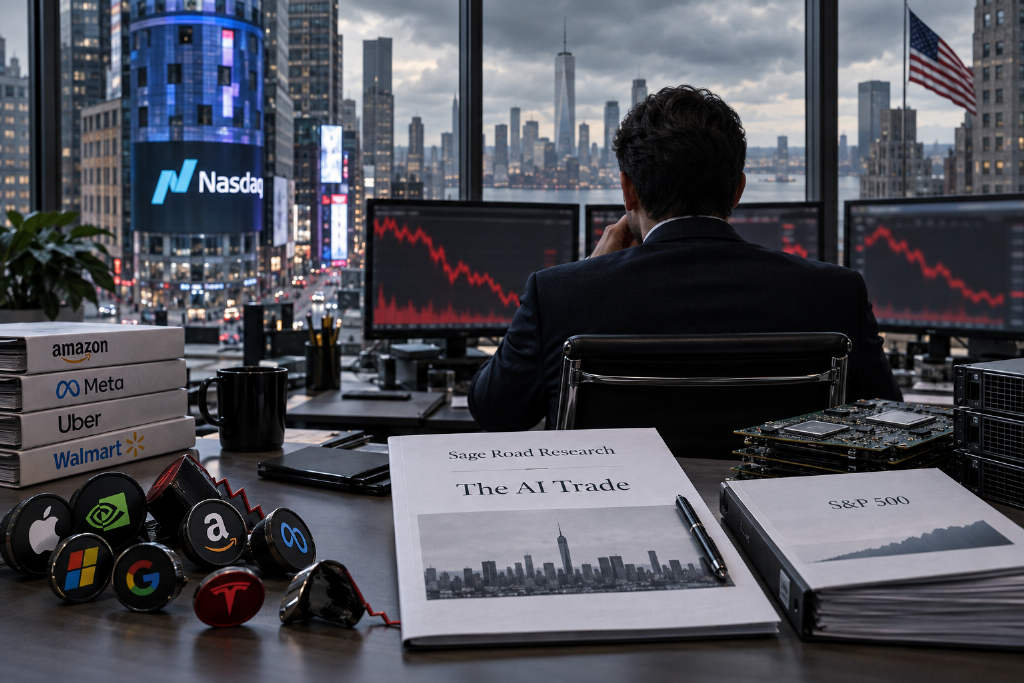
ChainCatcher reported that research firm Sage Road Research, in the executive summary of The AI Trade, said the Mag 7 has underperformed the Russell 3000 by about 8 percentage points this year and lagged the MSCI ACWI by nearly 9 percentage points.
The summary said the CBOE NDX volatility index relative to the VIX reached its highest level since the dot-com bubble in July. It also said the Nasdaq posted a 5% rebound over four days after entering a correction. At the time the report was written, shares of AI companies were down 20% from their 52-week highs in June.
Pressure on AI returns and model pricing
According to the report, companies are struggling to generate returns as AI costs surge. It said Uber, Amazon, Meta and Walmart have imposed restrictions on employee use of AI. The summary also said model homogenization is limiting pricing power, and Chinese open-source models are becoming lower-cost alternatives to OpenAI and Anthropic.
Capital spending and financing keep climbing
The executive summary said AI capital expenditure has exceeded expectations. Consensus for 2026 rose from $527 billion at the end of 2025 to about $800 billion by mid-year. By 2027, capital expenditure by hyperscale cloud providers is expected to account for 3% of U.S. GDP, more than double the 1.2% peak seen in late-1990s telecom fiber construction.
Allianz Research calculated that AI investment and sales show a growth gap of nearly 46%, worse than the 32% seen during the 2001 telecom bubble. As of June, hyperscale cloud providers and related entities including Nvidia had issued $225 billion in bonds, up 973.7% year over year. Off-balance-sheet liabilities at major technology companies also increased eightfold over four years to $1.65 trillion.