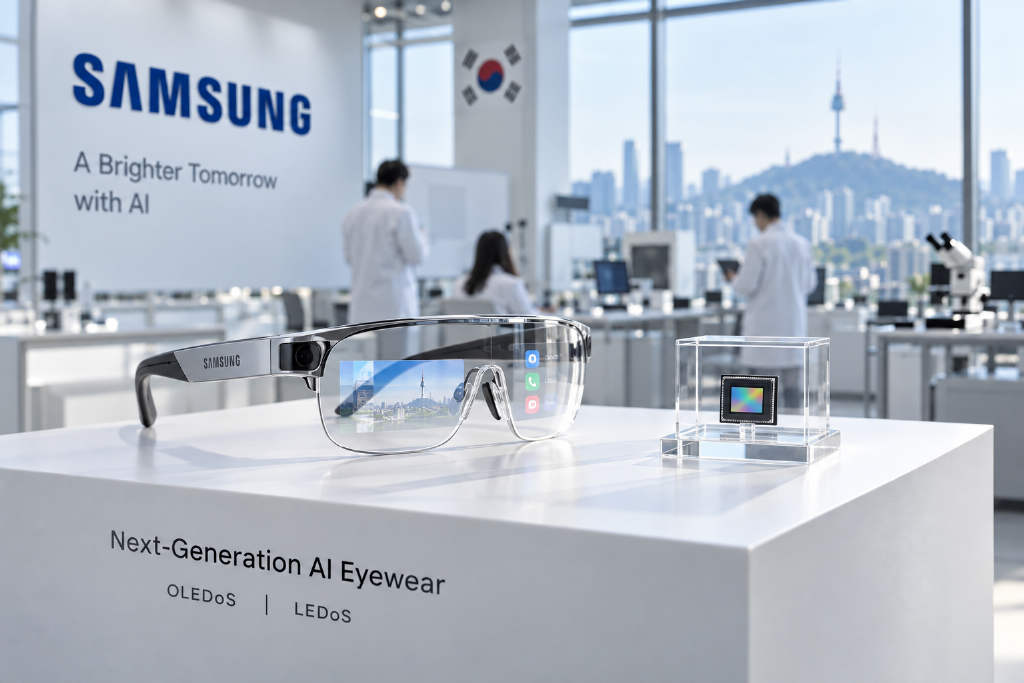
Samsung Electronics has begun work on its first AI glasses equipped with a display, according to a report cited by ChainCatcher from the Kechuangban Daily. The device is described as offering audio functions while also projecting color visual information onto the lens, putting it in a category similar to Meta Ray-Ban Display smart glasses. People in the industry said Samsung is considering an ultra-small display measuring 0.2 inches or less and handed the development task to Samsung Display last month, along with requirements covering product dimensions, display area, color and price. The company is now evaluating candidate panel technologies including OLEDoS and LEDoS, while major specifications remain undecided. Those include whether the glasses will use a binocular or monocular design. On color performance, the report said Samsung is expected to adopt limited 4-bit grayscale color rather than a high-definition screen. Industry sources added that RGB OLEDoS faces challenges in cost and yield, making a white OLEDoS panel a likely option. The product is expected by industry sources to arrive in the second half of 2027 or the first half of 2028.
Samsung Electronics has started developing its first AI glasses with a display, according to ChainCatcher, citing a report from the Kechuangban Daily. The device is said to provide audio functions and show color visual information on the lens, in a form factor similar to Meta Ray-Ban Display smart glasses.
Industry sources said Samsung is considering an ultra-small display measuring 0.2 inches or less for the AI glasses. Last month, the company assigned that display development work to Samsung Display and set requirements covering the product's physical dimensions, information display area, color and price.
Panel options are still under review
Samsung Electronics is currently evaluating candidate panel technologies including OLEDoS and LEDoS, while the product's specific details have not been finalized. Industry sources expect the glasses to be released in the second half of 2027 or the first half of 2028.
On color output, Samsung is expected to use limited 4-bit grayscale color instead of a high-definition screen. The company also has not decided whether the product will use a binocular or monocular design.
White OLEDoS seen as a likely option
Industry sources said RGB OLEDoS faces challenges in both pricing and yield, which makes a white OLEDoS panel a likely choice for the product.
The report also noted that Samsung previously released AI glasses without a display, developed jointly by Samsung Electronics, Google, Gentle Monster and Warby Parker.
This article was originally published by Bit.Fan. For more cryptocurrency news and market insights, visit www.bit.fan. Disclaimer:
The market information, project data, and third-party content displayed on this platform are for industry information sharing only and do not constitute any form of investment advice or return commitment.
Cryptocurrency trading carries high risks. Users should fully assess their risk tolerance and make independent decisions. All profits, losses, and legal responsibilities are borne by the users themselves.