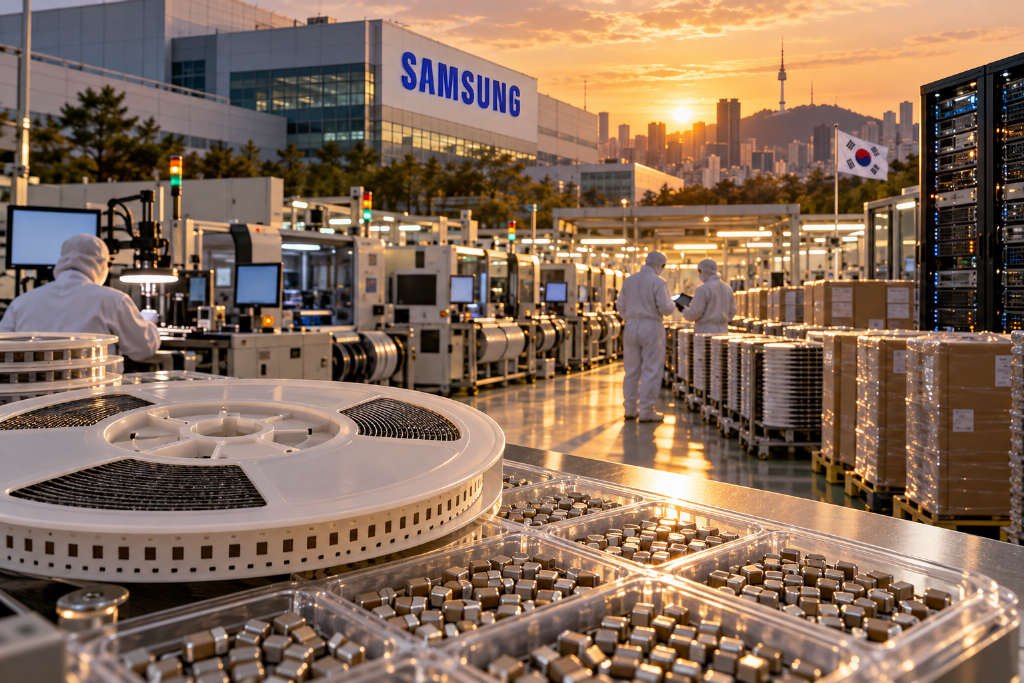
Samsung Electro-Mechanics' lead times for low-capacitance, high-capacitance, and automotive multilayer ceramic capacitors, or MLCCs, have extended from more than 30 weeks in September to 52 weeks in October, according to Wallstreetcn, citing data from Merrill Securities Korea. Some customers now face waits of about one year after placing orders. The report said Yageo, a Taiwan-based supplier, is keeping lead times for its main MLCC products at 30 to 52 weeks. Longer delivery cycles have spread beyond high-capacitance and high-performance products to low-capacitance and automotive applications. Lead times at NIC Components, Viking, and Holy Stone have also lengthened to varying degrees, while several companies are still maintaining price increases. On the demand side, AI servers are described as a major growth driver, with MLCC usage reaching more than 10 times that of ordinary servers. On the supply side, Samsung Electro-Mechanics' component division posted a 91% capacity utilization rate in the first half of this year, and its expansion project in the Philippines is not expected to reach mass production until after 2027.
Samsung Electro-Mechanics' lead times for low-capacitance, high-capacitance, and automotive multilayer ceramic capacitors, or MLCCs, have extended from more than 30 weeks in September to 52 weeks in October, according to Wallstreetcn, citing data from Merrill Securities Korea. Some customers are now waiting about a year after placing orders.
The report said Yageo, a supplier based in Taiwan, is keeping lead times for its main MLCC products at 30 to 52 weeks. The longer delivery cycle has spread from high-capacitance and high-performance products to low-capacitance and automotive products as well.
Lead times at NIC Components, Viking, and Holy Stone have also lengthened by varying degrees, and several companies are continuing to maintain price increases.
On the demand side, AI servers were identified as a major growth driver. Their MLCC content can exceed that of ordinary servers by more than 10 times.
On the supply side, Samsung Electro-Mechanics' component division posted a 91% capacity utilization rate in the first half of this year. Its capacity expansion project in the Philippines is expected to reach mass production only after 2027, leaving near-term supply pressure with little room to ease materially.
This article was originally published by Bit.Fan. For more cryptocurrency news and market insights, visit www.bit.fan. Disclaimer:
The market information, project data, and third-party content displayed on this platform are for industry information sharing only and do not constitute any form of investment advice or return commitment.
Cryptocurrency trading carries high risks. Users should fully assess their risk tolerance and make independent decisions. All profits, losses, and legal responsibilities are borne by the users themselves.