
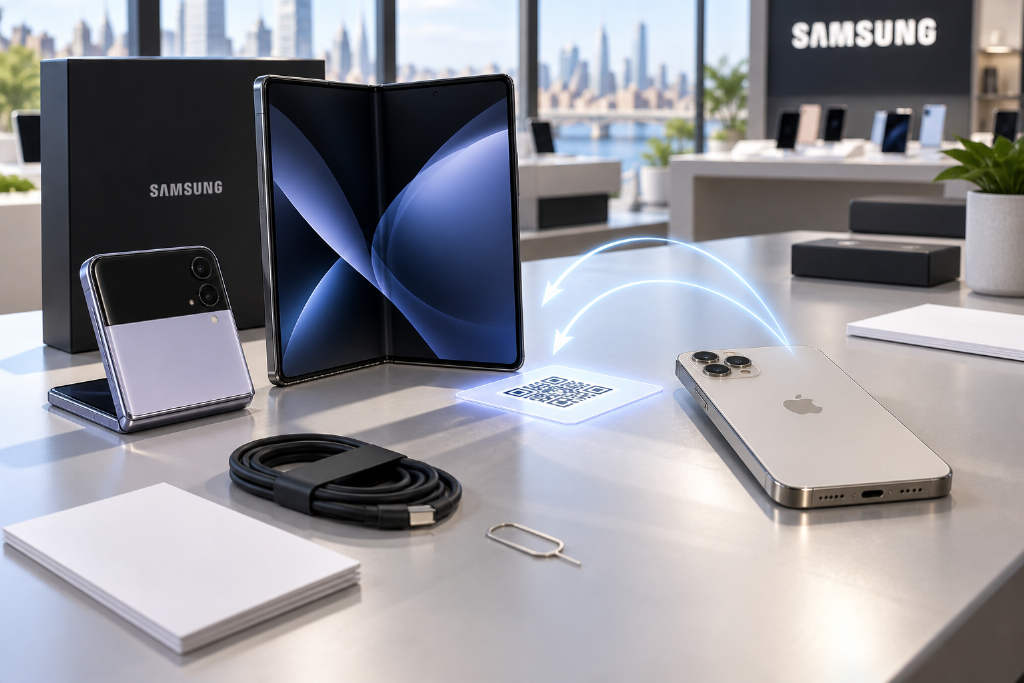
Samsung told CNBC that the Galaxy Z Fold8 series, launched in July, attracted iOS switchers worldwide at 1.6 times the rate recorded by the previous Fold7 and Flip7 generation. The figure was disclosed one day after Apple introduced its first foldable phone, the iPhone Duo.
Samsung entered the foldable category years earlier. The company released the first Galaxy Fold in 2019, while Apple only joined the segment this week.
30% of U.S. Flip8 buyers came from rival brands
Samsung also provided another data point for the U.S. market. Among Galaxy Z Flip8 buyers, 30% switched from competing brands, and most of them were buying a foldable phone for the first time.
The company said the two models are drawing different groups of buyers. Fold8 customers are focused on the thinner design and the inner screen’s ability to handle multitasking and content viewing. Fold8 Ultra buyers, by contrast, are coming for the larger display and added workspace, since that reduces the need to carry a separate tablet.
Smart Switch update cuts friction for iPhone users
Samsung recently updated its Smart Switch data transfer feature. iPhone users can now move data wirelessly to a Galaxy device by scanning a QR code, without first installing the Smart Switch app on the iPhone.
The change targets one of the most practical barriers in switching across ecosystems: the hassle of moving data. In Samsung’s framing, that friction can matter more than hardware specifications when users decide whether to change devices.
Counterpoint sees Samsung at 32% and Apple at 25%
According to data released by Counterpoint Research in July, Samsung is expected to lead the global foldable smartphone market this year with a 32% share. Apple, after entering the category, is projected to take 25%, while Huawei remains strong in the China market.
That suggests the research firm had already expected Apple to capture a quarter of the foldable market in its first year even before the product’s formal debut. Samsung remains ahead under that forecast, but the gap is less than 10 percentage points.