
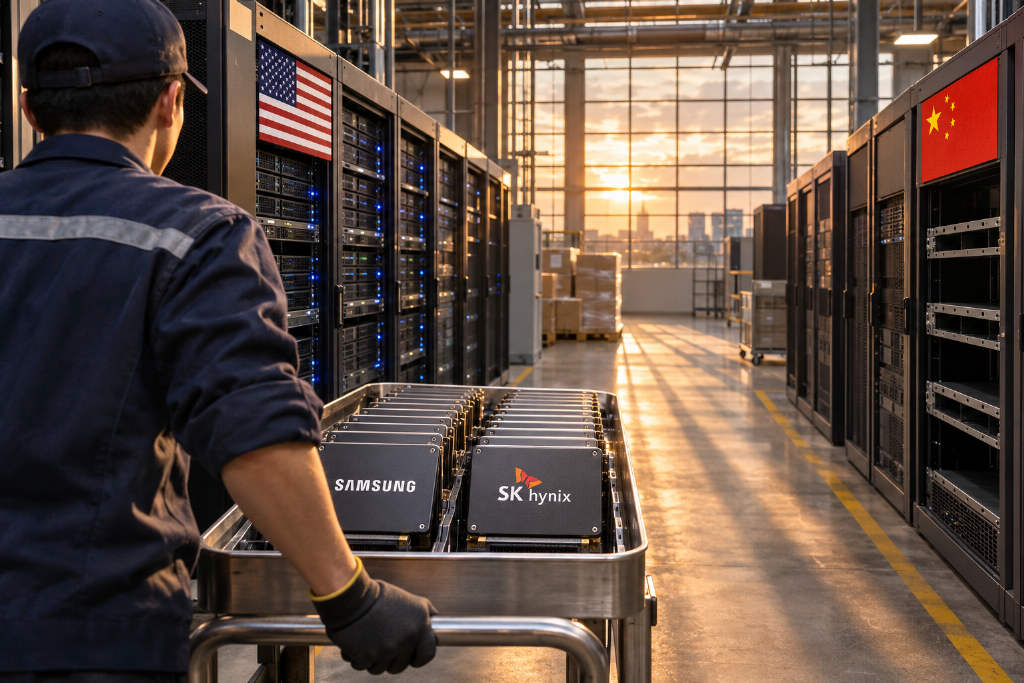
Samsung Electronics, SK Hynix and other memory makers have decided to allocate some enterprise solid-state drive supply previously discussed with Chinese customers to US buyers, according to a Nov. 12 report by ZDNet Korea cited by ChainCatcher.
Alibaba, Baidu and Tencent, three of China’s major artificial intelligence companies, have decided to reduce their eSSD orders to levels below earlier expectations. The memory suppliers are aware of the cuts. The report said demand for the storage used alongside advanced AI hardware has fallen as supplies of graphics processors and high-bandwidth memory have become harder to obtain following tighter US export controls on China.
AI semiconductor restrictions weigh on Chinese orders
Enterprise SSDs, or eSSDs, are NAND-based storage modules used mainly in data centers. They serve as auxiliary devices for storing data. A source cited in the report said the main reason Chinese companies reduced their orders was the difficulty of obtaining AI semiconductors.
The US government has effectively barred companies such as Nvidia and AMD from exporting advanced AI semiconductors to China. High-bandwidth memory used with those chips is also subject to controls. Chinese companies had previously sought to bypass the restrictions by importing products through overseas entities and dismantling products, but those routes have gradually become harder to use. Investment plans have consequently been delayed.
Supply intended for US cloud providers
Another source said the memory makers had indeed revised their eSSD supply plans for China. The supply in question is planned to be redirected to US cloud service providers.
That source said demand for storage from US data centers remains solid and that supply shortages could continue into next year and the following year. Industry sources said NAND supply remains tight in the US and other global markets. They added that demand reduced in China would be taken up by US data-center companies, meaning the shift would not have a major effect on overall NAND and SSD demand.



