



SanDisk posted an earnings report with an unusual mix shift.
On Oct. 29, the storage chip maker reported results for the first quarter of fiscal 2027, with revenue again topping the prior quarter’s level, and announced a stock split and a large buyback. The bigger story in the filing was where the new revenue came from: data centers, not the retail storage cards and portable drives many consumers associate with the company.
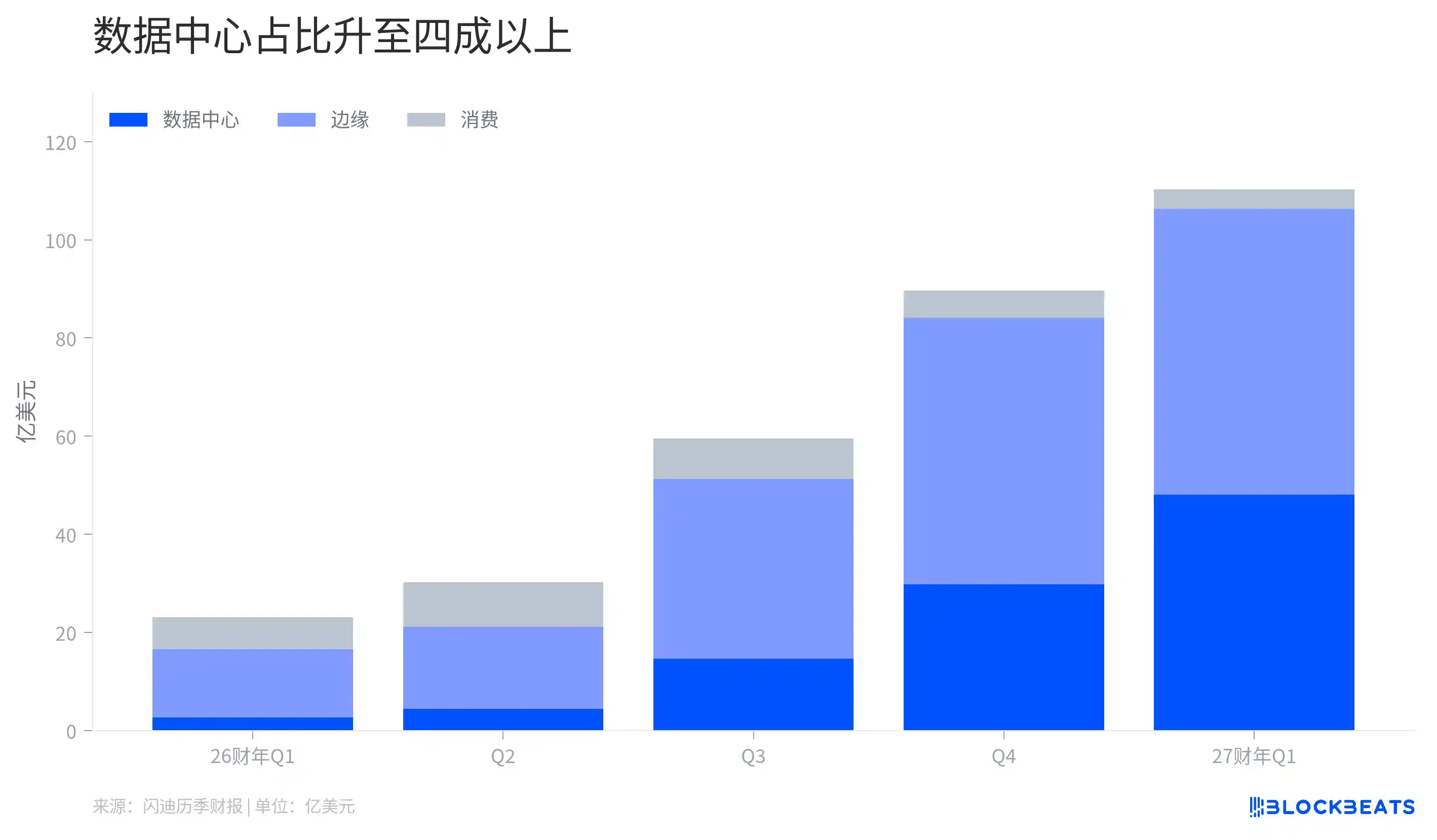
Data center revenue climbed to about 44% of total sales
According to SanDisk’s earnings report, revenue for the latest quarter reached $11.031 billion, nearly 4.8 times the level from the same period a year earlier. That headline number masks very different moves across customer groups.
A year ago, edge was already SanDisk’s largest source of revenue. That category includes customers in smartphones, personal computers, automotive and industrial markets, and is reported separately from consumer, where retail storage cards sit. In the latest quarter, edge remained the biggest segment, but data centers gained ground much faster.
Using the company’s figures, the data center share of revenue rose from about 12% to about 44%. Put another way, out of every $100 of product sold a year ago, roughly $12 came from that market. Now the figure is close to $44.
Consumer followed a different path. The segment peaked in fiscal 2026’s second quarter and has declined since then. SanDisk’s familiar retail brands are still on shelves, but they no longer explain the full picture of the company’s growth.
The segment labels matter here. In SanDisk’s reporting, “consumer” refers to retail and other end-user products, while flash memory bought by smartphone and PC manufacturers is counted under edge. A decline in consumer revenue does not mean all storage demand tied to personal devices is falling.
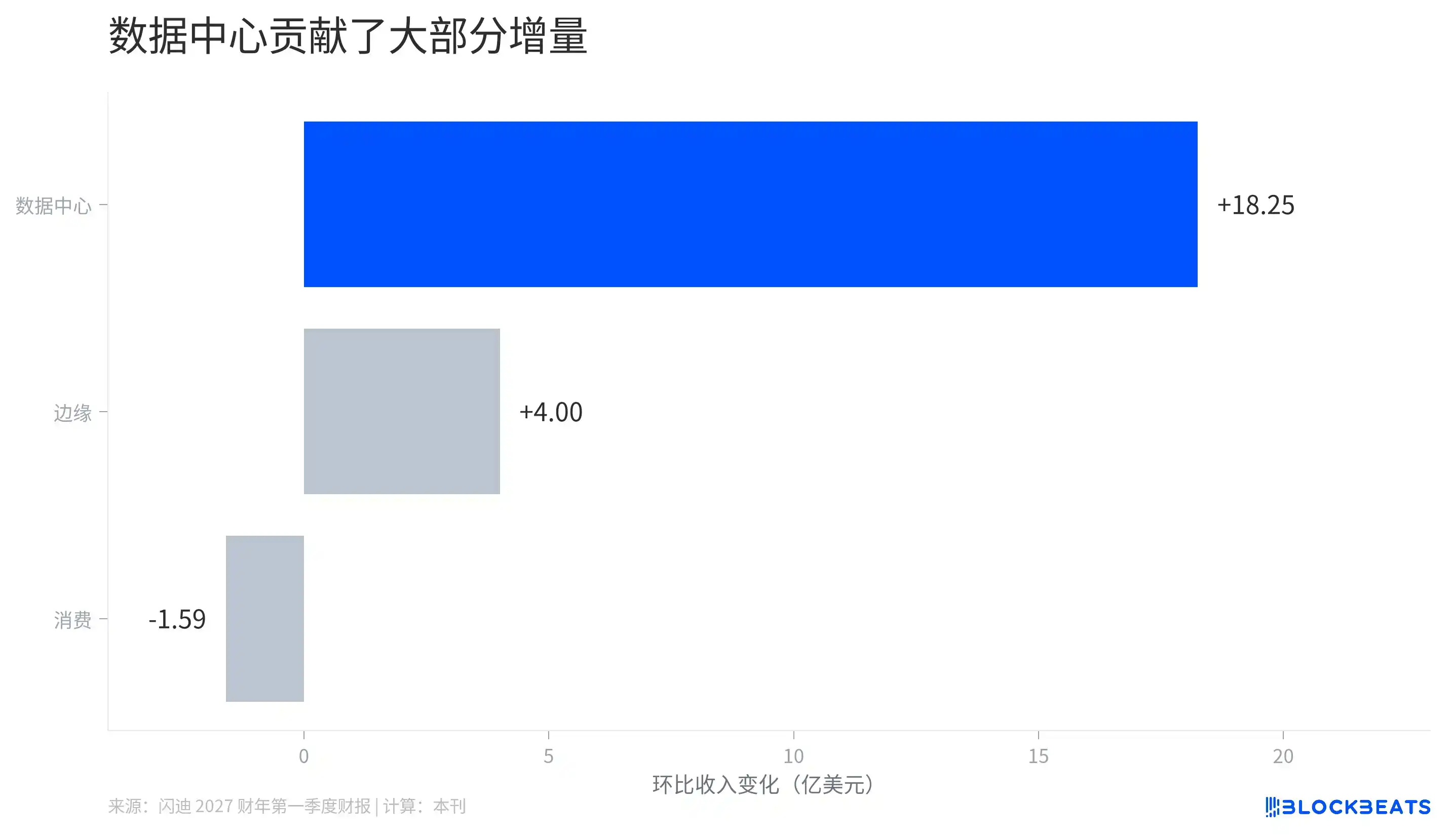
Most of the quarter-on-quarter increase came from data centers
The shift becomes clearer when the latest quarter is compared with the one before it.
SanDisk said data center revenue increased by $1.825 billion from the prior quarter. Measured against the company’s net increase in total revenue, that segment accounted for about 88% of the gain. That is a net-increase calculation, so the decline in consumer is included in the denominator.
Edge still grew, but its increase was much smaller than data center’s. Consumer moved lower and offset part of the expansion elsewhere. The result is a company with rising overall revenue but customer groups moving on different purchasing schedules.
Revenue growth alone does not answer another key question: did SanDisk sell more capacity, or did it get more per unit of capacity sold? Those are not the same thing, and they point to different readings of the cycle.
In the previous quarter’s earnings report, the company gave one split of that change, saying about two-thirds of quarter-on-quarter revenue growth came from pricing and about one-third from volume. That explanation applied to the prior quarter and cannot simply be carried over to the latest one.
Over a longer period, pricing still stands out. In its annual report, SanDisk said fiscal 2026 data center sales volume, measured by capacity, rose about 120%, while revenue per GB increased about 150%. Those figures describe different dimensions and cannot be added together as a revenue growth rate.
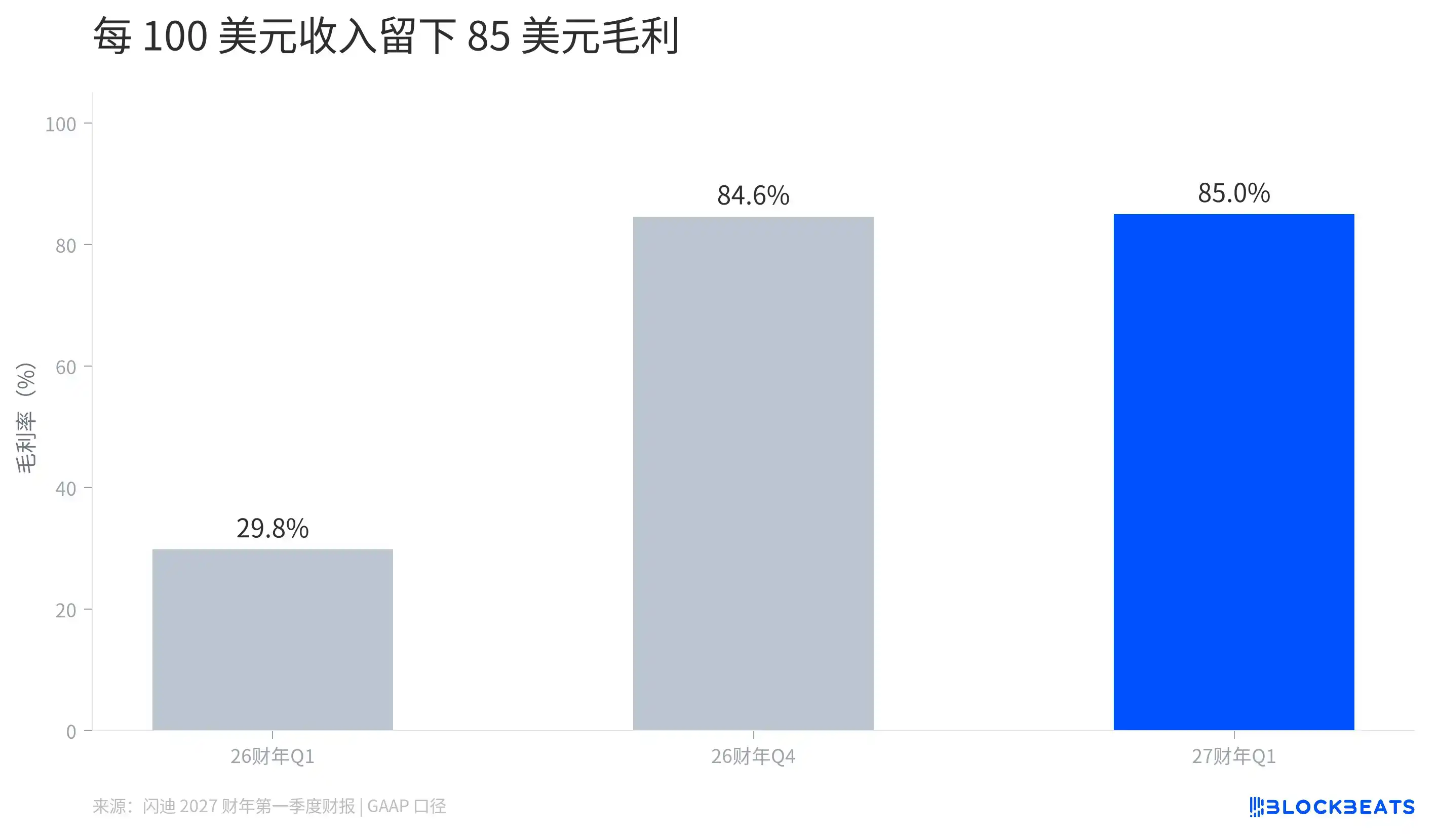
Gross margin improved sharply, though the quarter-on-quarter rise slowed
Margins changed as much as revenue did.
Under U.S. GAAP, SanDisk said it kept about $85 in gross profit for every $100 of revenue after cost of sales in the latest quarter. In the same period a year earlier, the figure was less than $30.
Gross profit is not the same as final profit. The company still has to cover research and development, administrative and selling expenses, followed by items such as interest, investment income and taxes. The latest quarter’s GAAP net income included gains from securities investments, which means not all of it should be read as profit generated by storage product sales.
Two clues help explain the margin move: higher pricing and a product mix shift toward higher-value customers. SanDisk referred to both in its prior fiscal-year results. Even so, the available disclosures do not allow a precise breakdown of how much each factor contributed to the latest quarter’s gross margin change.
One more detail stands out. Gross margin was only slightly higher than in the previous quarter. Revenue kept rising, but the sharp jump in margin had already started to cool. The two lines answer different questions: how much revenue the company booked, and how much of each revenue dollar remained after cost of sales.
$6.363 billion in operating cash flow, with buybacks near adjusted free cash flow
The final set of numbers in the report deals with cash collection and cash use.
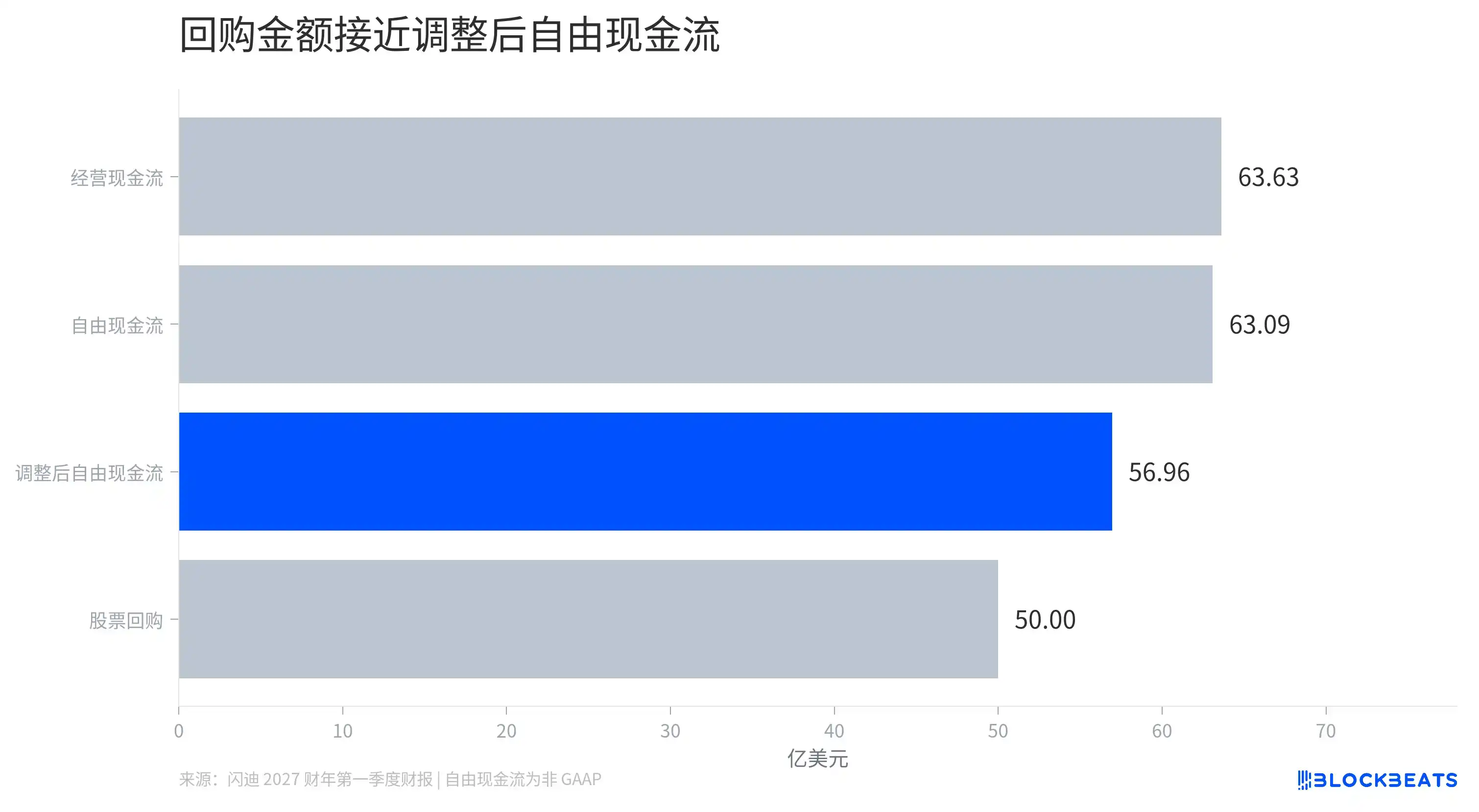
SanDisk reported $6.363 billion in cash generated from operating activities in the latest quarter. After capital spending on property and equipment, the company’s disclosed free cash flow came in slightly below that level.
The company also presented adjusted free cash flow. That measure adjusts free cash flow for activity related to the Flash Ventures joint venture, as well as the effects of prepayments and deposits under its new commercial model agreements. SanDisk said the purpose was to show what it sees as a better view of underlying business cash flow, not to suggest that prepayments were not real cash receipts.
In the same quarter, SanDisk spent $5 billion on share repurchases, a figure close to adjusted free cash flow. The comparison helps frame the scale, but the earnings report did not say the buyback was funded directly out of that metric alone.
The new commercial model also changed customer relationships. In its Investor Day announcement, SanDisk said agreements under that structure now cover expected shipment volume equal to about half of fiscal 2027. With customers committing and paying earlier, a single quarter’s net income no longer captures the full change in the company’s cash profile.
This quarter’s shift at SanDisk showed up in more than data center revenue. It also appeared in pricing per unit of storage and in how customers are paying the company.