

SanDisk posted quarterly revenue of $8.965 billion in its latest earnings release, with the company saying the figure was up 51% from the previous quarter.
The period is labeled FY2026 Q4 in the company’s reporting calendar. It ended on July 3 and covers most of the second quarter in the calendar year, making it the latest operating snapshot for that span.
In an 8-K attachment filed with the U.S. Securities and Exchange Commission, SanDisk said the results remain subject to fiscal closing and audit procedures, and the final 10-K may be adjusted. The figures here are based on the earnings release. Management’s guidance for the next quarter is not treated as realized revenue.
Revenue climbed sharply from FY2025 Q4
According to the company, revenue was $1.901 billion in FY2025 Q4. In the latest quarter, it reached $8.965 billion.
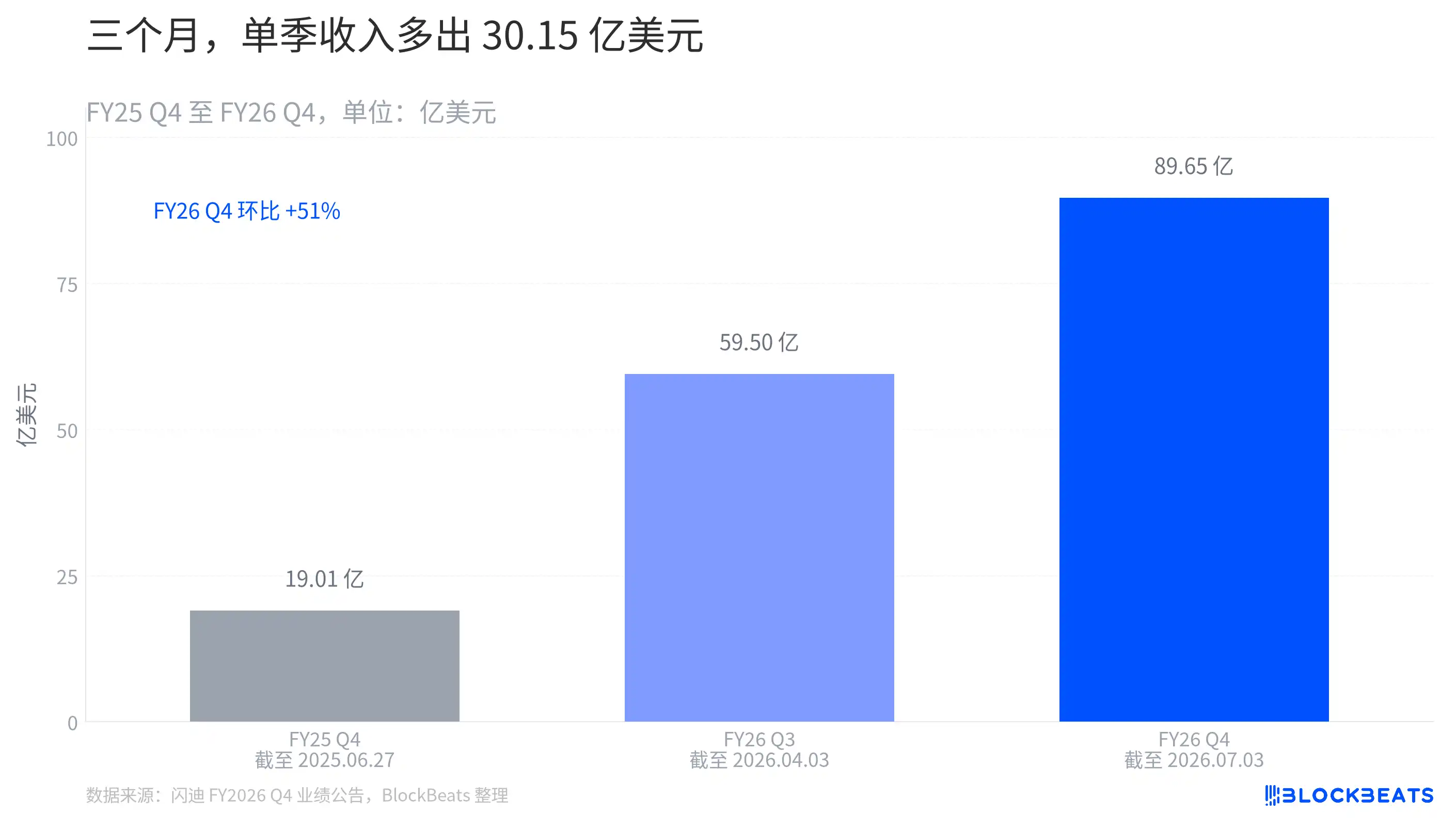
On a sequential basis, SanDisk added $3.015 billion in revenue from the prior quarter. That increase alone was larger than the company’s full-quarter revenue in FY2025 Q4, a much more direct illustration of the scale of the jump than a simple growth rate.
SanDisk’s midpoint revenue guidance for the next quarter is already above $10 billion, but that remains management’s current view rather than booked revenue.
Most of the incremental revenue stayed in gross profit
The latest quarter’s extra $3.015 billion in revenue did not come with a comparable rise in costs. SanDisk said cost of sales increased by only about $95 million from the prior quarter.
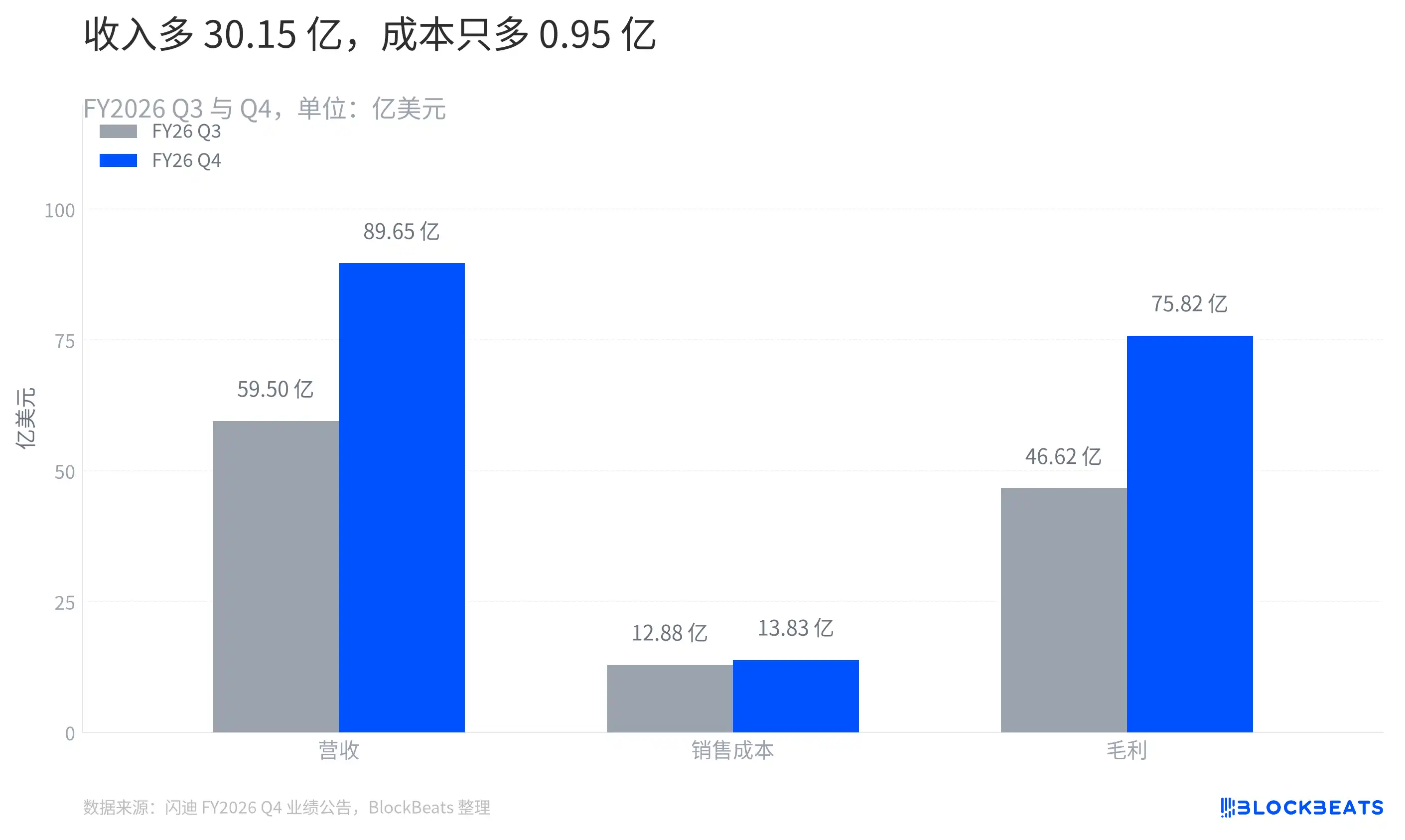
For a NAND manufacturer, that shift matters. Incremental revenue came in without a matching step-up in manufacturing expense, allowing gross margin, already above 80%, to move higher again. Put simply, most of each additional dollar of revenue stayed in gross profit.
The profit line still needs to be separated carefully. Based on the company’s reconciliation, GAAP net income and non-GAAP net income differed by about $741 million. One major item was an $804 million gain on equity securities that SanDisk excluded from its non-GAAP measure. Gains tied to valuation changes or disposals are not the same as profit generated by selling more flash products during the quarter, so the full brightness of the GAAP income statement cannot be assigned to the core business alone.
Data center grew fastest, but Edge remained the largest base
By segment, data center revenue doubled in the quarter, making it the most obvious piece of the AI narrative.
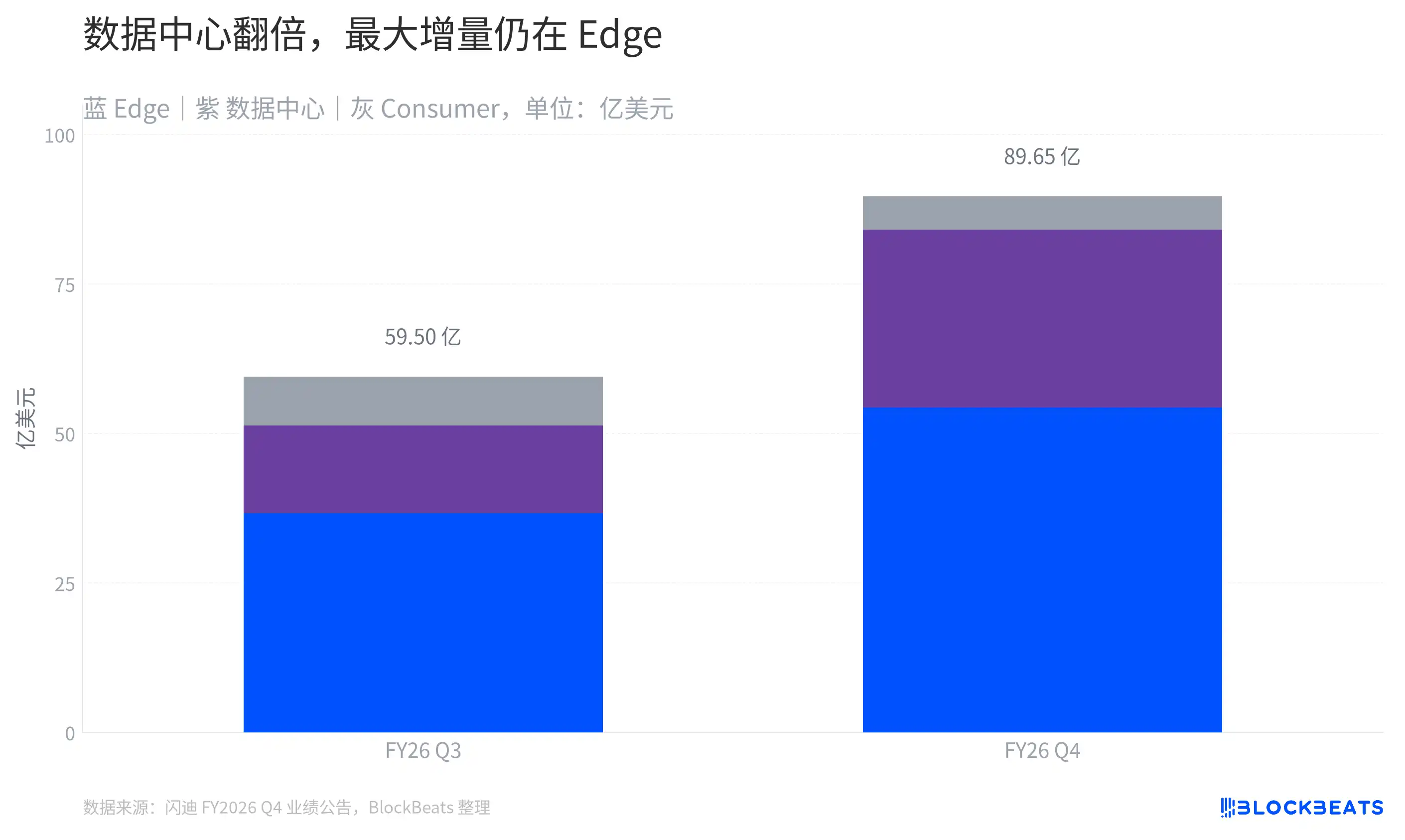
Viewed alongside the company’s three end markets, though, Edge was still the largest revenue base, and its dollar increase in the quarter was slightly higher than data center’s. Consumer, by contrast, became thinner.
That split matters. Data center delivered the fastest growth rate, while Edge supplied the larger revenue increment. Consumer’s decline shows the surge was not the result of every end market moving up at once. Demand was being reordered across different endpoints with different intensity.
Pricing did more than volume
SanDisk offered an unusually direct breakdown of sequential revenue growth in its earnings release. About one-third came from higher shipment volume, and about two-thirds came from higher pricing.
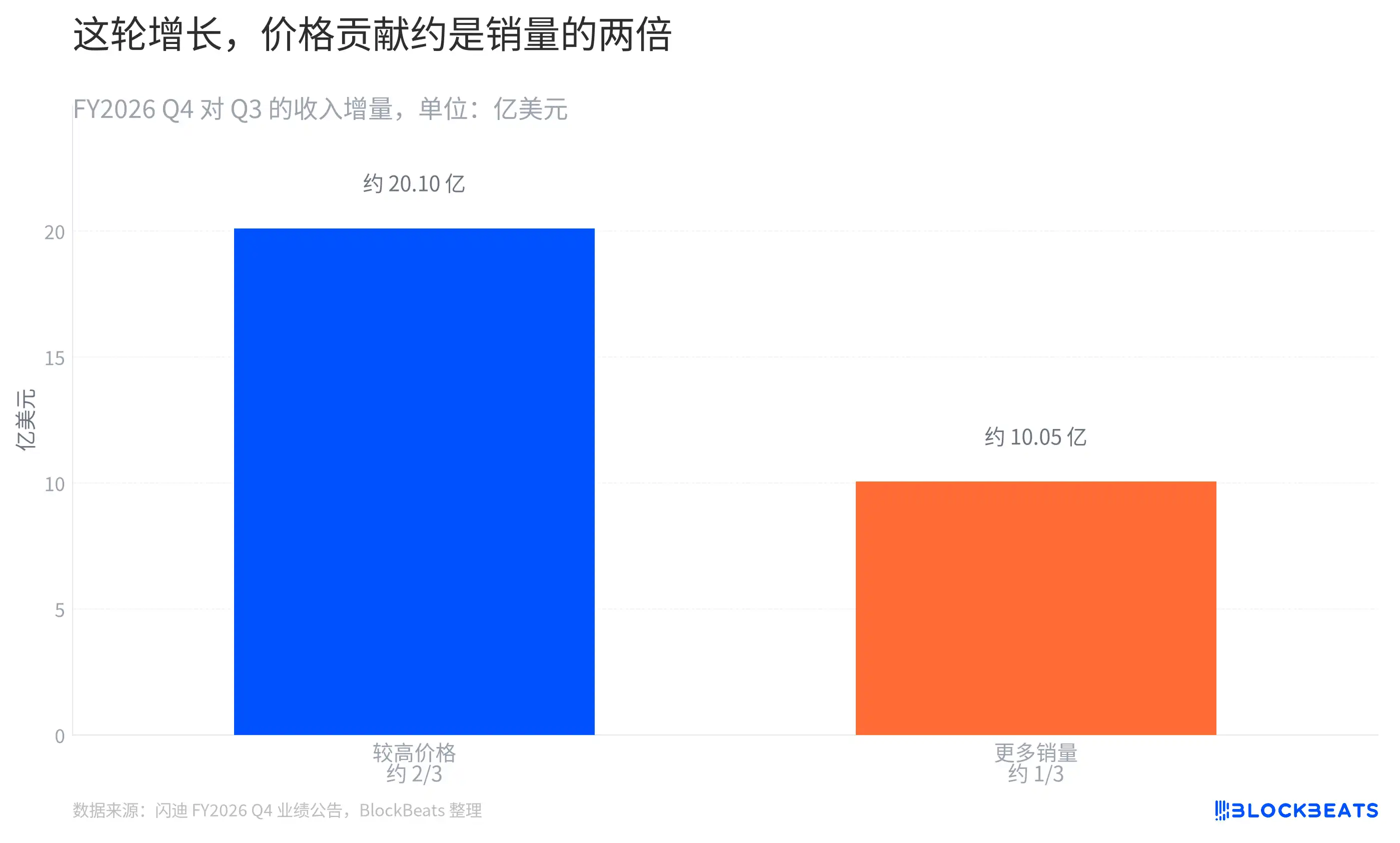
Using the company’s own proportions, pricing contributed about twice as much as volume. Customers were not only buying more NAND. SanDisk was also selling at a higher level of unit revenue.
When pricing and product mix move up together, and manufacturing costs do not rise in step, the income statement starts to show the kind of fold seen earlier in the quarter: revenue stretching out while costs stay close to flat.
SanDisk’s latest second-quarter snapshot does not read as a one-line AI story. Data center made the growth easier to see. Edge preserved the biggest increment in scale. Pricing turned that added revenue into a thicker layer of profit.