

A bizarre lawsuit in New York could send shockwaves through the Bitcoin community. An anonymous plaintiff, Noah Doe, along with two unnamed Wyoming LLCs (“ABC Company” and “XYZ Company”), has petitioned the New York State Supreme Court to declare them the legal owners of over 3.7 million Bitcoin held in 39,069 dormant addresses—worth approximately $293.5 billion at current prices. Among those addresses are 21,744 that have long been associated with Bitcoin’s creator, Satoshi Nakamoto. Those addresses hold roughly 1.09 million BTC, a treasure trove valued at about $83.7 billion.
The suit is built on New York’s lost property framework. Under Article 7-B of the state’s Personal Property Law, a finder who turns an item over to the police and gives the true owner a statutory waiting period can eventually acquire ownership. Noah Doe claims to have “found” the Bitcoin addresses—not the private keys, just the publicly visible addresses—and surrendered them to the New York City Police Department’s 17th Precinct on a USB drive. To satisfy the notice requirement, he published an OP_RETURN message on the Bitcoin blockchain and issued press releases. To accelerate the process, an unnamed expert appraised each address as worth “less than $10,” slotting every address into the shortest possible statutory window under Sections 254 and 257(2).
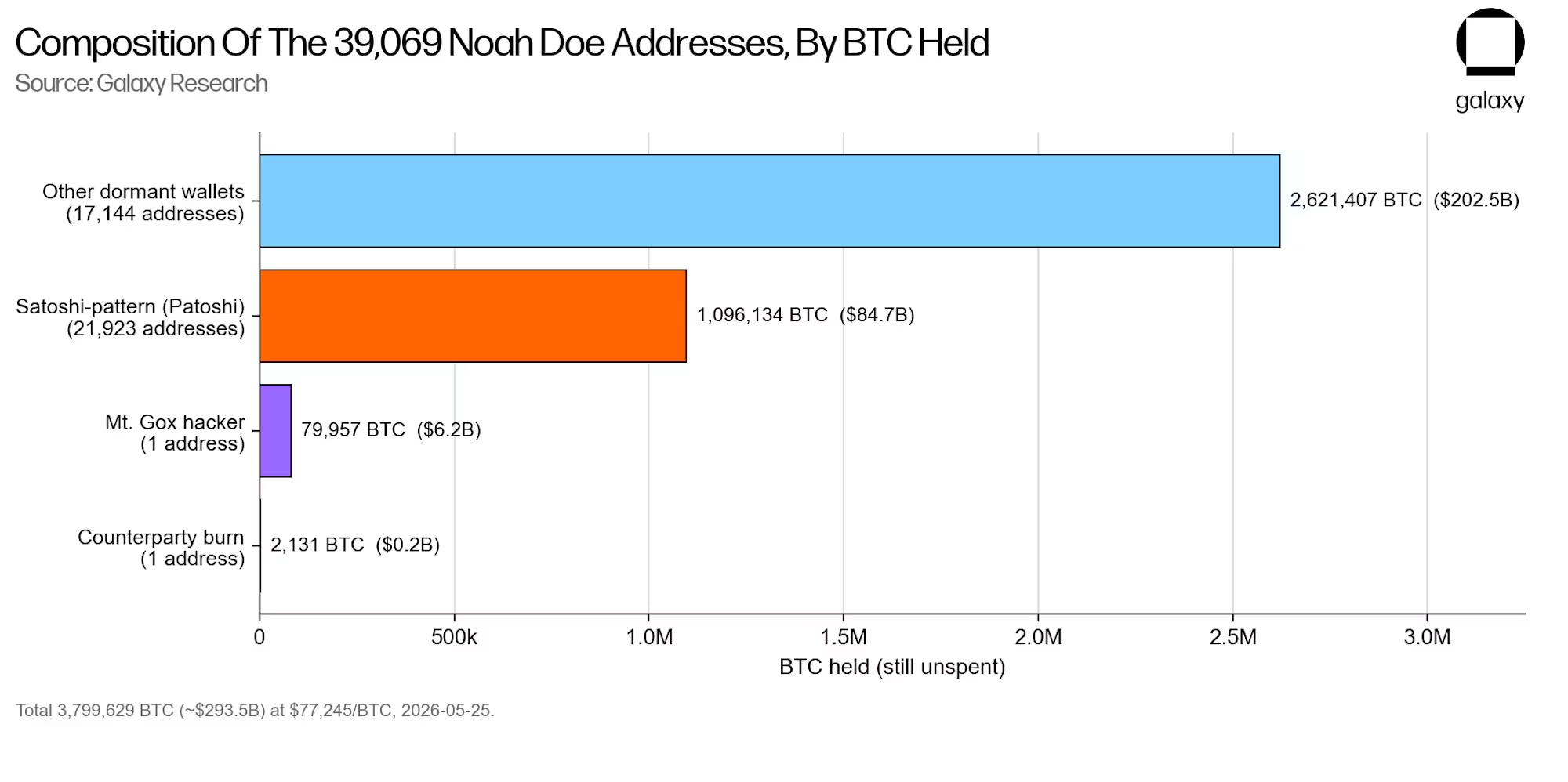
The complaint’s logic is a chain: the sub-$10 valuation triggers a uniform one-year vesting period, the chain message and press release substitute for personal notice, and the court then declares ownership transferred. However, when Galaxy Research ran the addresses through its full node and internal database, the narrative quickly fell apart. The 39,069 Noah Doe addresses hold 3,799,629 BTC as of May 25, 2026. Those coins are far from randomly distributed; they cluster into distinct categories that tell very different stories.
Breakdown of the Claimed Addresses
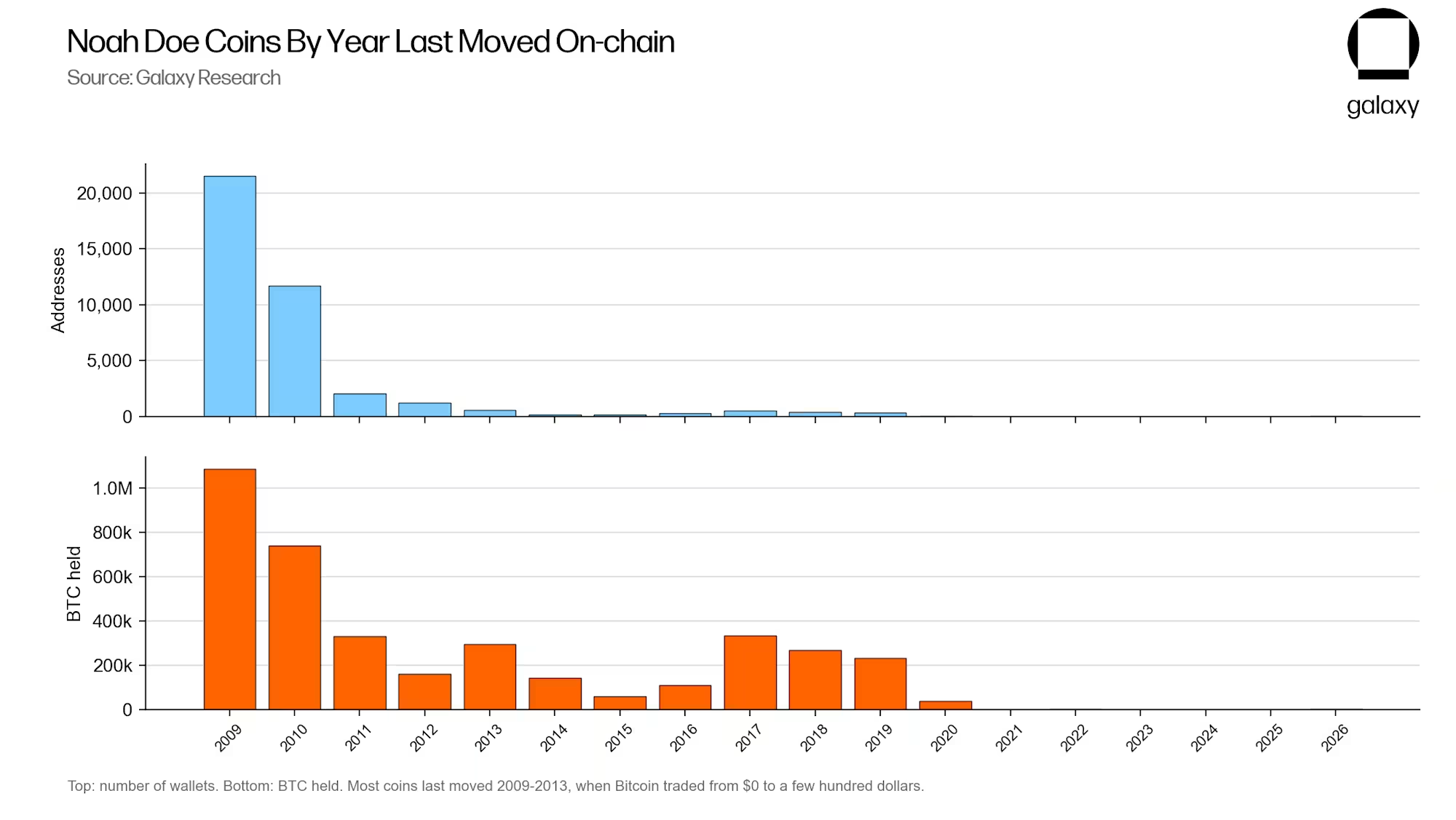
The largest piece comprises 21,923 Patoshi addresses tied to Bitcoin’s creator through the early “Patoshi” nonce pattern, holding about 1,096,134 BTC (around $84.7 billion) that have never moved. Then there is a single address containing 79,957 BTC—roughly $6.2 billion—that was stolen from the Mt. Gox exchange and has lain untouched since 2011, an address already subject to years of investigation. Another single address holds 2,131 BTC but is provably unspendable, a “burn” address for which no private key can exist. The remaining 7,144 addresses contain approximately 2,621,407 BTC, or $202.5 billion, reflecting a mix of early holders and exchange-era coins whose last on-chain activity clusters heavily between 2009 and 2013.
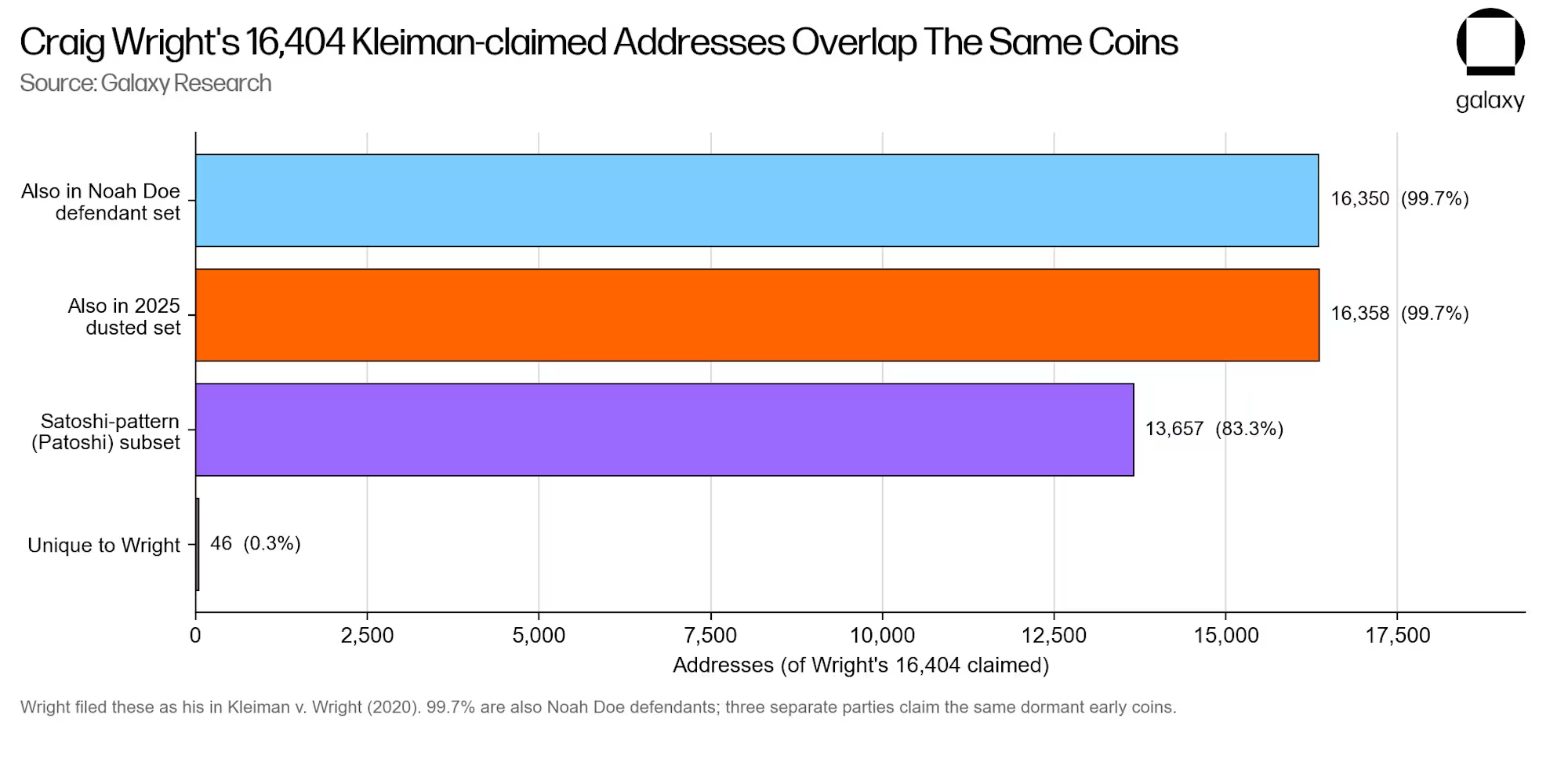
Adding to the absurdity, many of these addresses were already claimed years ago. During the 2018 Kleiman v. Wright lawsuit in Florida, Australian businessman Craig Wright submitted a list of 16,404 early block addresses he insisted belonged to him as part of his since-rejected Satoshi identity claim. Galaxy overlaid Wright’s list with Noah Doe’s claimed addresses and found substantial overlap. The plaintiff is essentially seeking a court order for property that another individual has already publicly, albeit controversially, asserted is his.

Legal Flaws and Procedural Anomalies
Galaxy points out that the core premise—that a finder of a public address can assert ownership under a lost property statute designed for physical items—is fundamentally unsound. Noah Doe never possessed the coins or their private keys; he merely observed entries on a public ledger. Handing over a USB stick containing addresses is not the same as turning over tangible property. Losing a private key does not strip the true owner of legal rights, and the actual key holders can move the Bitcoin at any time. Ownership cannot be transferred to a finder who has no ability to access the asset.
The less-than-$10 valuation is equally indefensible. The average Noah Doe address holds 97.25 BTC, worth approximately $7.5 million; the median is 50 BTC, roughly $3.86 million. Labeling each address as virtually worthless is a transparent attempt to bypass serious judicial scrutiny. Worse, the expert who provided this figure remains unnamed in the filings, making the number impossible to challenge or verify.

The use of pseudonyms also raises red flags. Noah Doe seeks anonymity to avoid being targeted as a large holder, yet his legal action would force the actual address owners to reveal themselves in order to defend their cryptocurrency. The two Wyoming LLCs, as corporate shells, have no physical person to be threatened and no privacy to protect. New York courts rarely permit pseudonymous litigation, and the state’s LLC Transparency Act now mandates disclosure of beneficial ownership, contrary to the stance taken by these anonymous companies.

The Default Judgment Threat
The defendants—the addresses’ real owners—are pseudonymous and deliberately undisclosed, meaning they are unlikely to receive actual notice. A technical default judgment is therefore almost certain by late June 2026, roughly 30 days after service. A motion for default judgment is expected over the summer. However, a court is unlikely to grant everything the plaintiffs seek quickly, given the questionable valuation, the anonymity issues, and the extraordinary scope of the claim.
Yet the real danger is not that the plaintiff will seize Satoshi’s Bitcoin. The danger is that if any of these coins ever move to a centralized exchange or custodian, the plaintiff could present the New York judgment and attempt to assert a security interest. Such a move could freeze assets, trigger years of litigation, and force long-dormant holders to come forward and prove ownership—jeopardizing their hard-won anonymity.

This lawsuit, however far-fetched, illustrates a stark reality: the pristine on-chain ownership that Bitcoin promises can be weaponized through legacy legal frameworks. Satoshi’s addresses, silent on the public ledger for over a decade, have now been dragged into a courtroom spotlight in one of the most provocative—and legally dubious—property claims the crypto world has ever seen.