

Satoshi Nakamoto, the pseudonymous creator of Bitcoin, probably never imagined he could one day be a defendant in a “lost and found” case. In March, the New York Supreme Court accepted a bizarre lawsuit: a plaintiff using the pseudonym Noah Doe, together with two unnamed Wyoming limited liability companies, is asking the court to declare them the lawful owners of 39,069 dormant Bitcoin addresses and the more than 3.7 million BTC contained within—valued at roughly $293.5 billion at current prices. Even more startling, the list includes 21,744 addresses believed to belong to Nakamoto, holding about 1.096 million BTC worth approximately $83.7 billion. The plaintiffs are attempting to retrofit New York’s lost property law onto publicly visible blockchain addresses, dressing a digital scavenger hunt in the language of legal ownership.
Case Overview and Legal Maneuver
The claim is brought under New York CPLR §3001, seeking a declaratory judgment, and ultimately rests on the state’s Personal Property Law §7-B, which normally governs lost physical items. Under that statute, a finder who delivers lost property to the police can acquire ownership if no valid claim is made within a specified waiting period. Noah Doe styled himself as the finder: he handed a USB drive containing the 39,069 public addresses—not the private keys or any proof of ownership—to the NYPD’s 17th Precinct. He then broadcast an OP_RETURN message on the Bitcoin blockchain and issued press releases to serve as notice to the purported owners. More artfully, an unnamed expert opined that each address’s “as-is” value is under $10, which pushed the case into the statute’s fastest track—items valued below $100 need be held by police for only three months, after which a one-year period sets in before the finder can claim outright ownership.
Address Composition: Satoshi, Mt. Gox, and Giant Dormant Wallets
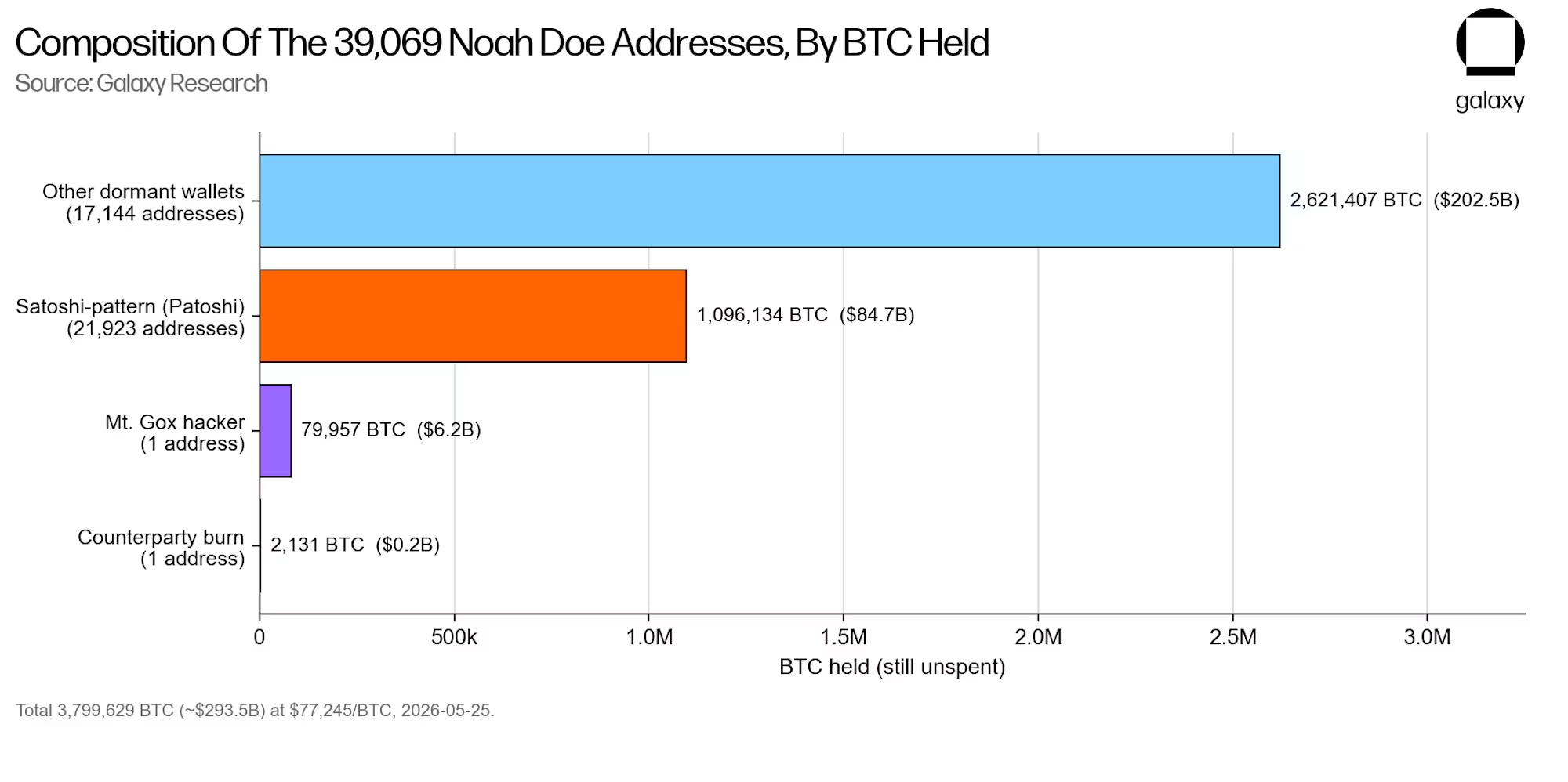
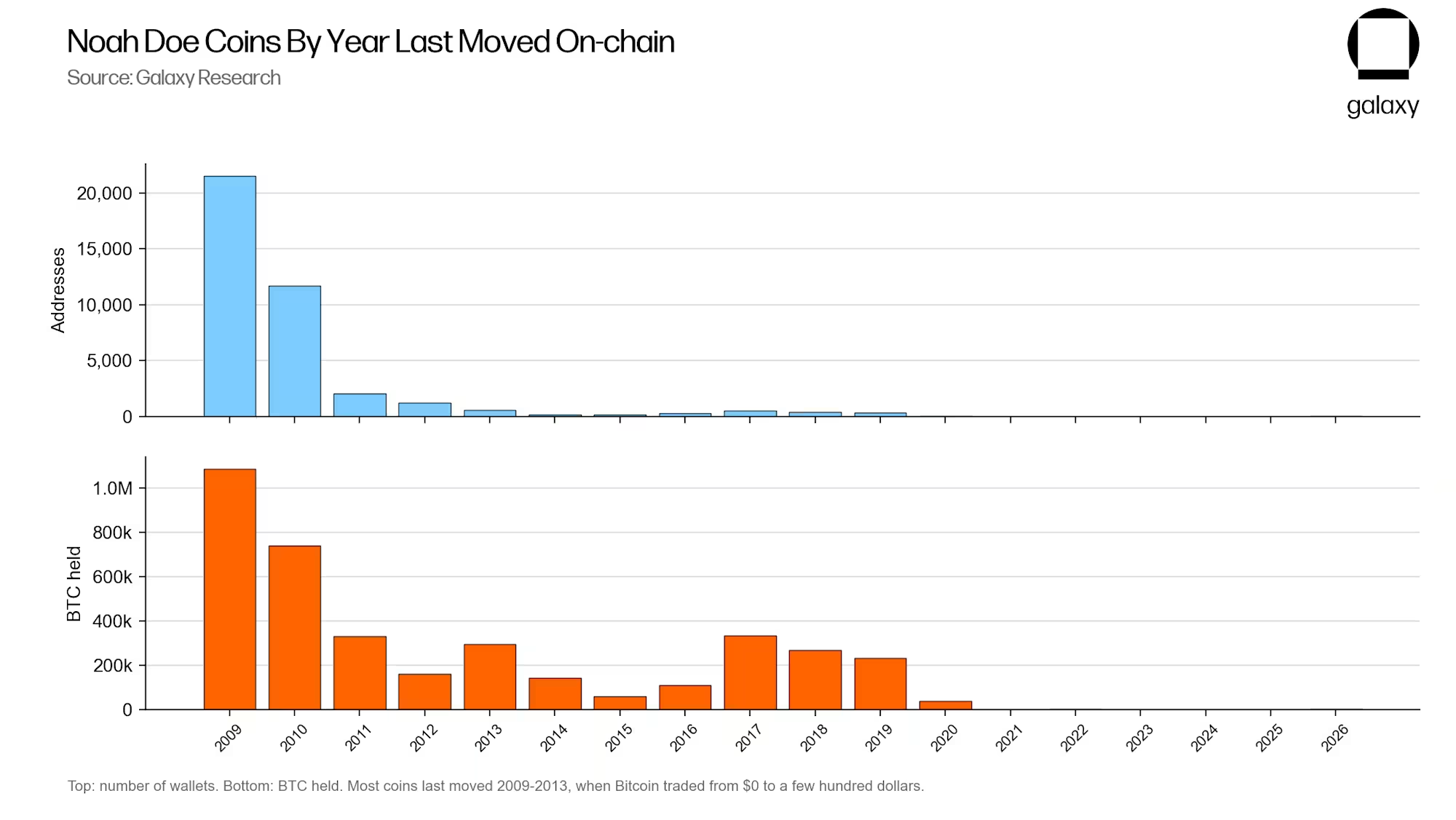
Galaxy’s research team analyzed the 39,069 addresses using its full node and internal database. As of May 25, 2026, they collectively hold 3,799,629 BTC, worth roughly $293.5 billion. The holdings are not evenly spread but cluster into distinct groups. The first is the “Patoshi” cluster: 21,923 addresses containing about 1.096 million BTC that have never moved and are strongly linked to Bitcoin’s creator through the known Patoshi nonce pattern. The second is a single address holding 79,957 BTC stolen from Mt. Gox in 2011—a contested trove that investigators have tracked for years. The third is a provably unspendable “burn” address with 2,131 BTC; no one holds its keys because, by design, none exist. The remaining 7,144 addresses house the bulk—2,621,407 BTC—largely from early holders and the exchange era, with the last on-chain transactions concentrated between 2009 and 2013, when Bitcoin’s price ranged from near zero to a few hundred dollars.
Heavy Overlap with Craig Wright’s Claimed Addresses
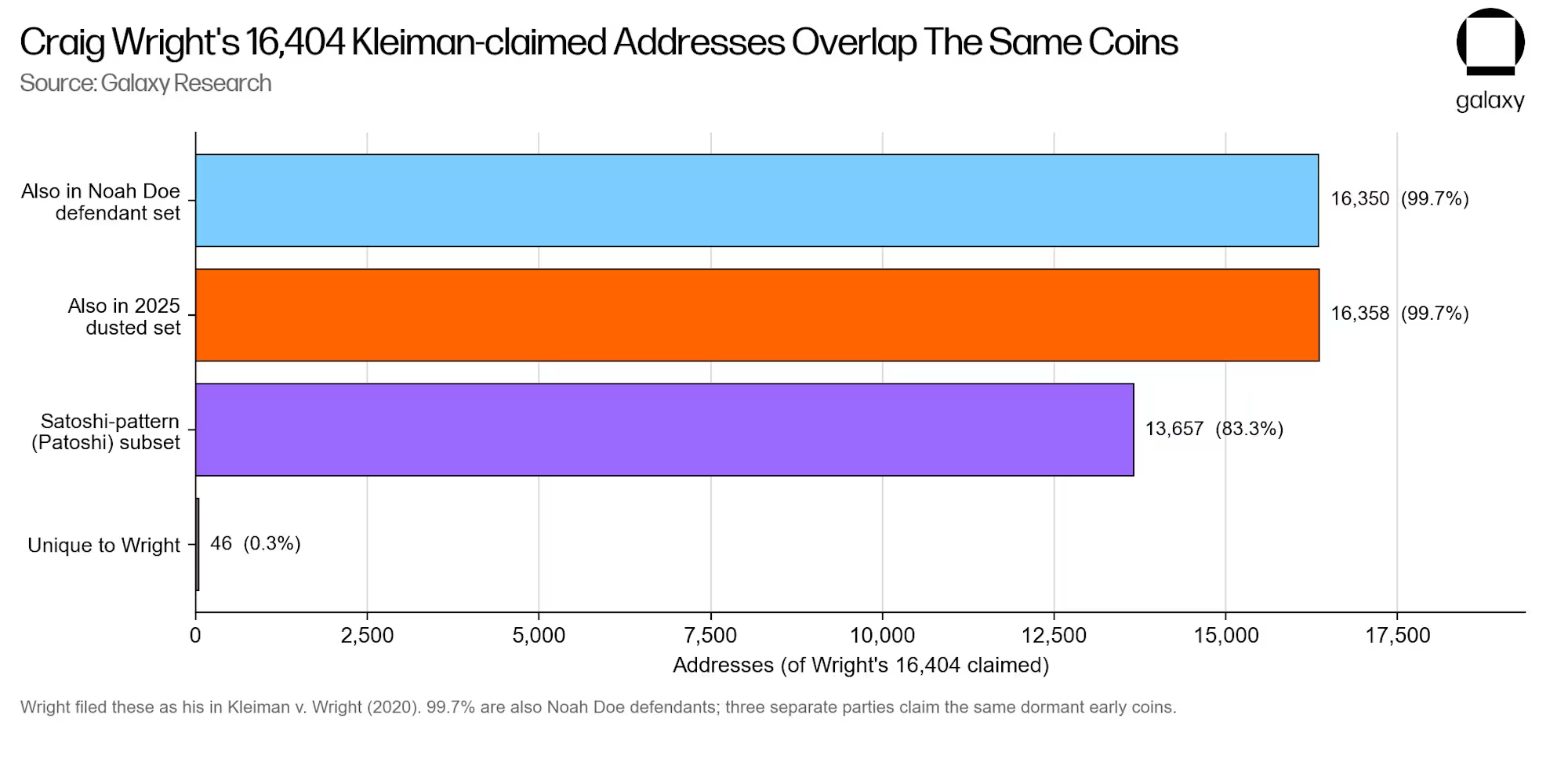
Noah Doe’s list also intersects with a notorious identity lawsuit. In Kleiman v. Wright, Australian businessman Craig Wright submitted a list of 16,404 early Bitcoin addresses that he said belonged to him, as part of his ultimately rejected claim to be Satoshi Nakamoto. Galaxy cross-referenced Wright’s claimed addresses with Noah Doe’s and found significant overlap. This means the very assets the anonymous plaintiff is trying to “claim” under New York lost-property law are substantially the same ones Wright once asserted as his “Satoshi estate,” adding a fresh layer of controversy.

Legal Holes: Never Actually “Found,” Valuation Absurd
Despite the plaintiffs’ procedural craft, the case is riddled with flaws. Lost property law presupposes that the finder has physical possession of the item and delivers it to the police. Noah Doe never held the coins or the private keys; he merely looked at public addresses on a ledger anyone can read. Handing over a USB with publicly viewable addresses is nothing like surrendering actual property. The law envisions a finder who can return the object to the true owner; here, the finder can never transfer a single satoshi. Losing a private key does not extinguish the real owner’s rights—the Bitcoin remains on-chain, and the key holder can move it at any time. Many lost-bitcoin owners have done exactly that.

Even more absurd is the “below $10” valuation per address. The average Noah Doe address holds 97.25 BTC (≈$7.5 million) and the median holds 50 BTC (≈$3.86 million). The expert who provided that cornerstone number is left unnamed in the complaint, making the figure unverifiable and unchallengeable. Taken to its logical extreme, the “as-is recoverable” reasoning would assign near-zero value to almost all self-custodied Bitcoin—clearly contrary to how actual owners, including the very plaintiffs bringing this suit, treat their assets. The plaintiffs’ request for anonymity, supposedly to avoid being targeted, is deeply ironic: they seek to force the real address holders to unmask themselves to defend their crypto. The two shell LLCs, ABC and XYZ, have no physical person to protect, and New York’s LLC Transparency Act already mandates beneficial ownership disclosure for such entities, further undermining their claim to secrecy.

The Real Danger: Cloud on Title and Exchange Freezes
The true threat is not that the plaintiffs could physically seize Satoshi’s coins or any other Bitcoin—those assets stay on-chain, and key holders can move them at will. The danger is that a favorable New York judgment would act as a “cloud on title.” If any of the listed coins ever land on a regulated exchange or custodian, the plaintiffs could present the judgment and assert ownership, potentially triggering asset freezes under anti-money-laundering and custody procedures. Such a move could force long-dormant holders, who surface decades later to move funds, to reveal their identities and litigate over ownership, destroying the anonymity they’ve preserved. Once a declaratory judgment is in hand, it can be wielded against intermediaries like Coinbase or Binance, turning a legally questionable state-court order into a practical weapon.

Because this is a declaratory-judgment action over property, New York law allows true owners to intervene directly and other interested parties to seek permission to join. However, intervention requires the owner to step forward and prove control over the address—exactly the kind of deanonymization that Bitcoin whales spend their lives avoiding. The defendant addresses are all pseudonymous and deliberately shielded from service; a technical default judgment is likely by the end of June 2026. Yet the court is unlikely to rapidly grant everything the plaintiffs seek, given the novelty and sweeping implications of the case. Ultimately, the aim is not to snatch coins from the blockchain but to obtain a paper title that can be used against regulated intermediaries. For whoever is behind this suit, that leverage is worth the effort, even if the judgment never touches the Bitcoin itself. For any holder of a dormant address, the case serves as a stark reminder that even if on-chain assets cannot be physically stolen, legal ownership disputes can still seep in through centralized gateways.