

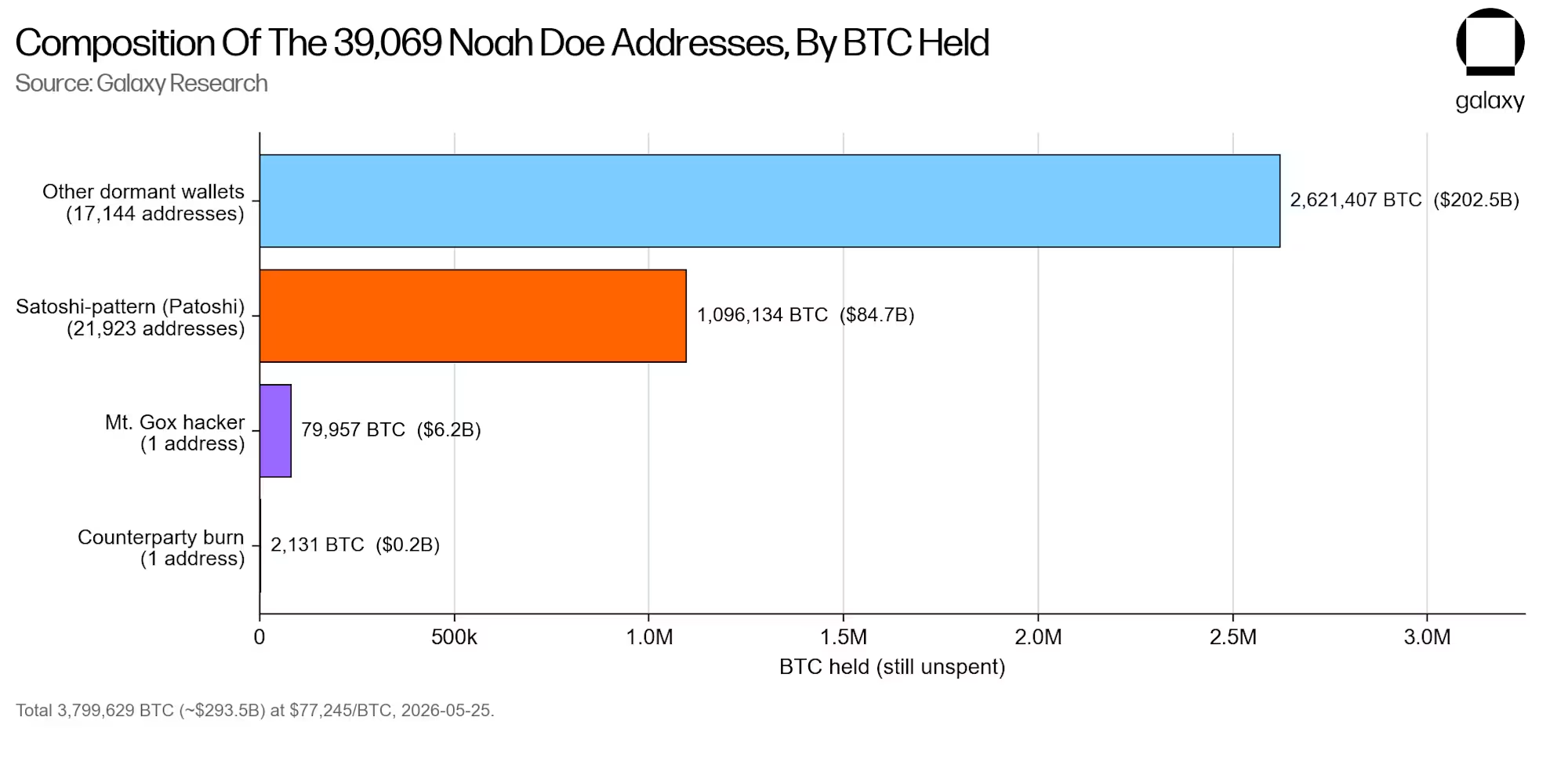
Sixteen years after Bitcoin's inception, its pseudonymous creator Satoshi Nakamoto has been drawn into a bizarre property lawsuit. The New York State Supreme Court has accepted a case in which a plaintiff, using the pseudonym Noah Doe, and two unnamed Wyoming limited liability companies are attempting to claim ownership of 39,069 dormant Bitcoin addresses under the state's lost property law. These addresses collectively hold over 3.79 million BTC, worth approximately $293.5 billion at current prices, including about 1.096 million BTC ($84.7 billion) believed to belong to Satoshi Nakamoto.
The Plaintiff's Legal Strategy
The plaintiff's legal basis rests on a declaratory judgment under New York Civil Practice Law and Rules § 3001, rooted in the state's lost property framework set forth in Article 7-B of the Personal Property Law. That law allows a finder who hands an item to the police and waits out a statutory period without the owner coming forward to eventually obtain ownership. Noah Doe seeks to apply this physical-property framework to Bitcoin: he claims to have handed a USB drive containing a list of public addresses (not private keys) to the New York Police Department as a substitute for surrendering the found item. He then attempted to notify the “owners” through OP_RETURN transactions on the Bitcoin blockchain and press releases. Crucially, he arranged for an “independent expert” to value each address at less than $10, pushing the case into the law's fastest one-year vesting procedure.
Breakdown of the Addresses
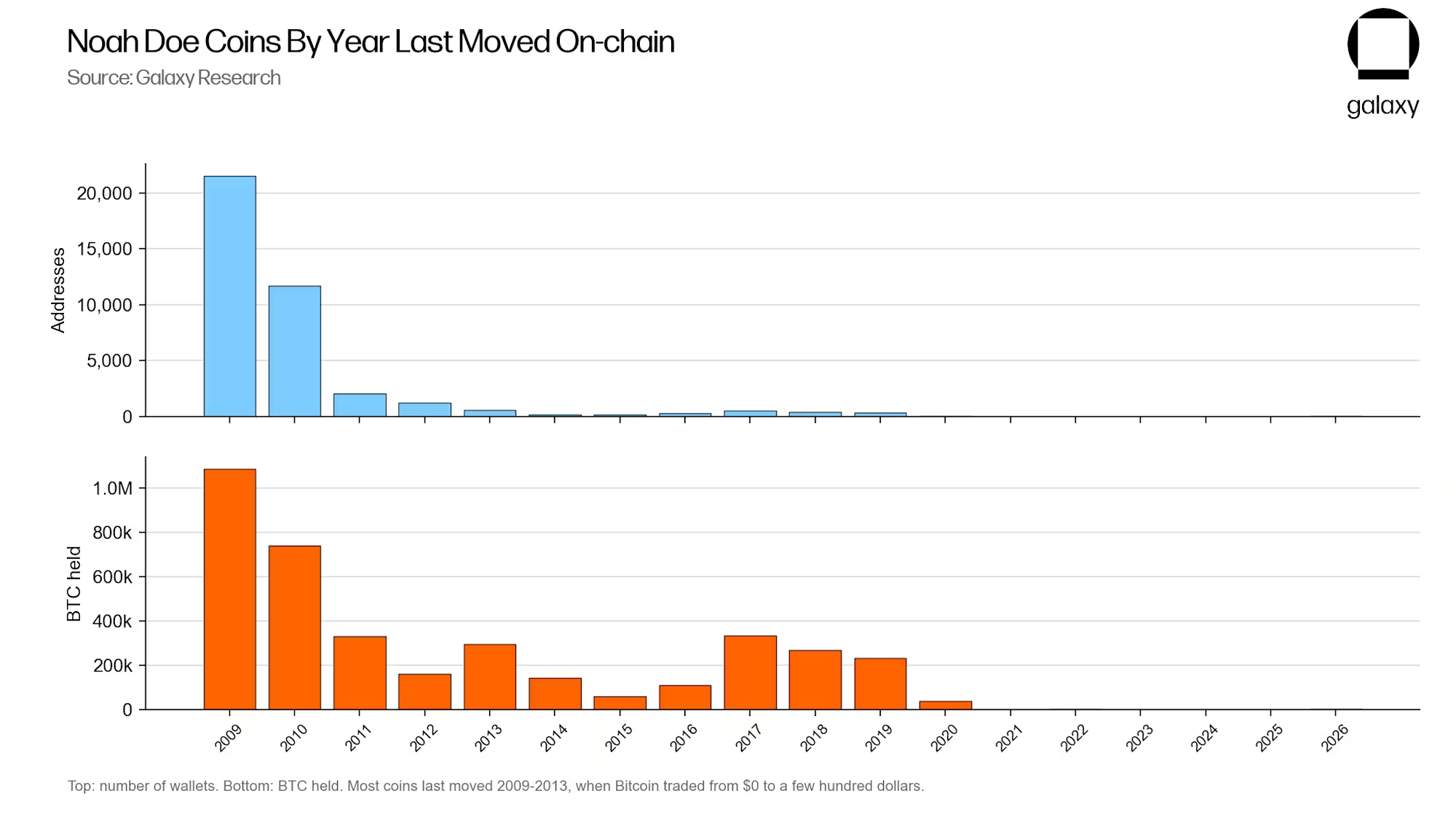
Galaxy Digital analyzed the addresses using its full node and research database. The list includes 21,923 Patoshi addresses—early mining outputs linked to Satoshi through a nonce pattern that have never moved—holding roughly 1.096 million BTC ($84.7 billion). One address contains nearly 80,000 BTC ($6.2 billion) stolen from the Mt. Gox exchange in 2011 and untouched since. Another is a provably unspendable burn address with no known private key. The remaining 7,144 addresses hold about 2.62 million BTC ($202.5 billion) and represent large early holders and exchange-era wallets whose last on-chain activity clusters between 2009 and 2013, when Bitcoin’s price went from near zero to several hundred dollars.
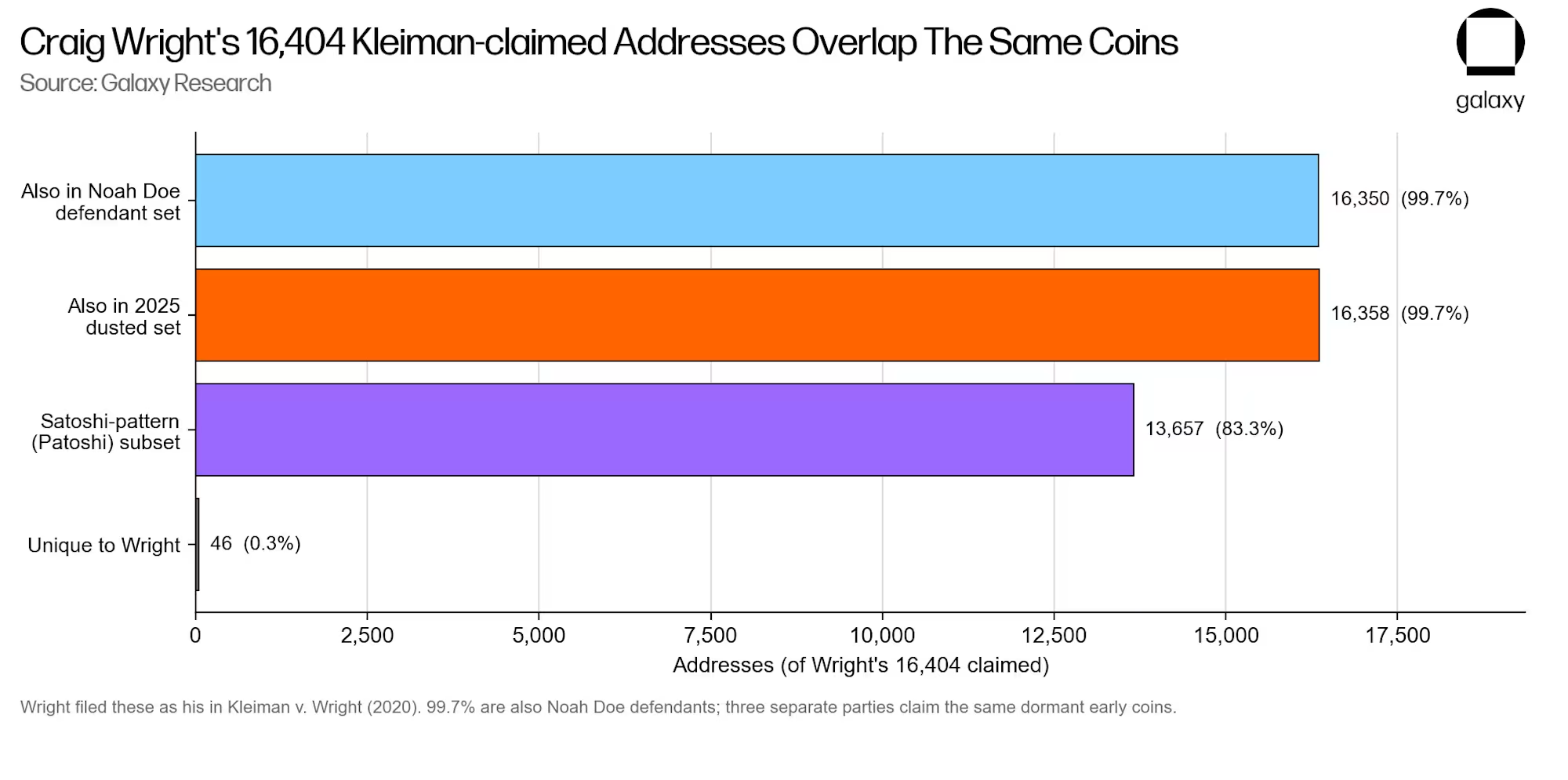
Notably, a significant portion of these addresses have been claimed before. In Kleiman v. Wright (2018), Craig Wright submitted a list of 16,404 early block addresses he asserted belonged to him as part of his later-dismissed Satoshi identity claim. Cross-referencing reveals a substantial overlap with Noah Doe's list.

Serious Legal Flaws
Legal observers note that the lost property statute is designed for physical items that a finder actually possesses and surrenders. Noah Doe never held any private keys or the Bitcoin itself; he merely read a public ledger that anyone can see. Handing over a USB drive with addresses is not the same as handing over the found property. Losing a private key does not extinguish the true owner's rights—the Bitcoin stays on-chain, and the real key holder can move it at any time. Consequently, ownership cannot effectively transfer to a finder who never held the asset.

The valuation claim that each address is worth less than $10 is equally untenable. On average, these addresses hold 97.25 BTC (about $7.5 million), with a median of 50 BTC ($3.86 million). The expert who provided the sub-$10 figure is anonymous in the filing, making this timeline-determining number immune to scrutiny. Meanwhile, the plaintiff seeks pseudonymity to avoid being targeted as a large holder, yet demands that real address owners identify themselves to defend their crypto. The two Wyoming LLCs used as corporate shells have no physical persons to threaten and no privacy to expose, making their anonymity request particularly weak, especially given New York's Limited Liability Company Transparency Law requiring disclosure of beneficial ownership.

The Danger of a Default Judgment
Because the defendant addresses are pseudonymous and will not appear to defend themselves, a technical default judgment is almost certain to occur by late June 2026, roughly 30 days after service. While the court is unlikely to grant everything the plaintiff requests immediately, a declaratory judgment from New York could function as a “cloud on title.” If any Bitcoin from these addresses later moves to a centralized exchange or custodian, the plaintiff could present the court order to that institution and attempt to freeze the assets, forcing the true holder to step forward and prove ownership—thereby exposing their identity. This is the real threat: not that Satoshi's coins will be seized, but that the judgment could be weaponized against regulated intermediaries to harass holders even decades after their last transaction.

The plaintiff does not seek to physically seize Bitcoin but to obtain a paper ownership certificate as leverage against regulated gatekeepers. That nearly explains why the case is being pursued despite the judgment having no direct control over on-chain assets.