
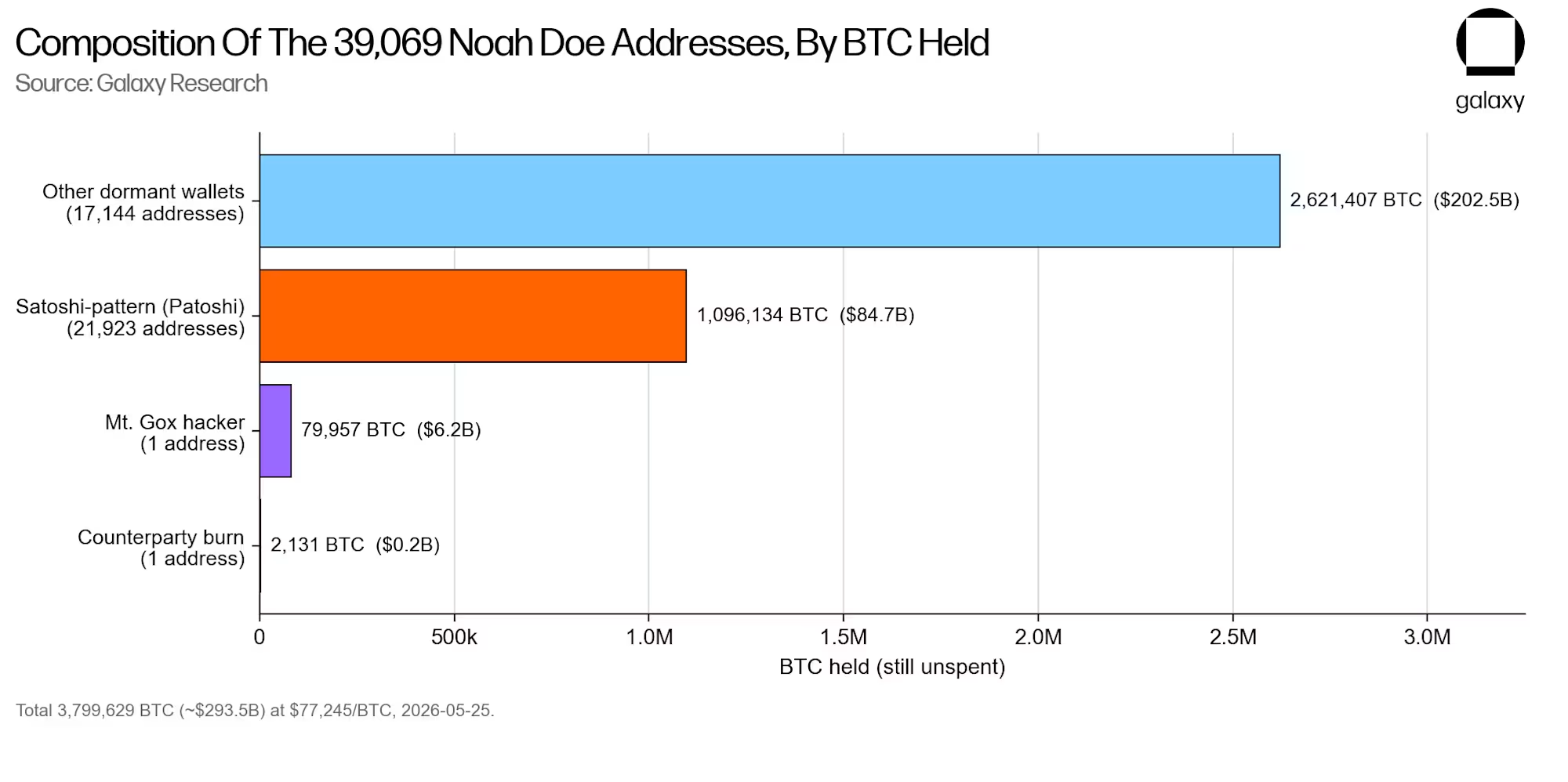
Bitcoin’s pseudonymous creator Satoshi Nakamoto has found him- or herself entangled in a lawsuit that reads more like a plot twist than a legal argument. In March, the New York State Supreme Court accepted a case brought by an anonymous plaintiff called Noah Doe and two shell companies from Wyoming. Their demand: a declaratory judgment asserting ownership over 39,069 dormant Bitcoin addresses, which collectively hold more than 3.7 million BTC. Within that trove are 21,744 addresses flagged as early Patoshi mining wallets, containing roughly 1.09 million BTC — worth some $83.7 billion at current prices.
The plaintiff’s gambit hinges on Articles 7-B of New York’s Personal Property Law, a traditional lost-and-found statute. Noah Doe claims to be the “finder” of these addresses. Instead of handing a physical object to the police, he turned over a USB stick containing the public addresses to the 17th Precinct. He then broadcast an OP_RETURN message on Bitcoin and published a press notice, purporting to fulfill the requirement of contacting the original owner. Parallel to that, an unnamed expert assessed each address’s “as-is” value at less than $10, thereby slotting the case into the statute’s shortest track — a one-year vesting period and only a three-month police holding requirement for items under $100. The entire structure is designed to yield a fast, uncontested judgment.
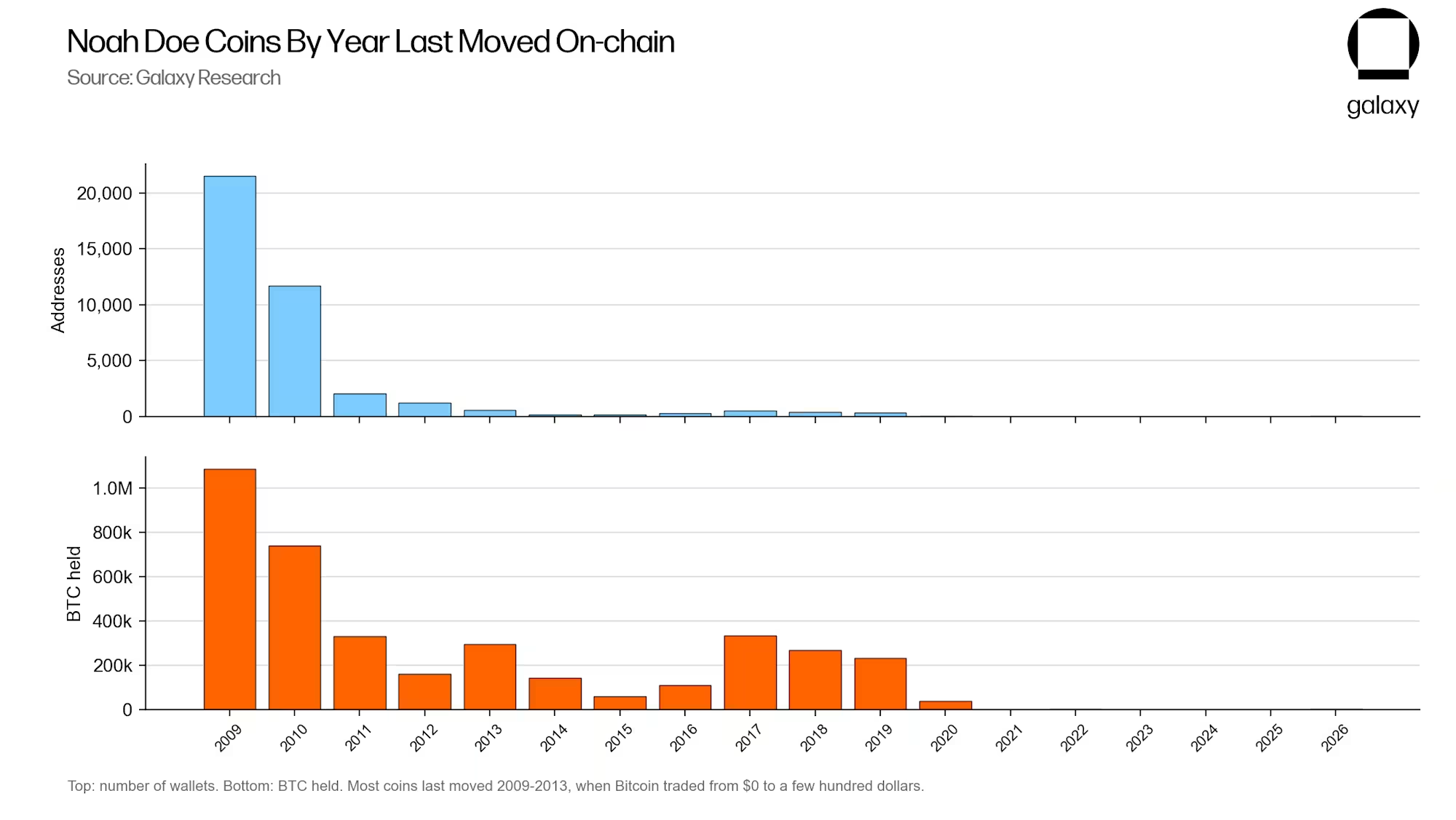
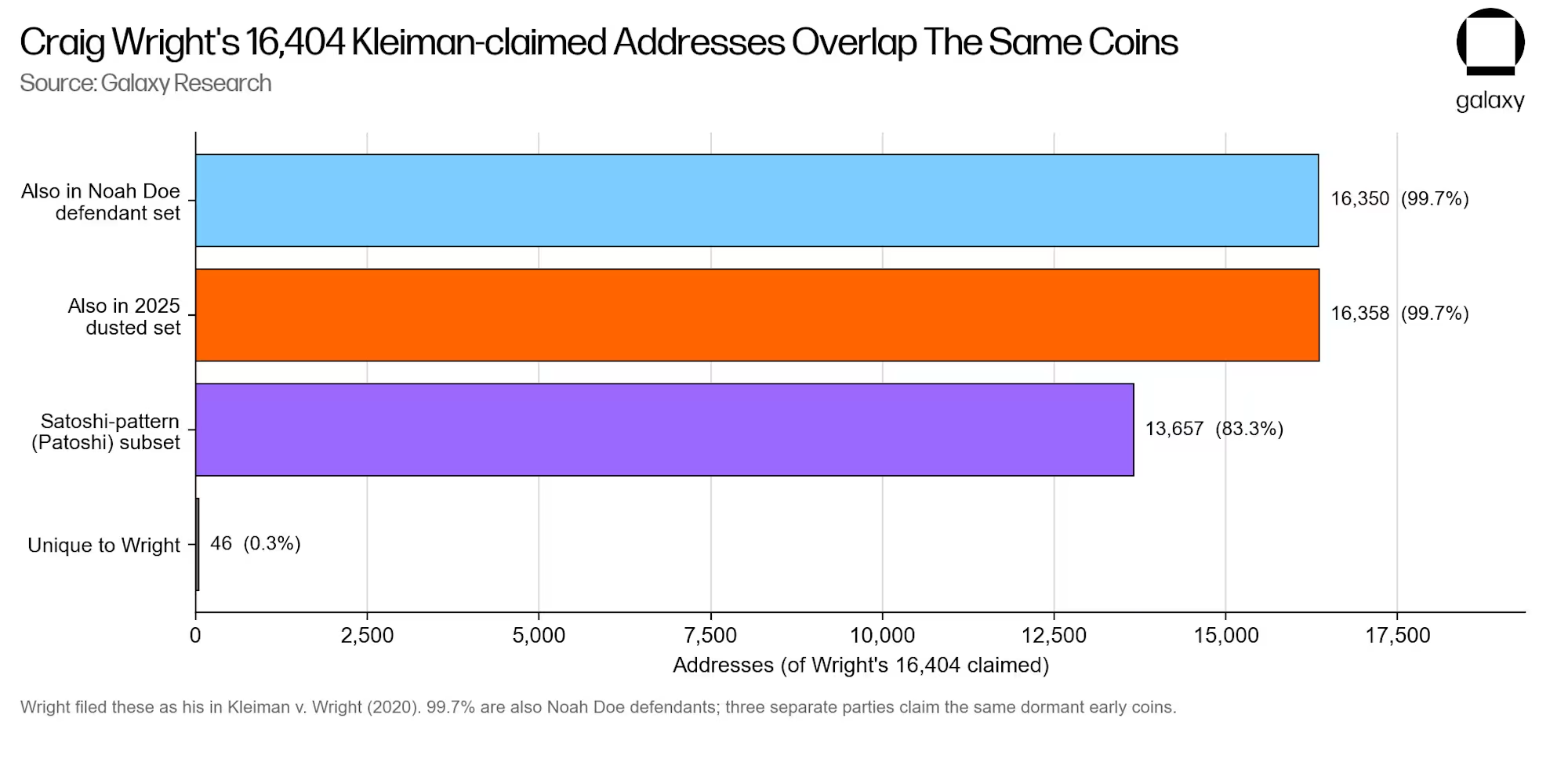
Galaxy Research examined these 39,069 addresses using their full node and internal databases. As of May 2026, the addresses held 3,799,629 BTC, valued at roughly $293.5 billion. The holdings break into several distinct groups: the Patoshi cluster (21,923 addresses, 1.09 million BTC) tied to Nakamoto’s early mining activity; a single Mt. Gox theft address holding 79,957 BTC untouched since 2011; a provably unspendable burn address with 2,131 BTC; and a fourth category of 7,144 whale-era addresses, most of which last transacted between 2009 and 2013. A notable overlap exists with the list of 16,404 addresses Craig Wright claimed as his own during the Kleiman litigation, a claim that was later dismissed.
Dubious Valuation and Identity Questions
The cornerstone of the plaintiff’s fast-track strategy is the below-$10 valuation per address. That number crumbles under scrutiny. The average balance across the addresses is 97.25 BTC (about $7.5 million), and the median sits at 50 BTC. Asserting that an address containing tens of millions of dollars is worth pocket change is a transparent attempt to game the statutory timeline. The person who provided that number remains unnamed in the filing, making the valuation impossible to challenge at this stage.

The plaintiff’s own anonymity further weakens the case. Noah Doe requests a pseudonym to avoid being targeted as a high-value holder, yet the lawsuit would force every real address owner to step forward and identify themselves to defend their coins. The two Wyoming LLCs fare even worse: New York’s LLC Transparency Act already requires disclosure of beneficial ownership, and courts are extremely reluctant to let shell companies claim hundreds of billions of dollars behind a cloak of secrecy.

The Real Threat to Bitcoin Holders
Legal observers at Galaxy note that the court is unlikely to simply hand over Nakamoto’s coins or any other whale holdings. But a judgment — even a default judgment obtained quietly — carries a more insidious risk. It acts as a title defect. If any of these Bitcoins are later deposited to a centralized exchange or touched by a regulated custodian, the plaintiff can present that New York judgment and demand a freeze or a security interest on the funds. The exchange, facing regulatory pressure, may comply rather than litigate, instantly locking the assets and forcing the true holder into years of costly litigation just to prove ownership. This would strip away the very anonymity that Bitcoin holders have spent years protecting.

The case also teeters toward a technical default. Since all defendant addresses are pseudonymous and unserved, a default judgment could become procedurally possible by late June 2026. However, courts generally hesitate to grant sweeping novel relief without full adversarial testing. Still, a piece of paper stamped by a New York court could be enough to alarm a compliance department. The lost-property statute was designed for tangible goods, and Noah Doe never held any private key or the actual Bitcoin. The coins remain on-chain, fully spendable by anyone who truly holds the keys. The danger is not the theft of Bitcoin by a court decree — it is the legal trap that springs when a holder finally decides to move those long-dormant coins toward a regulated door.