

In what may be the most audacious legal maneuver ever aimed at Bitcoin's core, a pseudonymous plaintiff has filed a lawsuit in the Supreme Court of the State of New York attempting to claim ownership of roughly 3.7 million bitcoins — worth approximately $293.5 billion — sitting in 39,069 dormant addresses. Among the targeted addresses are 21,744 early mining wallets linked to Satoshi Nakamoto through the "Patoshi" pattern, holding about 1.09 million BTC (around $83.7 billion at current prices).
Filed by a John Doe figure calling himself Noah Doe, along with two unnamed Wyoming LLCs, the complaint seeks a declaratory judgment under New York's lost property framework. The theory: the plaintiff "found" these addresses, delivered a USB drive containing the public addresses to the NYPD's 17th Precinct, published an OP_RETURN message on the Bitcoin blockchain, and thus satisfied the steps of the state's Personal Property Law §7-B for acquiring abandoned goods. To accelerate the process, an unnamed expert appraised each address at less than $10, pushing the case into an expedited one-year holding period.
The real danger is not that the plaintiffs could somehow seize the actual coins on-chain. Rather, a declaratory judgment in their favor would create a "cloud on title," allowing them to present the document to any regulated exchange or custodian that later receives any of these bitcoins. Such an action could freeze assets, trigger lengthy litigation, and force long-dormant holders to de-anonymize themselves just to prove ownership — exactly the outcome many whales have spent years trying to avoid.
Inside the 39,069 Addresses: Patoshi Hoard, Mt. Gox Loot, and a Burned Address
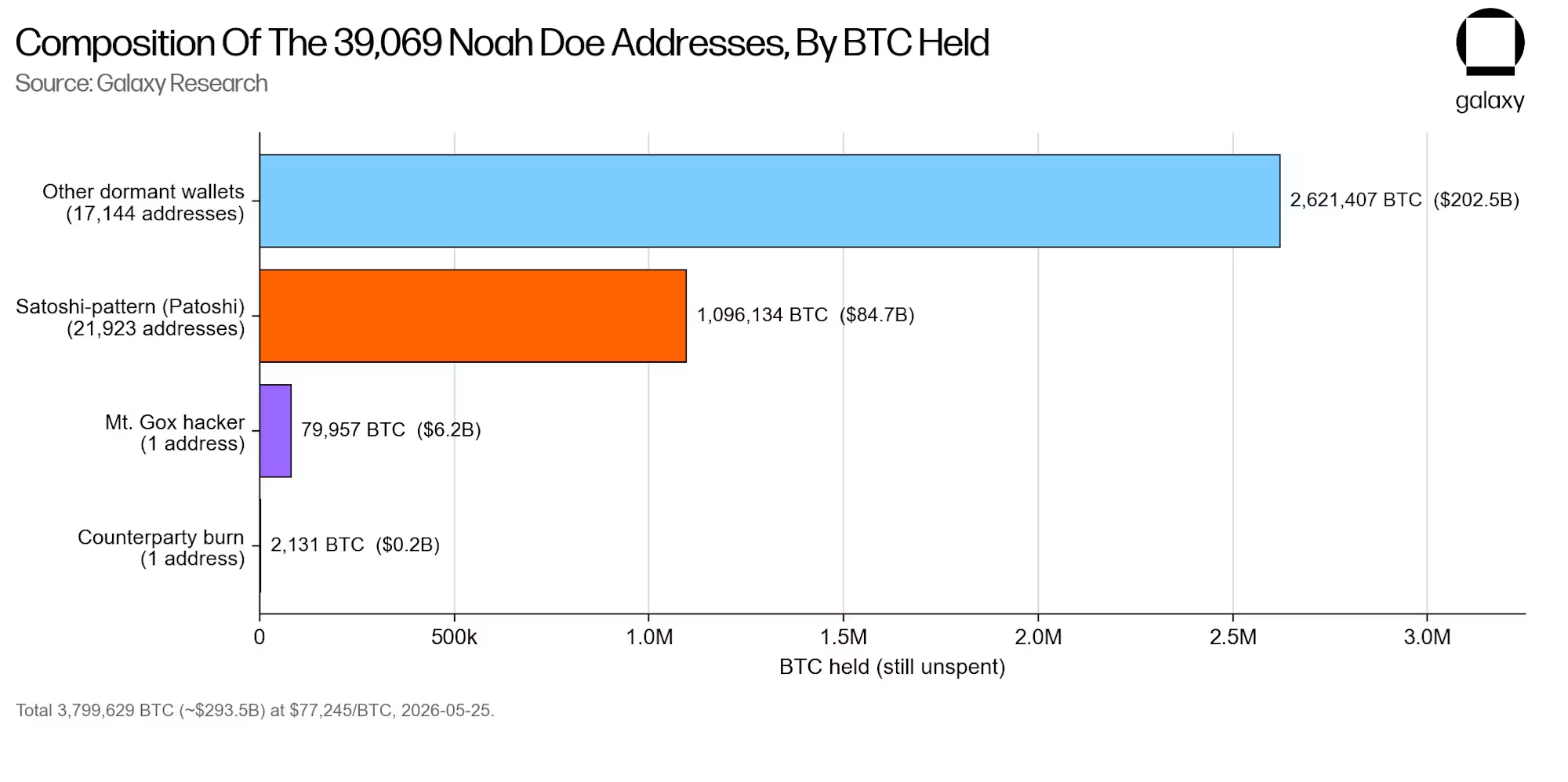
Galaxy Digital ran the full list against their node and research database, revealing a staggering concentration. The 21,923 Patoshi-mined addresses hold around 1,096,134 BTC, none of which have ever moved since being mined in 2009–2010. Another single address contains 79,957 BTC (approx. $6.2 billion) that were stolen from the collapsed Mt. Gox exchange in 2011 and have remained untouched ever since — property already under active investigation.
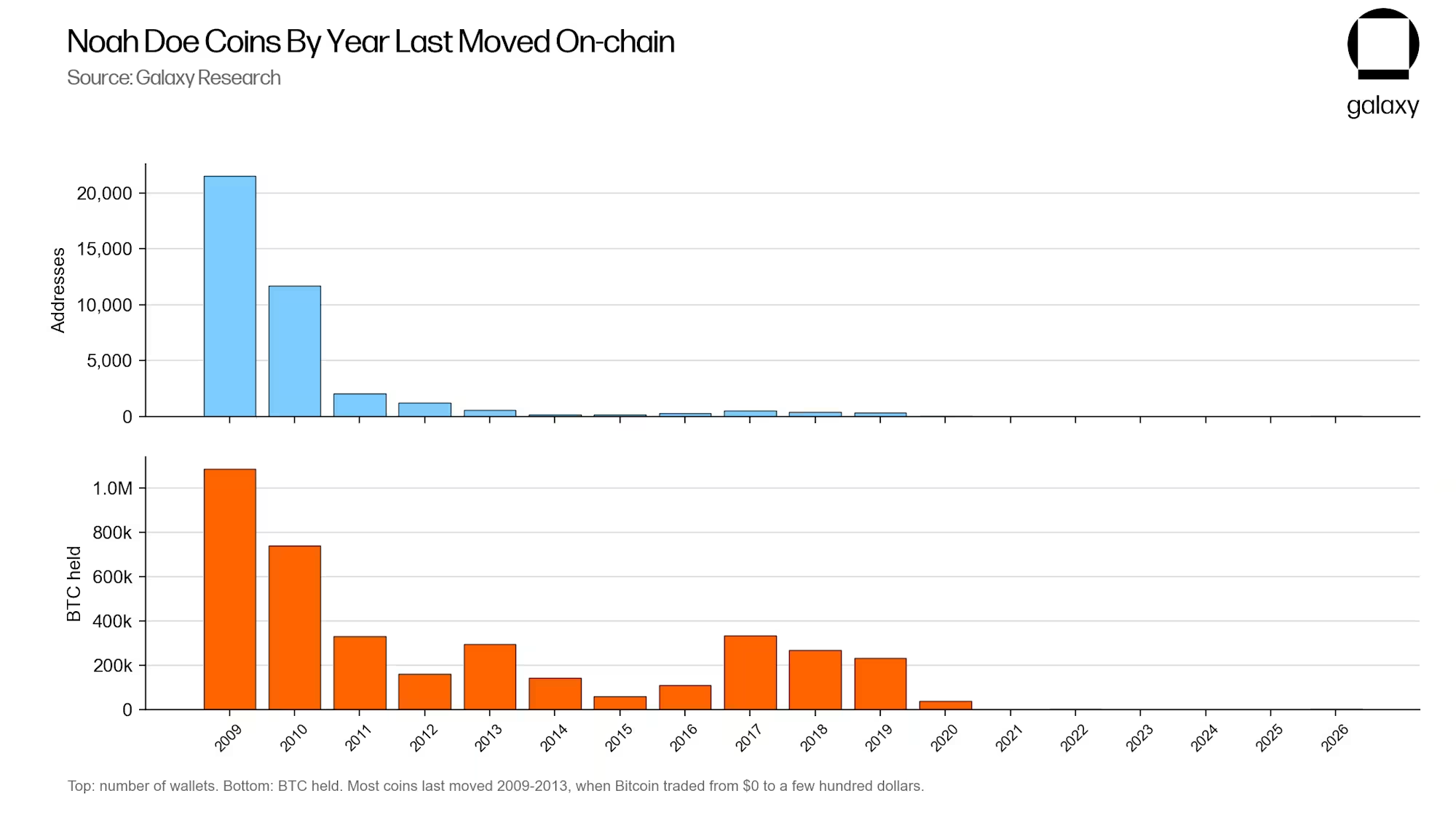
A third address holds 2,131 BTC (approx. $160 million) but is provably unspendable — a known burn address with no private key by design. The remaining 7,144 addresses contain about 2,621,407 BTC, much of it dating back to the early exchange era, with the last on-chain movement clustered between 2009 and 2013 when Bitcoin's price surged from near zero to several hundred dollars.
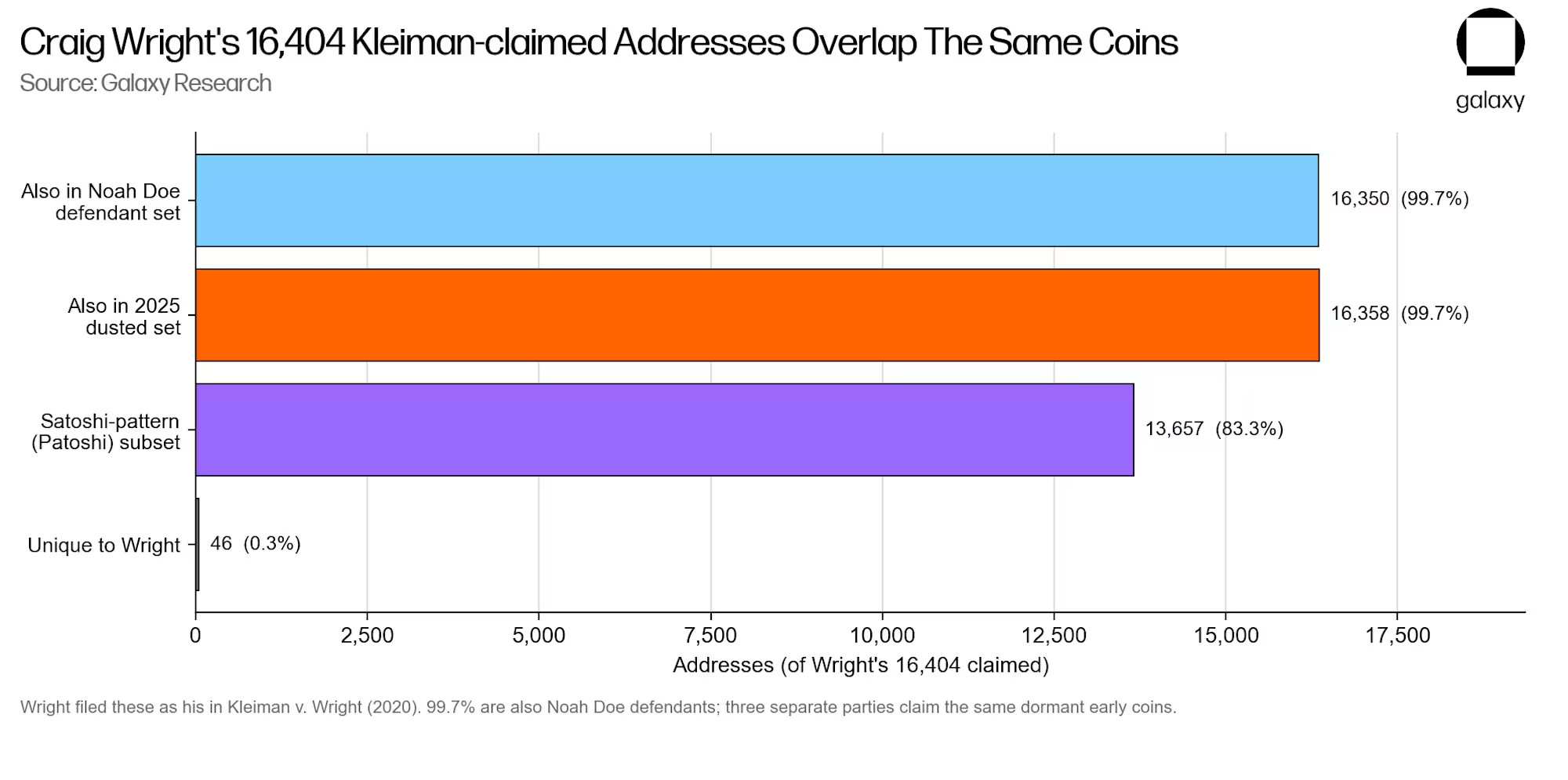
Notably, many of these same addresses had previously been claimed by Craig Wright during the Kleiman v. Wright litigation in 2018, where he submitted a list of 16,404 early addresses as proof of his alleged Satoshi identity. Galaxy's comparison shows a significant overlap, revealing a pattern of repeated attempts to assert ownership over the same dormant coins.

The Flimsy Valuation and the Anonymity Paradox
The entire expedited procedure rests on the claim that each address is worth less than $10 — a figure that defies arithmetic. The average holding across the Noah Doe addresses is 97.25 BTC (roughly $7.5 million), with a median of 50 BTC (about $3.86 million). The valuation appears engineered solely to slot the case into the fastest legal track, and the expert who provided it is left unnamed, making the pivotal number immune to scrutiny and cross-examination.

The plaintiff's request for anonymity further undermines the case. Noah Doe argues he fears being targeted as a large holder, yet the lawsuit aims to force real address owners to step forward publicly to defend their cryptocurrency. Meanwhile, the two Wyoming shell companies invoked a corporate veil that New York's own LLC Transparency Law is increasingly stripping away. Allowing an empty LLC to claim hundreds of billions in property while its human principals remain hidden stretches the concept of pseudonymous litigation beyond any reasonable boundary.
More fundamentally, lost and found statutes are designed for physical objects that the finder actually possesses and can hand over to authorities. Noah Doe never held any private keys or bitcoins; he merely read public addresses from an open ledger and handed a USB drive to the police. Losing a private key does not forfeit the on-chain asset — true key holders can move the coins at any time. Ownership cannot be effectively transferred to someone who can never access the tokens.

Default Judgment and the Title-Cloud Weapon
Because the defendant addresses are pseudonymous and purposely undisclosed, a technical default judgment is almost certain within about 30 days after service. Yet New York courts are historically reluctant to break entirely new legal ground in default settings, especially when property is disputed and the impact would be enormous. A sweeping ruling embracing the "lost property" theory for $293 billion in Bitcoin remains unlikely.
The enduring threat is the piece of paper itself. If even a single coin from these addresses ever moves to a centralized exchange or custodian, the plaintiff could present a favorable New York judgment and seek to encumber the asset. That could freeze funds, spawn years of litigation, and compel the holder — perhaps a whale who has never revealed their identity — to surrender their anonymity simply to prove they own the coins. This weaponization of a title cloud against regulated intermediaries explains why the case is being pursued so aggressively.

While it is almost inconceivable that Satoshi's coins or other massive hoards could be physically seized through this lawsuit, the case has already succeeded in turning every owner of a dormant Bitcoin address into a potential defendant. The mere filing of the action opens a new front in the battle over how legacy legal systems attempt to wrap themselves around permissionless digital property.