

In March this year, the New York State Supreme Court accepted a peculiar case: a plaintiff using the pseudonym Noah Doe is asking the court to declare him the rightful owner of more than 3.7 million bitcoins held in 39,069 dormant addresses. The claimed value totals roughly $274 billion, and among the addresses are 21,744 suspected to belong to Bitcoin's pseudonymous creator, Satoshi Nakamoto, holding approximately 1.09 million BTC worth $83.7 billion. The lawsuit attempts to weaponize New York's personal property lost-and-found law to assert ownership over publicly visible blockchain addresses—treating them as found lost items.
The Legal Mechanism: From U‑Disk to Police to 'Found' Property
At the core of the claim is Article 7‑B of New York’s Personal Property Law, which normally governs the return and eventual ownership of tangible lost items. Noah Doe asserts that he handed a USB drive containing a list of the addresses—not private keys or any proof of control—to the NYPD’s 17th Precinct, thereby fulfilling the requirement of turning over found property. He then sent an OP_RETURN message on the Bitcoin blockchain and issued a press release to serve as notice to the purported owners. Finally, an unnamed expert valued each address’s “as-is” recoverability at less than $10, which, under the statute, triggers the shortest one‑year waiting period for the finder to gain clear title.
If the court grants the judgment, the real danger is not that bitcoins will be seized directly, but that the ruling could be presented to any regulated exchange or custodian as a “cloud on title.” This would allow the plaintiff to freeze assets, trigger prolonged litigation, and force real owners to step forward and prove control—sacrificing the very anonymity Bitcoin hodlers cherish.
What the 39,069 Addresses Contain: Satoshi Patoshi, Mt. Gox Theft, and Burned Coins
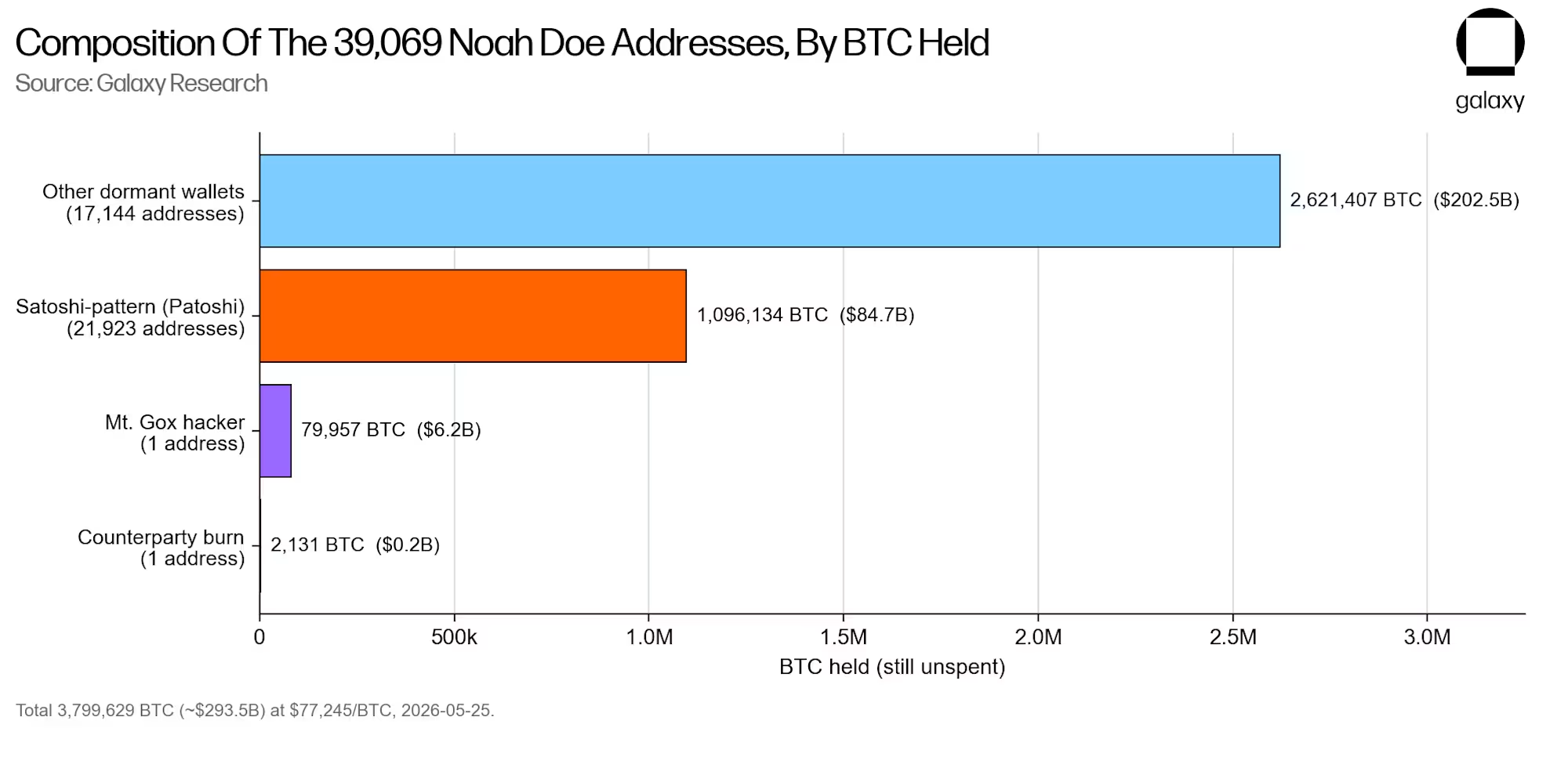
Galaxy’s full‑node analysis reveals several distinct clusters within the list:
Patoshi Addresses – 21,923 unspent early mining outputs linked to Satoshi via the Patoshi nonce pattern, holding ~1.096 million BTC ($84.7 billion).
John Doe #1 – a single address with 79,957 BTC ($6.2 billion) stolen from Mt. Gox in 2011 and never moved since—property already under law enforcement scrutiny.
John Doe #104 – one provably unspendable burn address holding 2,131 BTC ($160 million) for which no private key can ever exist by design.
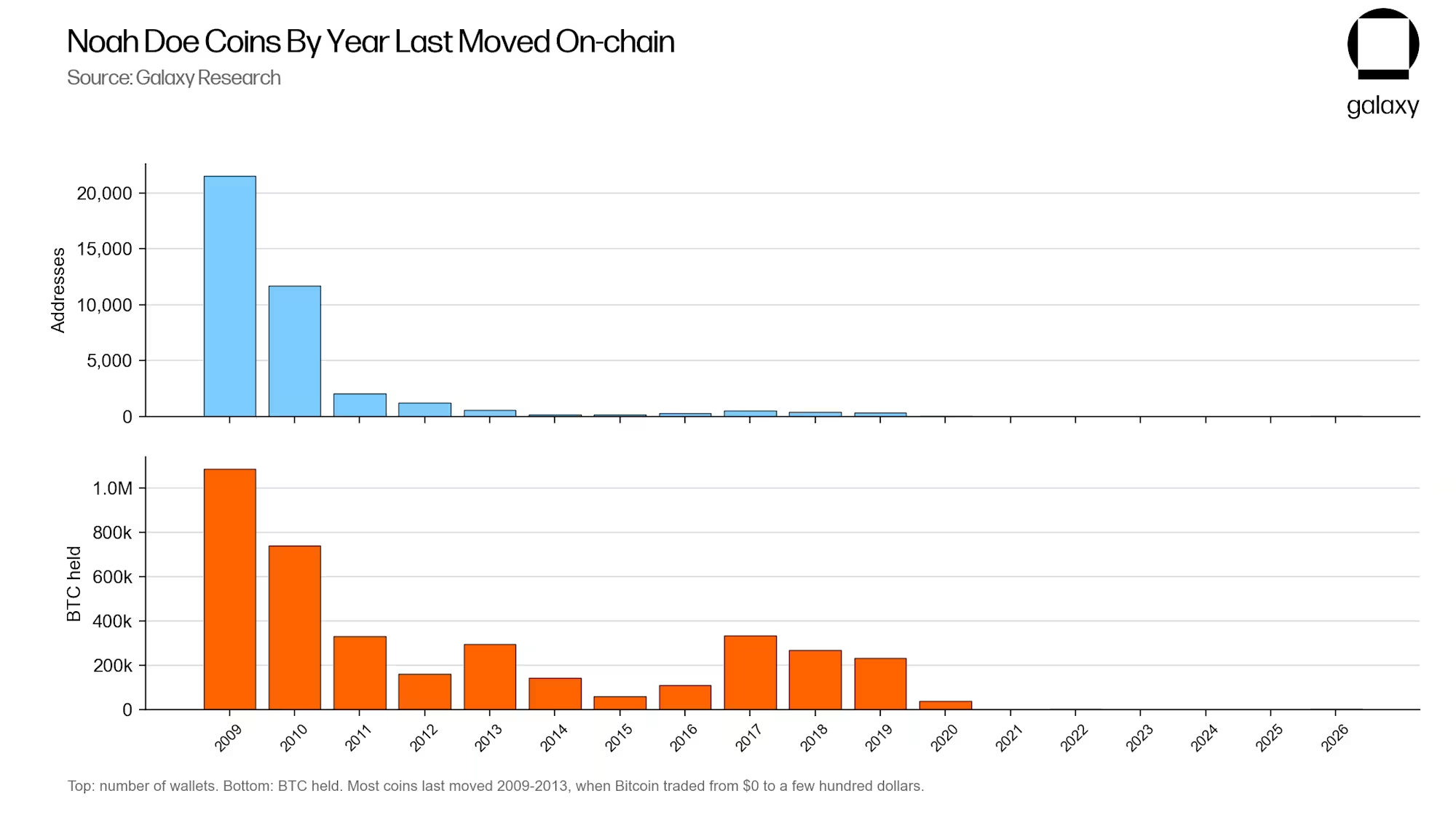
Remaining dormant addresses – 7,144 addresses containing about 2.62 million BTC ($202.5 billion), mostly from early Bitcoin users and exchanges, with their last movement concentrated between 2009 and 2013.

Strikingly, the average holding per address is 97.25 BTC (~$7.5 million), with a median of 50 BTC. The plaintiff’s $10 valuation is purely a procedural convenience to speed the case, and the unnamed expert behind it cannot be cross‑examined.
Overlap with Craig Wright’s Failed Claims
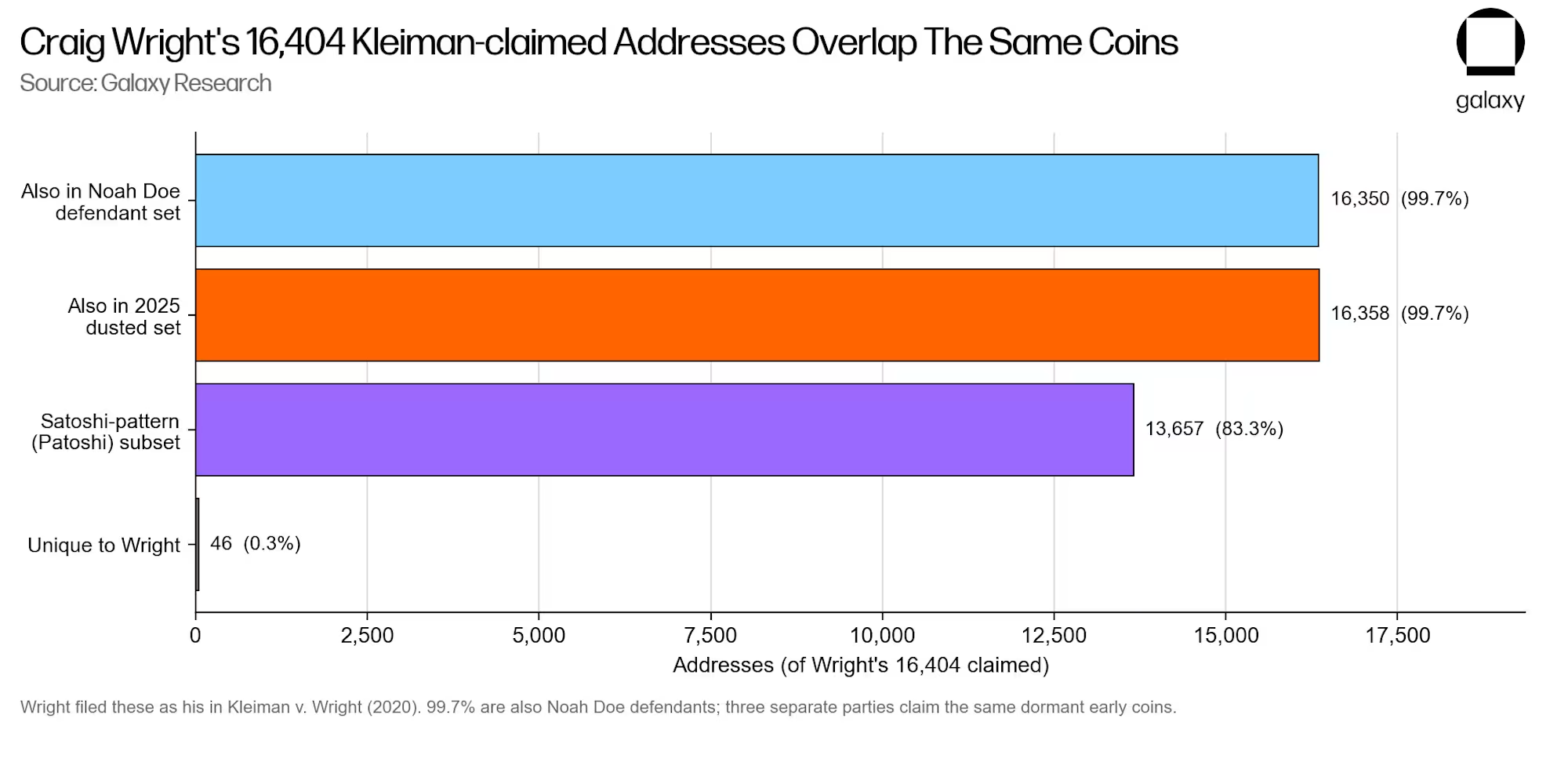
When the plaintiff’s addresses are compared with the list Craig Wright submitted in Kleiman v. Wright (2018), a significant overlap emerges. Wright claimed 16,404 early bitcoin addresses as his own—part of his later‑debunked “Satoshi” identity. The fact that Noah Doe’s list recycles many of those addresses suggests the lawsuit may be recycling already‑rejected assertions.

Legal Flaws: Lost Property Law Does Not Apply to Public Ledger Entries
The most fundamental problem is that New York’s lost property law pertains to physical objects that the finder actually possesses and surrenders. Noah Doe has never held any private key or bitcoin; he merely examined a public ledger that anyone can read. Surrendering a USB drive with address strings is not the same as turning in a wallet full of cash. Moreover, losing private keys does not divest the real owner of rights—bitcoins remain under their control, and they can move them at any time. Therefore no effective transfer of ownership to someone who cannot access the assets can occur.

The anonymity requests are similarly flawed. Doe seeks anonymity to avoid being targeted as a large holder, yet his lawsuit would force the real address owners to publicly defend their property. The two Wyoming LLCs, shell companies with no physical persons at risk, further undercut the argument for anonymity. New York’s LLC Transparency Law now mandates disclosure of beneficial owners, making it highly unlikely courts will allow anonymous entities to claim hundreds of billions of dollars in property.

The Real Threat: Default Judgment as a Weapon Against Intermediaries
Because the defendant addresses are pseudonymous and cannot readily be served, a technical default judgment is almost certain by the end of June 2026. While the court is unlikely to grant all the requested relief quickly, any favorable ruling would give the plaintiff a document to present to centralized exchanges and custodians. This could freeze deposits, force holders into costly litigation to prove ownership, and shatter their anonymity. The lawsuit’s instigator likely understands that even if the judgment never controls the bitcoins themselves, it provides a potent lever against regulated intermediaries—and that alone may be the true aim.