
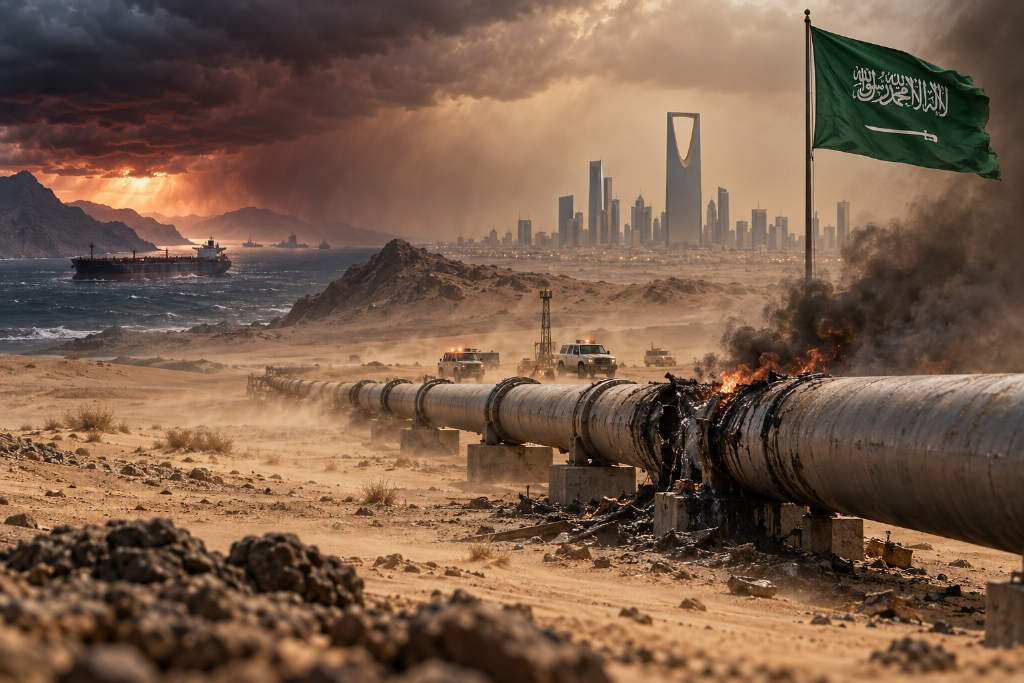
U.S.-Iran tensions are spreading more quickly into the Gulf region, the Financial Times reported, as attacks on Saudi energy infrastructure increase pressure on the Trump administration on both energy and politics.
The report said the Houthis have recently taken control of most of Yemen’s Red Sea coast and have attacked Saudi energy facilities. In parallel, a drone strike forced Saudi Arabia to shut the East-West pipeline that connects the country’s eastern and western regions. That attack was said to have been carried out by pro-Iran Shiite militias based inside Iraq.
Those attacks are putting more pressure on Saudi Arabia’s alternative oil export route that bypasses the Strait of Hormuz. Earlier, the United States had tried to restore energy shipments through Hormuz by measures including protection for merchant vessels, and oil flows had at one point recovered to about one-third of pre-war levels. The Financial Times said that if the East-West pipeline comes under sustained attack, or if shipping through the Bab el-Mandeb is disrupted further, Gulf energy supplies could face a more serious blow.
The conflict is moving across three fronts
The article said the war is now developing at the same time on military, economic and public-opinion fronts. Iran’s economy has already been hit by inflation and currency depreciation, but its political system is able to shield itself from part of that economic pressure. Trump, on the other hand, is heading into midterm elections, and continued increases in gasoline prices would directly weaken support for Republicans.
The report added that Saudi Arabia and other Gulf states are beginning to recognize the vulnerability of their own energy infrastructure. Trump was also said to have rejected a request from Saudi Crown Prince Mohammed bin Salman, or MBS, for immediate military action against the Houthis. In the article’s reading, that may indicate Washington is reassessing how effective military means can be.
Trump faces a choice over the cost of the conflict
The Financial Times said the Houthis have long combat experience and have remained intact under pressure from stronger military powers including Saudi Arabia, the United Arab Emirates, the United States and Israel. As the battlefield widens, Trump faces a central choice: continue confronting both Iran and the Houthis at the same time, or seek a lower-cost path to de-escalation.