
Science Corp said its Prima retinal implant has secured the European Union’s CE mark, giving the device clearance to be sold across the EU and the European Economic Area without separate approvals in each market. CEO Max Hodak told Bloomberg the company is preparing to bring the product to market in Europe.
The company has set August as the target for its European commercial launch, and the first commercial implant is likely to take place in Germany. Science Corp expects to implant the device in dozens of patients this year, then lift that number to about 200 next year. Pricing has not been set and will depend on region and insurance coverage.
Backing that timeline is a clinical dataset published last year in The New England Journal of Medicine. Among 32 late-stage patients who completed 12 months of follow-up, 26 recorded clinically meaningful improvements in vision, according to the report. The gains were enough for patients to recognize letters, numbers, and words again.
How Prima works and what condition it targets
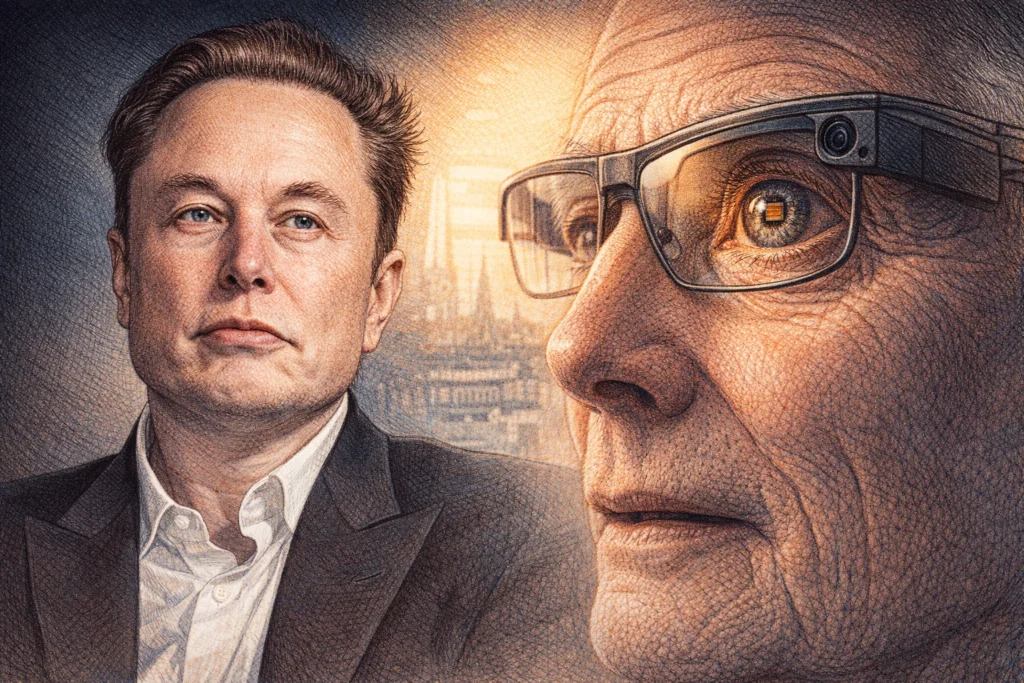
Prima combines two components: a wireless photovoltaic chip implanted under the retina at the back of the eye, and a pair of custom glasses fitted with a camera and a micro-projector. The glasses capture the scene in front of the patient and project the image onto the chip. Powered by light, the implant converts that image into electrical signals that stimulate surviving retinal cells, allowing the brain to perceive outlines again.
The device is aimed at geographic atrophy, the late-stage form of age-related macular degeneration. Once the light-sensing cells in the center of the retina die, patients can be left with blurred vision or dark gaps in their field of view. The report described the condition as the most common cause of blindness in older adults and said there is currently no drug that can cure it, only treatments that slow further decline.
More broadly, therapies for macular degeneration can slow progression, but none can reverse the disease. Science Corp described Prima as the first commercial device for this late stage that has been shown to restore some degree of form vision in certain patients. Geographic atrophy is more common in people over 70, and Hodak said Europe alone has hundreds of thousands of potential beneficiaries.
Why Science Corp reached commercialization first
In the U.S. brain-computer interface sector, Science Corp is not the largest company by value. The report said the company is valued at $1.5 billion, placing it second behind Elon Musk’s Neuralink, which has drawn more public attention. Even so, Science Corp appears to have moved ahead in turning an implantable product into something clinics can begin offering commercially.
Hodak is one of Neuralink’s co-founders and left in 2021 to build a separate company. His focus shifted to vision restoration rather than the more complex challenge of decoding brain signals tied to language and movement. That choice, according to the report, helped Science Corp make Europe its first commercial entry point and use the CE mark as the opening step.
The article said a single European authorization can cover the EU and the European Economic Area, making the process faster than a longer U.S. approval route. For a similar implant, waiting in the U.S. line could stretch commercialization by several years; going through the CE pathway brings that timetable forward.
Capital has also supported that push. Science Corp has raised $489 million to date, and Bloomberg reported in March that the company had reached a $1.5 billion valuation. The report said that funding allows Science Corp to keep building both its retinal implant business and next-generation devices designed to connect brain tissue with engineered neurons, while using product sales to generate cash flow and continue moving deeper into brain-computer interface development.