
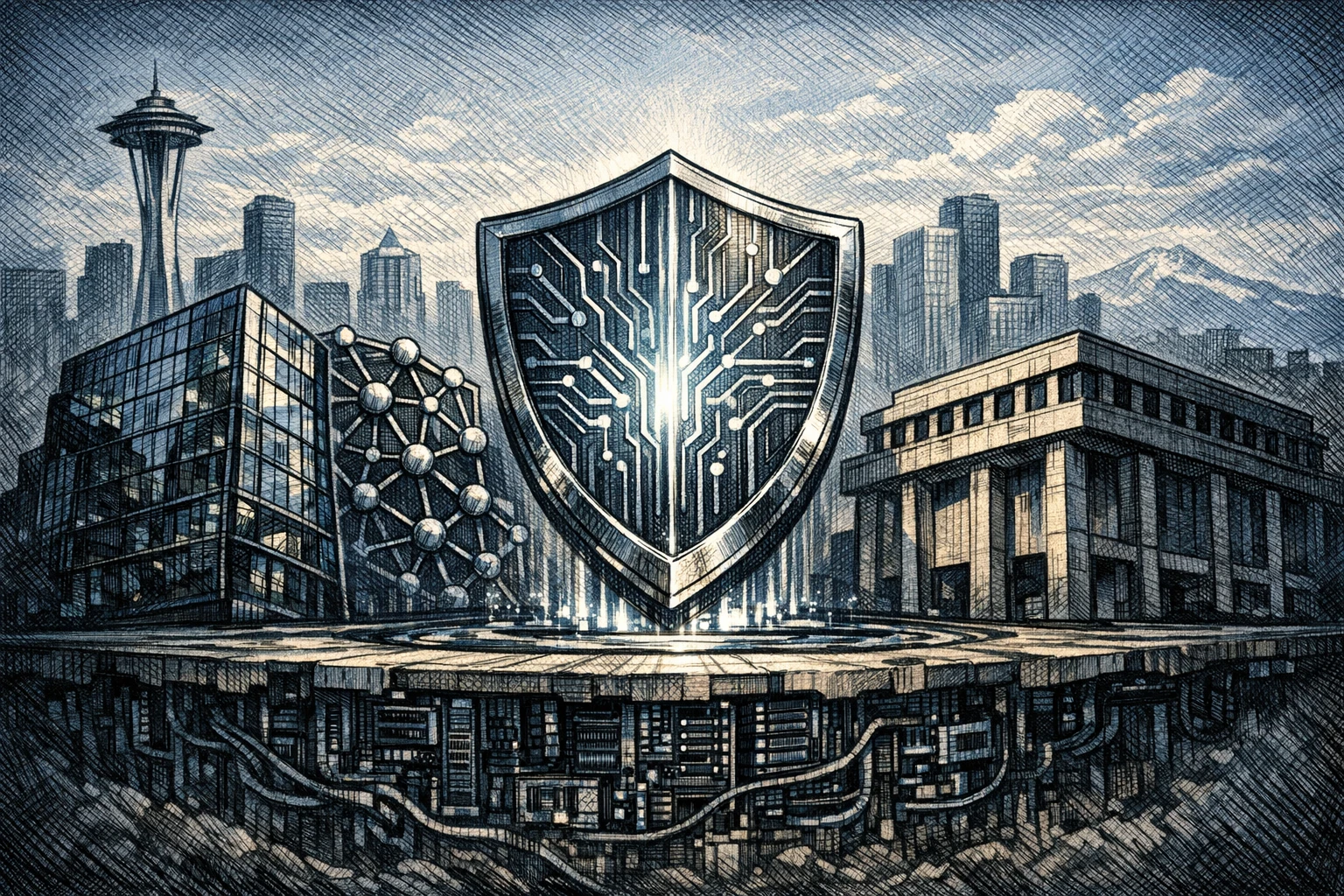
In 2009, the Seattle Police Department quietly built a private intelligence network named Seattle Shield, bringing together Amazon, Facebook parent Meta, ICE, the FBI, the Department of Homeland Security, and hundreds of private companies and nonprofits. Seventeen years later, most Seattle residents remain unaware of its existence, while the injection of AI is transforming this network from manual tip-sharing into algorithmic surveillance.
Who Sits at the Intelligence Table
A leaked 2020 member list spans hundreds of entities: Amazon, Meta, ICE, FBI, DHS, security firm ABM, Seattle Theatre Group, Downtown Seattle Association, and more. ABM has provided the technical platform since 2011, integrating access data and surveillance footage from venues. The theatre group contributes intelligence from large events; the downtown association supplies commercial district monitoring data via the Business Improvement Area mechanism. This public-private hybrid structure bypasses disclosure limits that apply to purely government agencies.
Privacy advocate Phil Mocek has tracked the network through FOIA requests since 2012, obtaining thousands of internal documents and calling for "tracking, accountability, and audits." Yet the ACLU of Washington has not actively pursued the matter, and the FBI has refused to answer whether the network ever led to a terrorism arrest.
SAR System: From Human Tips to Algorithmic Inputs
The core of Seattle Shield is the Suspicious Activity Report (SAR) system—a standardized channel for police and private entities to share leads. Traditional SARs rely on manual reporting and review, limiting efficiency. By 2026, Amazon Ring cameras can automatically tag "suspicious behavior" via machine vision, Amazon has data-sharing agreements with over 2,200 police departments nationwide, Meta's content moderation infrastructure processes billions of posts daily, and DHS uses natural language processing to scan travelers' social media. When these AI capabilities plug into a legal intelligence-sharing framework, turning SARs from human tips into algorithmic inputs becomes an engineering task, not a policy choice.
The 2020 BlueLeaks leak exposed the NetSentinel real-time data-sharing platform. Former FBI agent Terry Albury has highlighted the chronic lack of judicial oversight in such systems.
2025 Turning Point: Protest Defined as Terrorism
The seventh Global Shield conference report focused almost entirely on protest activities, not traditional terrorism threats. Retired Army Colonel William Edwards, a keynote speaker, presented an agenda that clearly shifted the network's "threat object" from armed crime to civil dissent. In 2025, a Trump administration national security memorandum formally listed protest speech as an indicator of terrorism. Once the legal definition expands, the existing intelligence-sharing mechanism automatically gains authorization to monitor political dissent—no system architecture changes needed, only a vocabulary shift.
What deserves more attention than the member list is that the marginal cost of this public-private surveillance architecture in the AI era approaches zero. When surveillance costs disappear, its scale is constrained only by political will, not technical capability.