
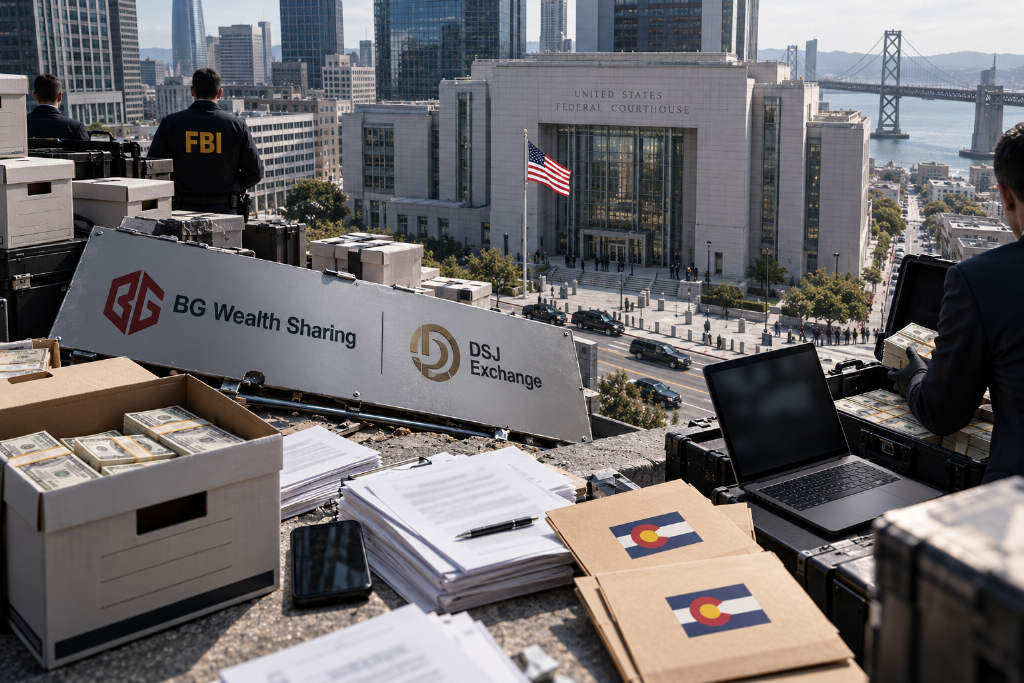
The U.S. Securities and Exchange Commission has charged two Colorado-incorporated, foreign-operated companies with allegedly running a crypto investment fraud that raised more than $130 million from tens of thousands of retail investors.

The defendants are BG Wealth Sharing Ltd. and DSJ Exchange Pty Ltd. In a complaint filed in the U.S. District Court for the Northern District of California, the SEC said that from at least October 2025 through June 2026, the companies solicited investors in more than 40 states and several U.S. territories to join what they called a “wealth-sharing program.”
According to the complaint, participants were promised risk-free returns generated by supposed signals for crypto asset trading. The SEC said BG Wealth claimed to be the world’s largest hedge fund, said it was registered with the SEC as an investment adviser, and told investors it had partnered with DSJ Exchange, which it described as a licensed and secure crypto trading platform. The agency said none of those claims were true.
False SEC filings were used to support the pitch
The complaint alleges that the two companies submitted false Form ADV and Form D filings to the SEC. Those filings were publicly viewable on the agency’s website and were then shared with investors as proof that the firms had been licensed or approved by the regulator.
Laura D’Allaird, chief of the SEC Enforcement Division’s Cyber and Emerging Technologies Unit, said in a statement that the operation was carefully organized. She pointed to the use of social media, encrypted messaging channels, weekly live videoconferences, and a mobile app to keep investors engaged.
The SEC also alleged that the defendants displayed fake certificates bearing the SEC’s seal and made periodic payments to some investors, calling that “a Ponzi-like tactic,” while misappropriating the remaining funds.
Charges and remedies sought by the SEC
The SEC charged both companies with violating the antifraud provisions of the Securities Act of 1933 and the Securities Exchange Act of 1934. It separately charged BG Wealth with violating Sections 204(a) and 207 of the Investment Advisers Act of 1940.
The agency is seeking permanent injunctions, disgorgement with prejudgment interest, and civil penalties against both companies. It is also seeking conduct-based injunctions against BG Wealth.
The Form ADV and Form D filings referenced in the case have since been removed from the SEC website.
Investor warning and assistance from other authorities
The SEC’s Office of Investor Education and Assistance has issued investor alerts warning that scammers are using exempt reporting adviser filings to create a false appearance of legitimacy. The agency urged investors to check the background of anyone offering or selling a crypto investment through Investor.gov.
The SEC said it received assistance from the Alberta Securities Commission, the Hawaii Department of Commerce and Consumer Affairs, the Texas State Securities Board, the Utah Division of Securities, the Washington State Department of Financial Institutions, the Wisconsin Department of Financial Institutions, and other authorities.
The report was first published by Bitcoin Magazine and written by Micah Zimmerman.


