
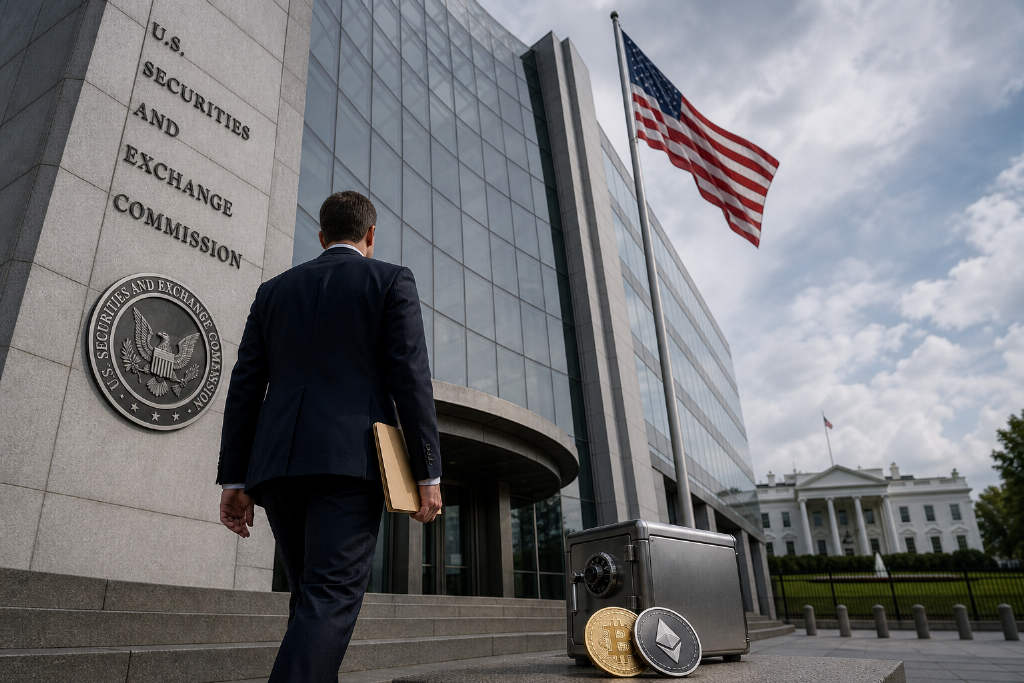
The U.S. Securities and Exchange Commission has sent a proposal to rewrite custody rules for investment advisers to the White House, starting the formal process for a rulemaking that would spell out how advisers and funds may hold crypto assets.
The Office of Information and Regulatory Affairs logged the submission on Aug. 25 under RIN 3235-AN46. The item is titled Amendments to the Custody Rules.
The filing classifies the proposal as economically significant and marks it as deregulatory under Executive Order 14192. It would amend rules under the Investment Advisers Act of 1940 and the Investment Company Act of 1940.
The SEC said the rulemaking would remove burdens tied to outdated provisions that are no longer needed for investor protection. The regulatory agenda sets October as the target for a formal proposal.
The agency is revisiting a proposal that stalled in 2023
In 2023, under Gary Gensler, the SEC pushed a plan that would have required advisers to place client crypto assets with a narrow group of qualified custodians. That group generally included a chartered bank or trust company, an SEC-registered broker-dealer, or a futures commission merchant regulated by the Commodity Futures Trading Commission.
The proposal drew objections from financial firms, crypto platforms, and another federal agency. Lawyers at the Small Business Administration warned that the SEC had underestimated the effect on smaller advisers. Investment firm a16z called the proposal illegal, infeasible, and dangerous.
It never reached a final vote and was pulled last year.
Direction under Paul Atkins looks different
The current SEC, led by Chair Paul Atkins, has taken a friendlier approach to the crypto industry. Unchained noted that the agency proposed fundraising rules last week.
A separate near-term item on the agenda, RIN 3235-AN48, would clarify crypto compliance for broker-dealers. The long-promised innovation exemption for tokenized securities is still pending.
The custody market has changed since 2023
The backdrop has shifted since the earlier proposal. A wave of new federal trust bank charters has expanded the pool of institutions able to custody digital assets.